Showing posts with label Collective Grief. Show all posts

Wednesday, October 28, 2020

New polling shows 79% of Aussies care about climate change. So why doesn’t the government listen?

by Rebecca Colvin, The Conversation: https://theconversation.com/new-polling-shows-79-of-aussies-care-about-climate-change-so-why-doesnt-the-government-listen-148726

We will remember 2020 as a year of crisis. COVID-19 hit Australia just as we were beginning to make sense of the horror bushfires and smoke of last summer, a sinister illustration of global warming’s threats.

Since then, the news media has given centre stage to COVID-19 and its cascading impacts on society, shifting climate change to a relatively minor role in our narrative of this year’s crises. So, have Australians forgotten about the urgency of climate change? No. 

Polling released today by The Australia Institute shows climate change and its impacts remain a prominent concern to Australians, even amid the upheaval and uncertainty wrought by COVID-19.
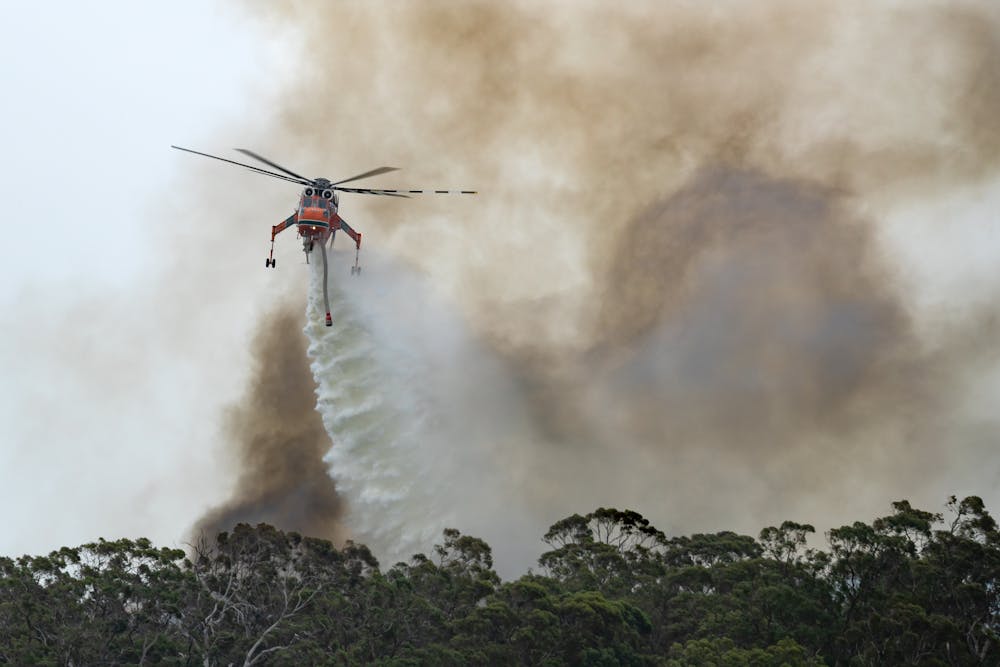
Helicopter dumping water over bushfires
The majority of Australians (57%) experienced some form of direct impact from last summer’s bushfires or smoke. Shutterstock

82% of Aussies worry about climate-driven bushfires

The Climate of the Nation report has tracked Australian attitudes to climate change for more than a decade.

This year, it polled 1,998 Australians aged 18 and over, and found the vast majority (79%) hold views in line with the best available scientific evidence. That is, four in five Australians agree climate change is occurring. This is the highest result since 2012.

An even greater majority, 82%, is worried climate change will result in more bushfires, up from 76% in last year’s report. This is perhaps unsurprising, given the record-breaking fires of last summer and the threat of longer and more ferocious fire seasons.

The bushfire royal commission is due to release its report today, and will likely highlight climate change as an amplifier of bushfire risk. This was foreshadowed in the commission’s  interim observations in August.

The report also showed Australians believe the post-pandemic economic recovery is not a time to further entrench fossil fuels. Only 12% of Australians want to see Australia’s economic recovery led by investment in gas, a plan the Morrison government is set on carrying out.

In contrast, a majority (59%) would like to see the recovery driven by renewables.

Australia: an international laggard

The level of scientific consensus on climate change is remarkable. Urgent action on climate change is recommended by scientists and desired by the overwhelming majority of the public. Yet, Australia remains an international laggard in this area.

The Climate Change Performance Index evaluates 57 countries plus the European Union, which together are responsible for more than 90% of global emissions. This year, Australia ranked last on climate policy.

The reasons include Australia’s absence from the UN Climate Action Summit in 2019, and withdrawal of contributions to  international climate funding programs.
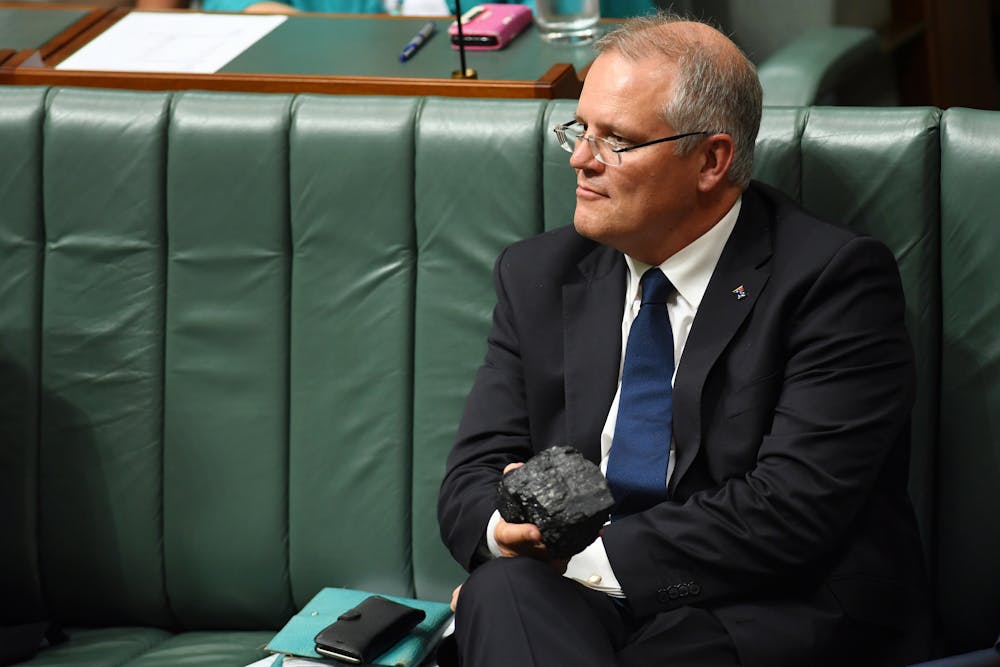
Scott Morrison holds a lump of coal
Australia’s inaction on climate change has made the country an international laggard. AAP Image/Lukas Coch

For many years, denial, delay and division over climate change was the norm in Australian politics. This is still the case among some media and political elites, and is no more pronounced than in debates over the future of coal in the domestic energy mix and for export.

Our energy sources play a big role in our overall contribution to climate change, with electricity generation contributing  32.7% of Australia’s emissions.

For everyday Australians, the solution is clear. The Climate of the Nation report shows the vast majority (83%) want to see coal-fired power stations phased out. Some 65% want the Australian government to stop new coal mines from being developed.

Toxic politics limit constructive conversations

For many, particularly those living in Australia’s coal production regions, the prospect of shifting from coal to renewables raises legitimate concerns about their futures.

However, the ability for people and policy to engage constructively with concerns over jobs and climate is limited by toxic politics.

An important culprit is the pervasive “us versus them”  narrative that dominates political and media discourse. The narrative repeatedly – but erroneously – signals to people in coal production regions that the rest of the country doesn’t care about them.

Coal production is also pitted against climate action in the “climate versus jobs” debate. But the polling shows such binaries are false: most Australians do care what happens in coal production regions. In fact, three-quarters of Australians want governments to plans and manage an orderly shift from coal to renewables.

The Australian people, by a large majority, care for those living in coal production communities and want to secure a safe climate.

68% of Aussies support an ambitious climate target

Australians recognise our country can make a disproportionately large and positive contribution to international efforts to mitigate climate change.
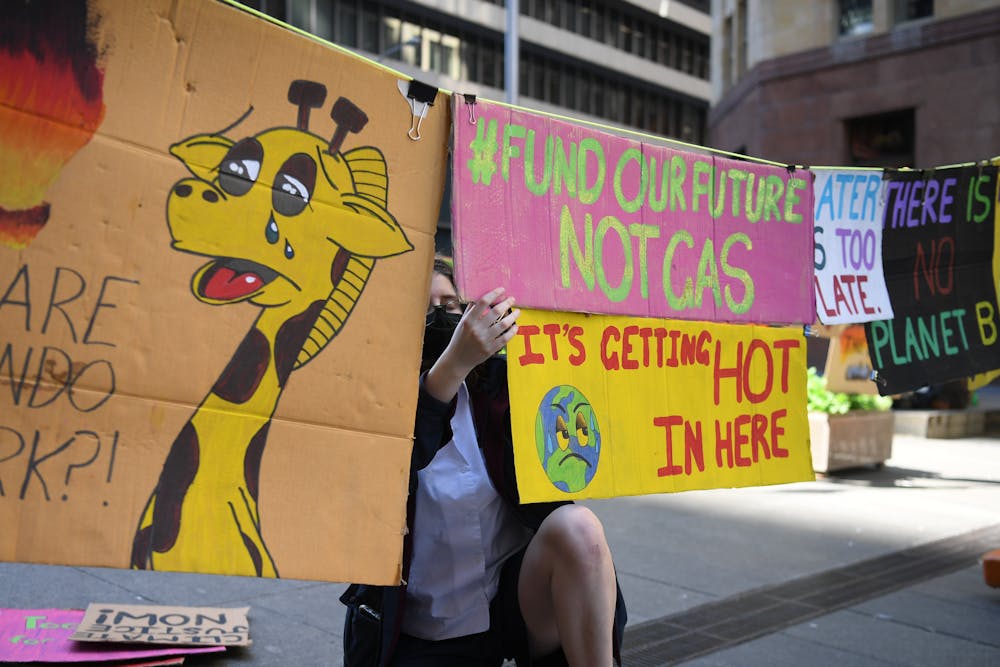
Students at a rally holding a sign against gas.
Most Australians want to see a renewables-led economic recovery from COVID-19. AAP Image/Dean Lewins

Seventy-one per cent want Australia to be a global leader in finding solutions to climate change, while 77% recognise tackling climate change can create opportunities for new jobs and investment in clean energy.

While all Australian states and territories have committed to net-zero emissions by 2050 or sooner, the federal government has not. But, once again, a majority of people would like to see otherwise: 68% support a net-zero by 2050 target for Australia. This is four percentage points higher than last year.

If we don’t implement meaningful and ambitious climate policy, Australia risks becoming even more of a climate outlier in the  international community than we already are.

The Climate of the Nation results clearly shows this goes against the will of the Australian people. Australia has a voting base that will support and reward ambitious climate action. Now is the time for political leaders to reflect this in the nation’s climate policy.

Wednesday, June 17, 2020

Revolutionary ideals of the Paris Commune live on in Black Lives Matter autonomous zone in Seattle

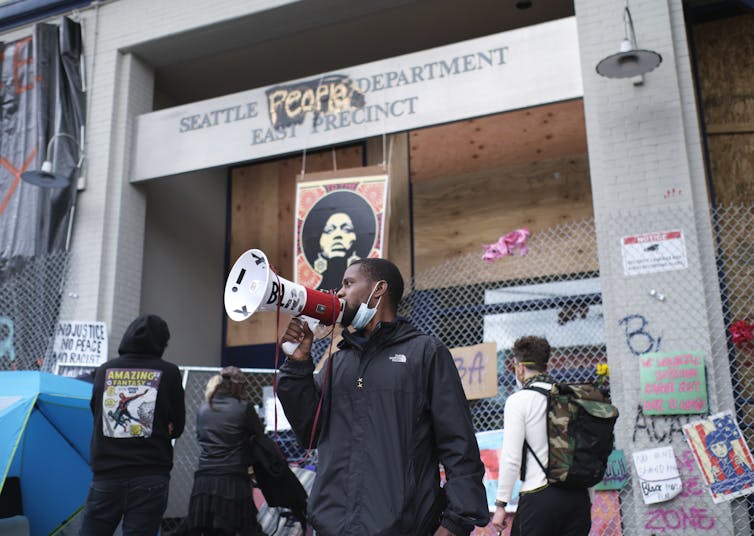
The Capitol Hill Autonomous Zone in Seattle. Stephen Brashear/EPA
A new autonomous zone set up in Seattle by the Black Lives Matter (BLM) movement bears some striking similarities with the Paris Commune of 1871. Despite its brutal ending, the seminal event in the French capital 150 years ago set the agenda for progressive urban politics and broader social justice movements ever since. But while what is happening in Seattle shares some of the political visions of the commune, it faces an altogether different and more sophisticated threat – of being co-opted by creative capitalists.
The Capitol Hill Autonomous Zone in Seattle – or Chaz as it has come to be known – was set up on June 8 in the Capitol Hill area of Seattle. It came about as a result of BLM  protesters moving in after the Seattle police abandoned the precinct due to clashes with protesters.
Since then, the protesters have barricaded the perimeter and set up a “no cop co-op” offering free water, hand sanitiser, face masks, food and other supplies. There are teach-ins, street art installations and other activities often associated with anarchist urban protest camps.

Centres of protest

Cities have been the focus of protests movements for centuries, because as urban sociologist Saskia Sassen has argued, the city has always been a place where the powerless can make history. As such, the creation of Chaz has the potential to cement the movement firmly within the pantheon of urban revolutionary histories. And given the list of demands that it has produced, which includes abolishing the police, retrials, amnesties for convicted protesters and rent control, there is a deeply radical politics at its heart.
So there are some obvious comparisons to make between Chaz and the Paris Commune. In Paris, the proletariat were reacting to their long economic oppression by the French elite. In response to an advancing French army looking to disarm them, they barricaded themselves in the capital.
The 2015 book Communal Luxury by the French culture and literature expert Kristin Ross paints a vivid picture of the Paris Commune as an important revolutionary moment. But more than simply accounting for the commune’s failure, she argued that its vision of a radically different world was more important than ever after the 2007-09 financial crash.

Communards with the Vendôme Column in 1871. André Adolphe Eugène Disdéri via Wikimedia Commons

In the three months that the commune existed, communards tore down imperialist statues such as the Vendôme column, changed the education system so that it empowered the working class and abolished the police. Debt was cancelled and rent suspended. There were street festivals and migrants, refugees and women were empowered. The commune, Ross argues so eloquently in her book, is more than a historical event; it is live resource that can also help us build a better world today.

Danger of co-option

Chaz creates a space for these radical politics to gestate, as a real-life urban laboratory of revolutionary thought.
But while there are certainly some similarities with the progressive ideals of the commune, there are some dangers too. The French capitalist state quickly and violently  massacred the commune’s inhabitants. While the Trump administration could potentially react with violence in Seattle, there is also the danger that the co-optive power of urban “creative” capitalism could soften – and eventually blunt – Chaz’s progressive ideals.
Similar autonomous zones have existed around the world for decades such as Christiania in Copenhagen, Denmark and  Užupis in Vilnius, Lithuania. But these and many others have become a kind of pastiche of their anarchist and anti-capitalist ideals. There may still be fundamental principles of solidarity, collective ownership and anti-capitalism within these places. However, they have become cocooned in a veneer of branding, advertising and commercialised and gentrifying versions of the “creative city”. This restricts and severely dilutes the dissipation of their ideologies.

An activist outside the abandoned police station in Seattle’s Capitol Hill neighbourhood. Stephen Brashear/EPA

With Chaz too, the lure of “protest chic” may be too much to resist – it is after all in Seattle, one of the US’s most heralded creative cities. For Chaz to resist this, it must resolutely be a space of the oppressed and the black voices of the movement. In essence, white people can help set it up and maintain it, but they must remain silent inside it and let the oppressed use the space to strategise and mobilise.
The Paris Commune didn’t end too well, and the murmurings from President Donald Trump are that the Capitol Hill Autonomous Zone may not last too long either. But that the commune is still taught and talked about today is testament to its lasting positive effect within urban politics. It may have been brutally quashed, but its anti-capitalist spirit set an example for nearly 150 years of subsequent urban struggles all over the world.
Cities have always been where the voiceless find their voice and articulate their demands most vociferously. For those who are deeply involved in the BLM movement (which should be all of us), let us hope that is still true.

Tuesday, October 9, 2018

What Would a Society Designed for Well-being Look Like?

Credit: Pixabay/GeraltCC0 Public Domain.
In early June of this year, the back-to-back suicides of celebrities Anthony Bourdain and Kate Spade, coupled with a new report revealing a more than 25 percent rise in U.S. suicides since 2000, prompted—again—a national discussion on suicide prevention, depression, and the need for improved treatment. Some have called for the development of new antidepressants, noting the lack of efficacy in current medical therapies. But developing better drugs buys into the mainstream notion that the collection of human experiences called “mental illness” is primarily physiological in nature, caused by a “broken” brain.
This notion is misguided and distracting at best, deadly at worst. Research has shown that, to the contrary, economic inequality could be a significant contributor to mental illness. Greater disparities in wealth and income are associated with increased status anxiety and stress at all levels of the socioeconomic ladder. In the United States, poverty has a negative impact on children’s development and can contribute to social, emotional, and cognitive impairment. A society designed to meet everyone’s needs could help prevent many of these problems before they start.
To address the dramatic increase in mental and emotional distress in the U.S., we must move beyond a focus on the individual and think of well-being as a social issue. Both the World Health Organization and the United Nations have made statements in the past decade that mental health is a social indicator, requiring “social, as well as individual, solutions.” Indeed, WHO Europe stated in 2009 that “[a] focus on social justice may provide an important corrective to what has been seen as a growing overemphasis on individual pathology.”
The UN’s independent adviser Dainius Pūras reported in 2017 that “mental health policies and services are in crisis—not a crisis of chemical imbalances, but of power imbalances,” and that decision-making is controlled by “biomedical gatekeepers,” whose outdated methods “perpetuate stigma and discrimination.” Our economic system is a fundamental aspect of our social environment, and the side effects of neoliberal capitalism are contributing to mass malaise.
In The Spirit Level, epidemiologists Kate Pickett and Richard G. Wilkinson show a close correlation between income inequality and rates of mental illness in 12 Organisation for Economic Co-operation and Development member countries. The more unequal the country, the higher the prevalence of mental illness. Of the 12 countries measured on the book’s mental illness scatter chart, the United States sits alone in the top right corner—the most unequal and the most mentally ill.
The seminal Adverse Childhood Experiences Study revealed that repeated childhood trauma results in both physical and mental negative health outcomes in adulthood. Economic hardship is the most common form of childhood trauma in the U.S.—one of the richest countries in the world. And the likelihood of experiencing other forms of childhood trauma—such as living through divorce, death of a parent or guardian, a parent or guardian in prison, various forms of violence, and living with anyone abusing alcohol or drugs—also increases with poverty.
Clearly, many of those suffering mental and emotional distress are actually having a rational response to a sick society and an unjust economy. This revelation doesn’t reduce the suffering, but it completely changes the paradigm of mental health and how we choose to move forward to optimize human well-being.
Instead of focusing only on piecemeal solutions for various forms of social ills, we must consider that the real and lasting solution is a new economy designed for all people, not only for the ruling corporate elite. This new economy must be based on principles and strategies that contribute to human well-being, such as family-friendly policies, meaningful and democratic work, and community wealth-building activities to minimize the widening income gap and reduce poverty.
The seeds of human well-being are sown during pregnancy and the early years of childhood. Research shows that mothers who are able to stay home longer (at least six months) with their infants are less likely to experience depressive symptoms, which contributes to greater familial well-being. Yet in the United States, one-quarter of new mothers return to work within two weeks of giving birth, and only 13 percent of workers have access to paid leave. A new economy would recognize and value the care of children in the same way it values other work, provide options for flexible and part-time work, and, thus, enable parents to spend formative time with their young children—resulting in optimized well-being for the whole family.
In his book Lost Connections, journalist Johann Hari lifts up meaningful work and worker cooperatives as an “unexpected solution” to depression. “We spend most of our waking time working—and 87 percent of us feel either disengaged or enraged by our jobs,” Hari writes.
A lack of control in the workplace is particularly detrimental to workers’ well-being, which is a direct result of our hierarchical, military-influenced way of working in most organizations. Worker cooperatives, a building block of the solidarity economy, extend democracy to the workplace, providing employee ownership and control. When workers participate in the mission and governance of their workplace, it creates meaning, which contributes to greater well-being. While more research is needed, Hari writes, “it seems fair ... to assume that a spread of cooperatives would have an antidepressant effect.”
Worker cooperatives also contribute to minimizing income inequality through low employee income ratios and wealth-building through ownership—and can provide a way out of poverty for workers from marginalized groups. In an Upstream podcast interview, activist scholar Jessica Gordon Nembhard says, “We have a racialized capitalist system that believes that only a certain group and number of people should get ahead and that nobody else deserves to … I got excited about co-ops because I saw [them] as a place to start for people who are left behind.”
A concrete example of this is the Cleveland Model, in which a city’s anchor institutions, such as hospitals and universities, commit to purchasing goods and services from local, large-scale worker cooperatives, thus building community wealth and reducing poverty.
The worker cooperative is one of several ways to democratize wealth and create economic justice. The Democracy Collaborative lists dozens of strategies and models to bring wealth back to the people on the website community-wealth.org. The list includes municipal enterprise, community land trusts, reclaiming the commons, impact investing, and local food systems. All these pieces of the new economy puzzle play a role in contributing to economic justice, which is inextricably intertwined with mental and emotional well-being.
In Lost Connections, Hari writes to his suffering teenage self: “You aren’t a machine with broken parts. You are an animal whose needs are not being met.” Mental and emotional distress are the canaries in the coal mine, where the coal mine is our corporate capitalist society. Perhaps if enough people recognize the clear connection between mental and emotional well-being and our socioeconomic environment, we can create a sense of urgency to move beyond corporate capitalism—toward a new economy designed to optimize human well-being and planetary health.
Our lives literally depend on it.
This article was first published in YES! Magazine.

Friday, August 19, 2016

Are We Feeling Collective Grief Over Climate Change?

Star Jet roller coaster after Hurricane Sandy (Wikipedia)
by Margaret Hetherman, Common Dreams: http://www.commondreams.org/views/2016/08/18/are-we-feeling-collective-grief-over-climate-change

In 1977, I was in middle school in Michigan, and a science teacher shared a tidbit off-curriculum.

Some scientists had postulated that as a result of "pollution," heat-trapping gasses might one day lead to a warming planet. Dubbed "the greenhouse effect," the image was clear in my 12-year old mind: people enclosed in a glass structure, heating up like tomatoes coaxed to ripen. It was an interesting concept, but something in the very, very distant future.

Fast-forward ~ 30 years later. The year was 2006, my daughter was three, and my dreams of a White Christmas were going to hell in a hand basket. There wasn't a snowflake to be seen in Brooklyn and it was DECEMBER - a far cry from childhood memories of jumping off the roof into fluffy mounds after a blizzard.

Something was awry. An Inconvenient Truth had just been released, and those graphs and slides were suspiciously coinciding with what we were beginning to see in the form of extreme weather, à la Hurricane Katrina. Any number of idioms might well have marked the juncture: "canaries in the coal mine" comes to mind.

"The disconnect is almost understandable: we are hitting tipping points of no return, etching our fate in glacial ice while the full consequence of our inaction remains hidden from view." So why weren't we coming together to nip this in the bud? Why were we failing to embrace what appeared to be so obvious?

The deterioration of our planet - the only home we have ever known and an assurance we used to take for granted - is bound to elicit a wide range of emotions in different individuals. Mourning is personal, but as a species, could it be that we are making our way through the stages of grief as outlined by the late Dr. Elisabeth Kübler-Ross?

Psychiatrist and climate activist Lise Van Susteren, M.D. doesn't necessarily think so. She points out that the Kübler-Ross framework was a response to people who hear devastating news and feel personally very involved, extremely vulnerable and know that the diagnosis is essentially inescapable. "That's not where most people are with climate," Dr. Van Susteren states. "It takes a long time for some people to lay down the sense within that something is true."

Yet she speaks of a collective anxiety that is insidious, even if we haven't managed to connect all the dots. "There isn't the slightest shred of doubt in my mind, that everyone on some level is anxious, deeply anxious, about climate change," the forensic psychiatrist says. She attributes her belief to decades of experience with people who have difficulty knowing what they are feeling on a deeper level, and she understands that anxiety comes from many headwaters.

"We can be anxious about ISIS, we can be anxious about our kids ... our health, our finances and all the rest. The confluence is such that it becomes amorphous and we walk around with a great deal of indescribable unease. And it can be either very difficult, or people will outright deny - depending on how deep or great their walls are - that it is coming from an overwhelming sense that the world is turned upside down from climate." 

Denial

Denial has been rampant since the earliest years of climate change awareness. Virtually every day brings reports of a new catastrophe. Bolivia's second-largest lake recently dried up and we won't soon forget the melting of tennis shoes at the Australian Open. Sure, there are cycles of nature to consider. But when you find yourself crossing Main Street in a rowboat on a regular basis? Or happening upon femur bones off the bank of Virginia's Tangier Island because the cemetery is underwater?

The disconnect is almost understandable: we are hitting tipping points of no return, etching our fate in glacial ice while the full consequence of our inaction remains hidden from view.

Dr. James E. Hansen, renowned climatologist and former Director of NASA's Goddard Institute for Space Studies in Manhattan speaks to the matter of timescale. "The problem is that the inertia of the system is not our friend," states the founder of and Adjunct Professor in Columbia University's Climate Science, Awareness and Solutions Program Earth Institute. It has caused the effects to appear only slowly. "That has been the fundamental difficulty. It looks like something in the far future."

Sitting across the table from the 75-year old scientist, it becomes rapidly clear that his greatest concern is for future generations. That, he says, was the point in writing his book, Storms of my Grandchildren. It also inspires his participation as guardian for future generations in a current landmark federal climate change lawsuit against the government for failing to protect children's constitutional rights to life, liberty, and property - a case that Dr. Van Susteren has collaborated on as well.

"These children are going to be around late in this century, so even though the large effects are not so soon, we can now see that they are going to occur if we don't rapidly phase down emissions," states Dr. Hansen. "And I think some of them - mainly the sea level issue - is [coming] sooner than has been assumed by many." Hansen believes people are moving in the direction of accepting that climate is changing and that humans are at least a factor if not the dominant factor.

But there is also the matter of our wiring.

"Denial is something that allows us sometimes to get through the day," says Dr. Van Susteren. "And in some cases that's really good, that's adaptive, but in other cases it's going to kill you ... and this one's going to kill you." 

Anger

While many in the denial camp have now set their tents up elsewhere, stragglers remain, buttressed by a heavily financed machine that has deliberately cultivated and preserved that pesky first stage of mourning. ExxonMobil and The American Petroleum Institute have long sowed doubt about the science behind climate change, taking their lessons from the tobacco industry playbook.

The Koch Brothers estimated by Forbes to be worth $44.2 billion each, have funneled mind-blowing sums through "charitable family trusts" and "think tanks" to influence policy and public opinion, planting seeds of uncertainty among the general public, and blocking attempts to regulate emissions, thereby ensuring that their pockets remain literally coated in oil.

What does it mean when our Senate Majority Leader urges the country's governors to defy regulations to reduce carbon pollution?

Some powerful forces have been messing with our opportunity to process the truth, and move beyond the stage of denial toward a stance of action. From where I sit, the angriest entities at the moment are those whose political and financial fortunes are at stake.

The truth is that our children, and their children, will be the ones to really know the rage. There's no telling how the devastation will play out, as the regions least responsible for the demise become uninhabitable; and the world as we know it, perhaps ungovernable.

"Right now, the path is, as the Buddhists like to say: if we're not careful we're going to end up where we're headed," offers Van Susteren. She believes we are headed to a place where the world will look at our country and recognize that our per capita emissions, the droughts, floods, and searing hot days will be "because we gaily or callously, or with willful ignorance went about our ways, consuming what we wished, emitting what we felt like." 

Bargaining

When the Kyoto protocol was signed in 1997, the atmospheric CO2 level was 368 ppm. Today, it stands at 404 ppm and I'm scratching my head because living in the Holocene has been good (think of it as "life with benefits"), and I'll be sad to lose Miami to the rising sea.

The lengths we've gone to with our bargaining, pollution trading, and decades-away targets are staggering. This year brought April in Paris and 175 countries signed a historic climate accord. The deal, which supports the cap-and-trade system, strives to keep global temps from rising more than 3.6°F by 2100.

Hansen, a proponent of an alternative Carbon Fee-and-Dividend model, argues that the UNFCC and IPCC scenarios assume negative emissions in the second half of the century, and that this will saddle young people with the task of having to phase out fossil fuels.

"They're going to have to somehow achieve negative emissions, which means you're going to have to suck that CO2 out of the atmosphere," says the scientist. "We have to make clear what the burden is, that we're leaving for young people."

The bottom line is that we best make haste. If a heat wave in Phoenix sounds brutal, consider Abu Dhabi and Dubai, which are slated for a heat index of 177°F during this century if we don't mitigate the magnitude of warming. 

Depression

In 2010, the NIH issued "A Human Health Perspective On Climate Change." The report portends dark consequences ranging from sexual dysfunction to the migration of large communities, hostile political environments, conflict, and war.

"Climate change has the potential to create sustained natural and humanitarian disasters beyond the scale of those we are experiencing today," reads the NIH report. "Extreme weather events, sea-level rise, destruction of local economies, resource scarcity, and associated conflict due to climate change are predicted to displace millions of people worldwide over the coming century."

But the future grief on our planet will not be like that of a natural disaster, according to Dr. Van Susteren, when there is a low point and then the worst is over - when people grieve, work together and then pick up. "The fingerprints of humans are all over the frequency and intensity of climate disasters ... what will happen when future generations look back and know that we could have taken action - that we knew - and we didn't?"

Dr. Van Susteren can't shake off a sense of shame when she speaks about how future generations will feel: "That we abandoned them willfully, negligently, intentionally, and out of dereliction of duty." 

Acceptance

Hansen, who first brought global warming to the attention of the Senate Energy and Natural Resources Committee 28 years ago, seemed initially taken aback by the proposition that humanity might be working through a framework typically associated with death and dying.

"That model sort of assumes that ... the consequences are all inevitable," expressed the man who is arguably the planet's most reliable champion of climate health. "So I'm not yet willing to accept that, and here’s the real story - that this is tragedy. Because it's avoidable."

Hindsight may prove the only true vantage by which to see how we've worked through the scaffold of bereavement, and it will be left to our progeny to judge whether we conducted business as usual, or reversed course when approaching the most critical thresholds.

Meanwhile, the cauldron simmers with a stew of emotions, actions and inactions. The realities hit closer to home with every Hurricane Sandy, each new Zika hot spot on the map, and with the ever-dwindling array of animals, from the Monarch butterfly, to the pelican and stork and 1300 other types of birds whose collective song, or lack thereof, might well serve as warning: we, too are a threatened species.

© 2016 Scientific American
Margaret Hetherman is a writer, editor and essayist. Her opinions have appeared in the Op-Ed pages of The New York Times, and other media work has appeared on CNN, MTV and the BBC.