Showing posts with label Cooperatives. Show all posts

Wednesday, January 22, 2020

How to Manage a 30-person Housing Cooperative

by Emily Bender, Shareable: https://www.shareable.net/blog/how-to-manage-a-30-person-housing-cooperative


I have continually been fascinated by the question of how to build a strong community through collaboration, especially in shared housing spaces. I live in San Francisco, California, which has one of the country's largest gaps in economic inequality. This in turn is fueling gentrification and community displacement
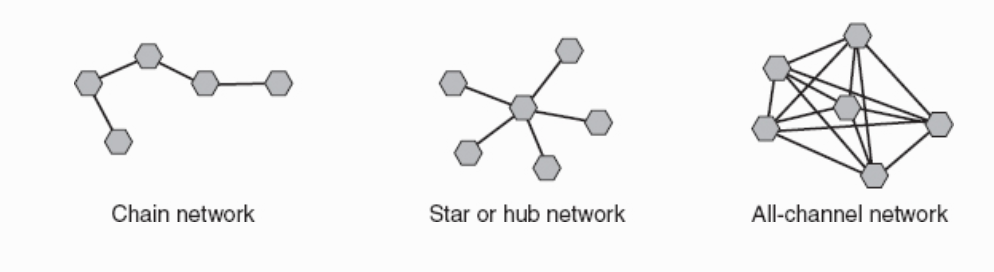
In response, people are turning to shared living communities such as the 30-person Chateau Ubuntu, a housing cooperative that I'm a part of. As opposed to traditional top-down hierarchy that incentivizes competition, our house is a complex series of "networks" that depend on the participation and collaboration of everyone. Untangling this complicated web of networks is key to understanding how we function together.
Our structure includes three distinct frameworks: the star, chain, and all-channel networks. As the most centralized, the star network acts as a central hub that all nodes of the network are connected and communicate through. While lacking a central hub, each node along the highly stratified chain network is connected along a predetermined path that obscures associations between nodes. 
Finally, the all-channel network is completely decentralized where all nodes are connected and can freely interact with each other. A visual representation of the three network styles is demonstrated below by John Arquilla and David Ronfeldt in their 2001 book on networks: 
We manage ourselves through seven decentralized working circles that (mostly) have free association with one another — like the all-channel network above. All circles are open for any housemate to join, and everyone must be a part of at least one circle. However, looking closer at circle operations reveal different degrees of centralized decision-making and chain communication. 
For example, all circles have rotating "lead" position, some of which are paid. The lead circle is responsible for facilitating that circle's tasks alongside acting as the circle's primary representative with the larger community. But beyond this each circle's structure diverges, and a brief overview of each is necessary in understanding how they work together:
Recruitment: The recruitment circle manages the task of bringing new people into our home. This group acts as a star network, where the individual tasks carried out by members of the circle, such as interviewing applicants, are all communicated back through the circle's lead. The recruitment lead then acts as a liaison between potential applicants, exiting house members, and the rest of the community.
Food: The task of sharing food — one of the powerful ways we connect and collaborate — is carried out through an "all channel" network, which helps us navigate complex logistics. All housemates pay a fee towards buying groceries in bulk — together accessing cheaper prices for groceries than we would ever find individually. The majority of our food is delivered through two local food distributors, Veritable Vegetable and Imperfect Produce. We also have deals at the Sunday farmers' market.
Labor: The labor circle oversees our chore system to make sure the common spaces are tidy. This includes facilitating monthly deep cleaning sessions, ensuring appliances and other things in the household are functioning well, and, in conjunction with the recruitment circle, onboarding new house members.
Events: The events circle, an entity without a rigid form, organizes fun gatherings like talent shows, live music, dance classes, game nights, writing workshops, and even a live dating game show. Living together with a multitude of people from a diversity of places and cultures opens incredible opportunities for continuous education, sharing, and fun.
Sustainability: The sustainability circle, like the events circle, doesn't have specific day-to-day tasks, but is instead responsible for lowering our household's environmental impact.   
Finances: Besides overlooking the house budget and rent collection, the finances circle is crucial for other working groups that make regular purchases — such as food and labor. While the circle itself manages the flow of funds, the whole community determines the allocation. In this sense, this circle most resembles a chain network, carrying out the decisions made by the larger community.   
Community Wellness: This circle, in which I currently serve as the lead, serves as a support system that bridges the working circles and the larger community together. We act as first-line mediators in interpersonal conflict issues. If initial mediation is unsuccessful, then the issue is brought to the rest of the wellness team, and if escalation continues, it's brought to the larger community.
Integrating all three network styles allows us to successfully maneuver the tension between having an organized framework to maintain a cohesive, happy household and one that is dynamic and open to changing needs of our housemates. However, to make this function smoothly requires buy-in from all members. We aim to reaffirm our commitment at our bi-monthly, all-house meetings, where the circles report on their progress to the entire community. 
We find that this is usually when most conflict arises — but we work together to address triggers and fill in gaps in our structure. Doing this ensures that we're all taking responsibility for each other's well-being and creating experiences that wouldn't be possible if we went at it alone.
All images provided by Emily Bender

Tuesday, November 6, 2018

Creating the Everyday Commons: The Need to Consider Space in Sharing Initiatives

Analysis: Imagine living in a neighborhood where you can learn from your neighbors, grow your own food, participate in your child's education, and invest back to your community's well-being through your daily transactions. If you're reading this article, you're probably interested in or already involved in a community garden, daycare cooperative, trade school, tool library, or other hyperlocal initiative. These projects, which can be found all around the world, allow communities to build their collective agency in solving everyday needs and create a local sharing culture, thus providing an alternative for more sustainable and socially just communities.
While the field of "urban commons" has been around for a while, there's limited research that investigates the relationship between initiatives like those listed above and physical space. My doctoral research at Carnegie Mellon University's School of Architecture in Pittsburgh, Pennsylvania, takes upon this exciting challenge of identifying spatial patterns of sharing practices. 
In my research, I'm drawing from the fields of the commons, social practices, human behavior, architecture, and urban design, while investigating four contemporary case studies of sharing culture in London, U.K., and Athens, Greece. I'm interested in learning what a daycare cooperative, an alternative currency, a cultural center, and self-governed refugee shelter have in common with regards to their spatial attributes. Some of my early findings might be useful to others researching sharing and the commons, but more importantly, I think they can be insightful to those who are on the ground, working on amazing sharing and collaborative initiatives.
So, what have I learned so far?
Space acquisition and appropriation: In their early stages, sharing programs tend to run into the challenge of acquiring a space. Many cities often limit themselves to residential and commercial uses, with very little opportunities for communal, nonprofit uses. Even after a group has found a space, it is usually a space not designed for sharing. Given the inherent dynamism of sharing initiatives' activities, they tend to be creative in appropriating their spaces to accommodate emerging needs. Towards that end, a large open floor-plan space is usually preferred as it allows for flexibility and can afford a wide range of activities.  
Identity and interactions: Sharing initiatives aspire to engage with the wider public by being open and accessible to all. To this end, it's important to consider the spatial attributes of a place — large, open doors, for instance, serve as porous spaces, inviting people outside of the group inside. However, beyond the physical "openness" of the space, there are non-spatial conditions such as territoriality and the projected identity of the group that can create barriers between the initiatives and the adjacent community. In those cases, the group needs to make an effort to engage with the neighborhood by extending its activities to adjacent public spaces. Nearby parks, sidewalks, or squares could be instrumental in providing a fertile ground for facilitating interactions between the initiative and those who may not have made it to the group's physical location.
Local ecosystem: Finally, for an initiative to be fully supported, it needs to be embedded in the daily routine of the people involved. The proximity of people's homes to the space is critical. That does not necessarily mean that sharing initiatives should be located in purely residential areas. Finding a place that has a good mix of residential area and local commerce is important for the initiatives to place themselves within a supportive ecosystem of people, organizations, and businesses.
This piece is based on the paper "Creating the Everyday Commons; Towards Spatial Patterns of Sharing Culture," published by Bracket Magazine.

Saturday, September 29, 2018

A Boost for the Worker-Owned Economy: A New Measure Will Make it Easier for Retiring Owners to Sell Their Businesses to Employees—and Save Jobs Into the Bargain

Photo by Ian Spanier/Getty Images
Business owners looking to sell their companies to their employees just got a helping hand from the federal government. It’s the first such measure that’s passed Congress in more than 20 years.
Tucked into the omnibus National Defense Authorization Act signed by President Trump in August 2018 was language directing the U.S. Small Business Administration to help retiring owners sell their businesses to their employees, either as a worker cooperative or as an Employee Stock Ownership Plan.
The measure was backed by an array of nonprofit advocates of employee ownership, including the ESOP Association, the National Urban League, the American Sustainable Business Council, and the U.S. Federation of Worker Cooperatives. According to Melissa Hoover of the nonprofit Democracy at Work Institute, it is the first federal legislation ever to explicitly name worker cooperatives as an SBA priority.
The help appears to be timely, as retirement looms for a “silver tsunami” of business owners. According to the Harvard Business Review, 2.3 million companies are owned by baby boomers, half of whom are expected to retire in the next 10 years. Those companies employ 25 million people.
As that wave of retirees breaks, business owners don’t have many options. Most do not have children who want to run the business, according toJoseph Blasi and Douglas Kruse, professors at the Rutgers School of Management and Labor Relations. Studies show that many will simply close up shop, with their employees losing their jobs. Some may sell to a competitor such as another local company, a larger publicly traded corporation, or a private equity fund—options that also can trigger job losses.
“That makes selling their businesses to the workers who helped create all the value in the first place one of the best options available,” Blasi and Kruse wrote in The Conversation. “It not only helps secure the owner’s retirement but also leaves behind a legacy in the local community.”
The SBA sets the legal standards for what qualifies as a small business, and the standard varies by industry.
The new federal law directs the SBA to use its nationwide network of nearly 1,000 Small Business Development Centers to educate owners about selling to their employees. One obstacle, however, is that owners commonly want or need an immediate cash payment, which employees can rarely afford.
The law addresses that problem by authorizing the SBA to use its 7(a) loan guarantees for such buyouts. The SBA does not make the loans, but its guarantees mean that intermediaries such as banks are much more willing to make the loans. For 2018, Congress authorized the SBA to guarantee up to $28.5 billion for those loans.
Hoover cautions, however, that despite the law and loan guarantee authorization, “we can’t assume employee ownership will be a priority for the SBA. We must help make it a priority. The legislation is well-written, so now our work is to support the implementation to make sure it meets our needs.”
In 2016, the Democracy at Work Institute convened a Workers to Owners collaborative to expand the number of providers assisting with employee-to-owner transitions. Hoover noted, “now the national network is well-positioned to coordinate efforts in implementing the new law.”
Marjorie Kelly of the nonprofit Democracy Collaborative has found that retiring owners are often concerned about their employees losing their jobs. She has cited Galfab, a company that makes waste-hauling equipment in rural Indiana, as an example of a company that made a successful transition to employee ownership.
“Taking care of all the employees was foremost in our mind,” CEO Jerry Samson said when he announced the sale of the company to his employees. Kelly said that Samson decided not to take the highest bid he received for the company because he didn’t want the company sold and moved to some other place, with all those people losing their jobs.
Employee ownership is viewed by many advocates as a fundamental building block for a just economy because workers can have a say in the company’s management and share in the benefits of its success. A growing body of data supports the advantages for workers. A study from the National Center for Employee Ownership reveals that in the last recession, employee owners were four times less likely to be laid off, have two and a half times more money in their retirement accounts, and receive 5 percent to 12 percent more in wages than those in comparable non-employee-owned companies.
That information, alongside a growing concern with economic inequality, is spurring bipartisan interest in employee ownership. U.S. Sen. Kirsten Gillibrand, (D-New York) who introduced the employee-ownership bill in the Senate, had three Republican and three Democratic co-sponsors.
“There’s a reason employee ownership has been favored by people as diverse as Ronald Reagan and Bernie Sanders,” Kelly said. “It works, both as a business proposition and as a pathway to a more democratic economy that works for everyone.”
The bipartisan enthusiasm is significant, Kelly said. “We have the opportunity to bend the curve of history. We can watch these 2 million baby boomer-owned businesses close or be absorbed by big companies, with the accompanying layoffs and job loss. Or we can have a major national commitment to moving these companies into employee ownership, reducing inequality, spreading asset ownership, and rebuilding the middle class.”
One form such a government commitment could take is a much larger loan-guarantee program for employee ownership, similar to federal home loan programs. This could double the number of employee owners in a decade, from 14 million today to 27 million.
“After World War II, we made a commitment to broad-based home ownership. We can now do the same for enterprise ownership,” Kelly said.

Tuesday, July 31, 2018

CASE STUDY - Remembering 1968: The Hackney Centerprise Co-operative

by Tom Woodin, History Workshop: http://www.historyworkshop.org.uk/remembering-1968-the-hackney-centerprise-co-operative/#more-8593

There has been a tendency to downplay the significance of the radical claims of the 1960s, not least among those in that age group who feel estranged from the ‘1968 generation’. On one episode of the BBC’s Strictly Come Dancing, for example, judge Len Goodman repeated an expression I have heard many times, that ‘I was born in the war,’ followed by a poignant silence, a means of asserting continuity, even though the 1939-45 conflict had nurtured social change. 
In reality, we are still living with the complex implications of the explosive impact of the 1960s. The changes permeated social, political, economic and cultural forces, and, after the visible demonstrations against Vietnam and other issues died down, many radical ventures were seeded that would set down roots in the 1970s. One of these ventures was Centerprise, a voluntary association which engaged with working class communities in Hackney, London.
           Centerprise photographed by Sherlee Mitchell. © Sherlee Mitchell / Bishopsgate Institute
Centerprise started working with young people and provided a safe space where they could play chess, write poetry, socialise, form bands and publish books. The impulse rapidly proliferated into welfare rights, childcare, adult literacy, community writing and publishing, a bookshop, coffee bar and meeting rooms, all under the one roof on Kingsland High Street in Hackney – a lime green building. Centerprise welcomed gardeners, Black power groups, Leninists, Conservative Party members who turned up their noses at workers as well as the ‘scowling’ left-wing groups who had their eyes on state power rather than community organising.

Left; Centerprise drawn by Doffy Weir in the 1970s, © Doffy Weir / Bishopsgate Institute | Right; A meeting held in the unfinished coffee bar at 34 Dalston Lane, early 1970s. © Tom Wilson / Bishopsgate Institute

In a book published in 2017, The Lime Green Mystery; an oral history of the Centreprise co-operative, Rosa Schling has captured the feelings, emotions, experiences and dilemmas of the people who created this social experiment. The book takes the reader on a guided tour of the building, visiting rooms where many different activities and relationships were developed. The book is an outcome of the project A Hackney Autobiography run by On the Record and funded by the Heritage Lottery Fund. The Centerprise archive, including oral histories by On the Record trained volunteers, is now housed at the Bishopsgate Institute; audio tours bringing the archive to life are freely accessible online and on iTunes & Android app;  events and workshops were held; and learning resources developed.
Despite the thematic organisation, the book betrays a chronological trajectory familiar to voluntary groups. The early phase was characterised by an assortment of anarchic and charismatic individuals who campaigned and brought the thing into being, imbuing it with a vision and purpose. For co-founder Margaret Gosley, one starting point was sitting in a bus shelter in Brighton with pioneering publisher Glenn Thompson, denouncing the wealthy and putting the world to rights. The towering figure of Thompson cast a long shadow over Centerprise, importing ideas from the USA civil rights movement, not least the mix of coffee shop and bookshop. 
Richard Gray, who went on to form the Peckham Publishing Project, was awe-struck on first meeting Glenn: ‘his Afro… his Cuban heels, cool jeans and leather jacket… He was like I imagined Malcolm X or Stokely Carmichael…’. One commentator noted how leaders could emerge naturally at Centerprise, like one who ‘strode into Hackney much as his ancestors had gone off into distant parts of the empire to bring the British way of life to the natives’ – reminiscent of ‘Barrington’ in Robert Tressell’s Ragged Trousered Philanthropists. Despite a suspicion that some saw themselves as ‘intellectually superior’, over time, sympathetic relations developed and, for people such as the author Roger Mills who frequented Centreprise in the mid-1970s, it represented a university experience which nurtured a new way of thinking.

Young customers of Centerprise outside the entrance, early 1980s. © Wendy Pettifer / Bishopsgate Institute

The powerful individuals of the initial phase gave way to a collective working pattern in the second which fostered a symbiotic relationship between self-help and campaigns for change. For instance, while a playgroup was organised along lines of parity with council services, Centerprise simultaneously agitated for better facilities elsewhere. Smalley Road Estate residents were supported in collating their experience of living in poorly built new flats, organising meetings, arranging technical surveys and publicising the results through the papers and TV. 
A sense of professionalism meant that Centerprise treated residents more like customers than clients, breaking out of a social services typology. There was also a strong vein of opposition to staff becoming famous or gaining kudos from their work. Janet Rees was absolutely forbidden from appearing on TV in relation to her work on the Smalley Road campaign. The resistance to ‘personality politics’ echoed her Baptist childhood in Wales, ‘you work hard, you’re very self-effacing, you’re very modest, you put yourself to the back of the queue.’ 
Dedication to this quasi-religious cause was shown by workers putting in 70 hour weeks, which nurtured a form of hermetic living that took its toll on personal relationships while giving rise to new ones: ‘We were just always there. It was like joining a monastic order, except that you could still have sex…’ As a collective, Centerprise was inevitably torn betweeen prioritising the needs of the wider community and those of staff working in the collective. Working relations were to prefigure broader social change, yet the politicisation of everyday life, which allowed people to raise important issues, could be wearing when acrimony and scapegoating infused meetings. The impulse to include everyone also became testing in dealing with the glue-sniffers and other difficult characters who made Centerprise their home.

Centerprise coffee bar, 1980s. © Maggie Hewitt / Bishopsgate Institute

Crucially, Centerprise championed the democratisation of history and literacy, which built upon the early work of the History Workshop movement. Researching worker writers and community publishers, I found Centerprise to be one of the most significant examples in Britain and internationally. The Hackney Reading Centre, which ran from the mid-1970s to the 1990s in a room at the top of the Centerprise building, organised adult literacy classes with a focus on writing and publishing about student experience. The learner’s experience helped to locate them as expert and stimulated many debates with tutors and workers. It paralleled the impressive work of the publishing project that promoted local writers in a wide range of publications. The scale and scope of publishing required a lot of investment but emerged out of a desire to represent sympathetically and promote the lives of local people – the ‘irrepressible beauty’ in Vivian Usherwood’s poems, the still vibrant poetry of Hugh Boatswain or the autobiographical work of Ron Barnes and others.
Alongside widespread debates over the representation of class, race, gender, disability and sexuality, simple but poignant memories relate to the smells, sights and feel of participating in this cultural democracy. As the magic of printing became available for popular consumption, recalling the paper and the whiff of glue evoked the magic of creation arising from a physical process. Neil Littman recalled: ‘I remember Letraset type. I seem to remember it involved some type of carbon paper impression on it and paper being churned through a roller. I remember the pasting up of the artwork was done with little bits of paper and glue. I remember the smell of it.’ Taste was also a cue to conjure up the characters who worked in the café, especially when staff roles were rotated which meant that mediocre cooks exchanged places with skilled ones – red snapper roti and jerk chicken on the good days, less appetising fayre on others.
In the early 1990s, following financial irregularities, the collective arrangements ceased and a manager was appointed. Centerprise activity would also be re-directed to serving the black community more explicitly. This is an aspect of the history into which this book does not really delve in great depth and it creates the feeling that there was more than one Centerprise. The project is now closed, a loss which coincides with a period of greatly rising inequality and social cleansing. Centerprise was a space where new relationships, identities and practices were constructed. The Lime Green Mystery repopulates this rich history on the page. It remains a resource for thinking about the future.
Rosa Schling’s The Lime Green Mystery: an Oral History of the Centerprise Co-operative was published in 2017 by On the Record. 
Tom Woodin is a reader in the social history of education at the UCL Institute of Education. He has written about history of education and the co-operative movement and, most recently, is the author of Working-class writing and publishing in the late twentieth century: literature, culture and community, Manchester University Press, 2018. He also writes about the co-operative movement and the history of education and coedits the journal History of Education.

Thursday, June 14, 2018

INTERVIEW: Cooperation Jackson's Kali Akuno - 'We're trying to build vehicles of social transformation'

We are witnessing the rise of a solidarity economy movement, stretching from the Atlantic to the Pacific, including organizations like Cooperation Worcester in Massachusetts, Cooperation Humboldt and Cooperation Richmond in California, and Cooperation Jackson in Mississippi, among others. One of the leaders of this movement is Kali Akuno, co-founder and co-director of Cooperation Jackson, who recently wrote a book titled "Jackson Rising: The Struggle for Economic Democracy and Black Self-Determination in Jackson, Mississippi." Akuno was born in Los Angeles, California, and grew up in a working-class community where he watched the devastation brought by deindustrialization and the gang wars that hit L.A. in the 1970s, 80s, and 90s. His family was deeply involved in various social movements, particularly the Afrikan People's Party. Akuno was raised in a world marked by violent poverty, as well as radical activism. Akuno moved around in California and eventually wound up in Jackson, Mississippi. We spoke with Akuno about his work with Cooperation Jackson, the broader solidarity economy in general, and what particular challenges working-class African American communities are experiencing in the deep south.
Robert Raymond, Shareable: So how did you end up in Jackson, Mississippi, as director of Cooperation Jackson, having been born and raised in California?
Kali Akuno, co-founder of Cooperation Jackson: So, I have a kind of varied background, particularly leading up to Cooperation Jackson. it really started in the early 2000s when I was the director of the School of Social Justice and Community Development in Oakland, California. During the second year of that project, I just woke up one night with a terrible nightmare. The nightmare was about, what were we really doing to prepare the kids we had recruited, in terms of a job, in terms of opportunity? Just kind of recognizing that given the shift of the economy that much of what we were preparing for was going to be rapidly becoming obsolete and that this was a population that was going to become increasingly more and more disposable.
I just woke up feeling like I kind of set these kids and their parents up with false hopes and false expectations. I just couldn't live with that. So I started on a journey trying to figure out what could be done. What could working-class people — particularly black working-class people — what could we do to put more direct control and power in our own hands, toward shaping the economy, creating the economy that would serve us and serve our needs. That led me back to a road of really looking at and analyzing worker cooperatives and other types of solidarity economy institutions.
So then from that, I was a member of the Malcolm X Grassroots Movement and the New Afrikan People's Organization, and it was in the course of mid-2000s where we developed what became known as the Jackson-Kush Plan [a vision, starting in 2007, put together by a number of different organizations, including the Jackson's People Assembly, to create jobs with rights, dignity, and justice that generate wealth and distribute it equitably based on the principles of cooperation, sharing, solidarity, and democracy].
One of my major contributions to that plan was really incorporating the Solidarity Economy framework within it and contributing what I had studied from a deep, deep dive into a study of the Mondragon and Emilia Romangna cooperatives — as well as some of the work that was being done by that Zapatistas. So, I just really brought that to the fore and tried to incorporate that within the Jackson-Kush Plan, which eventually wound up becoming a core component of debate and study within that organization. As we launched a major phase of that plan's execution in 2013 with the with the election of Chokwe Lamumba to Mayor of Jackson, one of the main things that we were trying to move and shift as a result of pursuing that office was changing some of the municipal policies to make it so that it would be easier for a grassroots communities, working-class communities, to actually develop cooperatives to make a contribution towards the local economy, but also to put more direct control in worker hands. Unfortunately, Chokwe died shortly after, too soon before we could really execute what we all had in mind in terms of those policies. But the plan to move forward and to try to execute that vision, that moved forward and that became Cooperation Jackson. So that's kind of how I got involved, and that's part of the core genesis of how Cooperation Jackson got started.
So how would you describe Cooperation Jackson today?
Cooperation Jackson is an emerging network of cooperatives supporting solidarity economy institutions that are working to transform Jackson, its economy, and the social relationships. It's starting with the establishment of more equity in the community but overall it's trying to end some of the old school, longstanding differentials in the power that exists in the economy here locally. But to also be a model of the transformation of a more ecologically and regenerative way of doing production and putting the means of production directly in the hands of members of the community. So that's just a short bit of what we're trying to do, what we're aiming to do, and what we're on the on the road to do.
What do we need to know about Jackson, Mississippi, to understand why this project is so important?
Some key things I think to understand about Jackson, Mississippi. Number one: it's the capital of the state of Mississippi, it's a city roughly about 200,000 people. It's over 80 percent black. If you follow the federal regulations, it's overwhelmingly poor with more than twenty percent officially below the federal poverty line. We would argue that the real unemployment rate is between forty and fifty percent.
And then we exist in the larger context. This is the largest city in Mississippi, but it exists as a progressive bubble in a very red and ultra-reactionary state. … I think to understand Jackson and what's been going on here, and some of the success that we've had, is that we've been living with the politics that everyone else is now also experiencing with the Trump regime — the kind of virulent racism, the outright misogyny, you know the viciousness, we've been living with that for quite some time. That has been the norm and order of the day here in Mississippi for well over 50 years. Not much has really changed in that regard into the politics.
It produces a certain level of clarity that you have in the community's minds about what their interests are, and who's opposed to those interests, that I think has made some of the different aspects of the work that we've been trying to do somewhat simple. That clarity enables our work to really move in a way that may be a bit harder in other communities. That's a critical thing to understand. That doesn't mean that there’s still not a great deal of organizing work that has to happen, but for us, trying to convince people that there are problems is the easy part — that you don't really have to sell to anybody. The challenging part is what is your solution and is it viable? That is where there's a lot of organizing work that has to be done to convince people that doing economics in a different way is a viable alternative that can challenge the stranglehold of the powers that be. So, first and foremost, we're putting forward as solid a vision as we can to get people to see a different future as possible, and then to work our way towards building the models and the institutions that we need — to actually live, breathe, practice, and embody the vision that we want to see.
What is the connection between cooperatives and economic democracy in Jackson? And what other new economics interventions are you exploring?
A core element that cooperatives speak to are questions of self-reliance and self-sufficiency, particularly regarding historically oppressed, exploited, and marginalized communities. In order to change that situation it has to start from within, and with the resources and the talents that you yourself possess. We've got to be very clear that there are no external saviors coming to save the day. And that our liberation is in our own hands ultimately. So just starting with the clear foundation which I think Mississippi brings to bear every day, that the search for solidarity really starts within, within your own community and folks who are sharing similar experiences. So that kind of foundation runs through the black community particularly here given the circumstances I just described.
Another key thing that I will say is that the solidarity economy is not something that we have to invent or parachute or convince people of. Given the vast majority of people's economic situation, if there wasn't some level of solidarity that people were practicing — particularly with their families and their extended loved ones — many people just wouldn't make it through the day or the month. You know, paying bills, eating, providing child care support to each other. There's a great deal of solidarity that already exists as an informal solidarity economy, and what we're just trying to do in many respects is to build on that foundation and move it from an informal set of practices and relationships to a more formal set of practices and relationships, and create a dynamic wherein, you know, people can exchange, trade, and barter, and still share with each other across familial relationships or just basic communal relationships. And trying to scale that up so that we can do time-banking, perhaps throughout the city in the next couple of years. We're also working on an alternative currency. You know, so this organic composition already exists in that community and our challenge is how to connect it much more explicitly to the formal piece.
It really sounds like Jackson is up against a lot, with the far right in political power and having been entrenched in a kind of structural racism for decades — centuries. Do you think that things like alternative currencies, or even cooperatives alone, can transform the economy of a place like Jackson?
So, that is where the politics have to come in very clearly, and where we try to interject them very clearly. It's to say that we're not just trying to build cooperatives for cooperatives' sake. We're trying to build vehicles, very explicitly and very intentionally, of social transformation. What we're trying to do is fundamentally change the relations of production in our community. If people can create their own livelihood, I won't say business, because it's more than just business — but if we can create and control own livelihoods, it eliminates the long legacy of exploitation, of abuse, that people — particularly black people — have suffered in this community.
We believe that you have to have very explicit and intentional politics that goes along with the development of cooperative businesses and enterprises, so people are very clear on why they are trying to build a certain level of equity and what we hope that will lead to. You know, if we change the social relationships, we change the balance of power in this society and remove people from being in positions of dependency — particularly economic dependency — and move them to places of being able to exercise real strength because, say, they control their own resources and they're not afraid of somebody kicking them out of their house, or they’re not afraid of somebody firing them from a job. That control gives you far more power to say what you want, and to do what you want, and to exercise your own will when you control those fundamental basics.
This Q&A has been edited for length and clarity.
Hear more from Kali Akuno in Upstream's latest episode — part two of their worker coop series. Listen to the episode here.
Header image of Kali Akuno courtesy of Cooperation Jackson.