YOUR RESOURCE FOR OVERCOMING THE ENVIRONMENTAL, SOCIAL, AND POLITICAL CRISES OF THE 21ST CENTURY THROUGH THE GREEN TRANSITION, COMMUNITY BUILDING, AND UNDERSTANDING OF SOCIETY THROUGH SOCIOLOGICAL THEORY AND PRACTICE
Every semester in which I teach a course on Muslims in the Civil Rights Movement at Southern Methodist University, I give my students a selection of quotes from both Martin Luther King Jr and Malcolm X and ask them to guess who said what. So for example, I will posit the following two quotes and ask for their proper ascription:
“Ignorance of each other is what has made unity impossible in the past. Therefore, we need enlightenment. We need more light about each other. Light creates understanding, understanding creates love, love creates patience, and patience creates unity. Once we have more knowledge (light) about each other, we will stop condemning each other and a United front will be brought about.”
“The majority of white Americans consider themselves sincerely committed to justice for the Negro. They believe that American society is essentially hospitable to fair play and to steady growth toward a middle-class Utopia embodying racial harmony. But unfortunately this is a fantasy of self-deception and comfortable vanity.”
And every single time, they have been unable to identify the first quote as belonging to Malcolm, and the second to Martin. But it is not just a few students that have gotten it wrong. The American education system and most mainstream portrayals of Martin and Malcolm have been simplistic and sanitising.
Martin is the perfect hero who preached non-violence and love, and Malcolm the perfect villain who served as his violent counterpart, preaching hate and militancy. The result is not just a dishonest reading of history, but a dichotomy that allows for Dr King to be curated to make us more comfortable, and Malcolm X to be demonised as a demagogue from whom we must all flee. Reducing these men to such simplistic symbols allows us to filter political programmes according to how “King-like” they are. Hence, illegitimate forms of reconciliation are legitimised through King and legitimate forms of resistance are delegitimised through Malcolm X.
Malcolm was never violent, not as a member of the Nation of Islam, nor as a Sunni Muslim. But Malcolm did find it hypocritical to demand that black people in the United States commit to non-violence when they were perpetually on the receiving end of state violence. He believed that black people in the US had a right to defend themselves, and charged that the US was inconsistent in referencing its founding fathers’ defence of liberty for everyone but them.
Malcolm knew that his insistence on this principle would cause him to be demonised even further and ultimately benefit the movement of Dr King, which is exactly what he had intended. Just weeks before his assassination, he went to Selma to support Dr King and willingly embraced his role as the scary alternative. In every interview, in his meeting with Dr Coretta Scott King, and elsewhere, he vocalised that the US would do well to give the good reverend what he was asking for, or else.
But he never actually said what the “or else” was, placing a greater urgency on America to cede to King’s demands. Malcolm had no problem playing the villain, so long as it led to his people no longer being treated like animals. And while King may have been steadfast in his commitment to non-violence, the thrust of Malcolm fully served its purpose.
As Colin Morris, the author of Unyoung, Uncolored, Unpoor wrote, “I am not denying passive resistance its due place in the freedom struggle, or belittling the contribution to it of men like Gandhi and Martin Luther King. Both have a secure place in history. I merely want to show that however much the disciples of passive resistance detest violence, they are politically impotent without it. American Negroes needed both Martin Luther King and Malcolm X …”.
But it was not just that Malcolm and Martin had complementary strategies to achieve black freedom, they also spoke to different realities. Malcolm spoke more to the Northern reality of black Americans who were only superficially integrated, whereas Martin spoke to the Southern reality where even that was not possible.
Malcolm also spoke to the internalised racism of black people that was essential to overcome for true liberation. As the late James Cone states, “King was a political revolutionary. Malcolm was a cultural revolutionary. Malcolm changed how black people thought about themselves. Before Malcolm came along, we were all Negroes. After Malcolm, he helped us become black.”
That is why, despite the diminishing of Malcolm in textbooks and holidays, he has been consistently revived through protest movements and the arts. He has lived through the activism of the likes of Muhammad Ali and Colin Kaepernick, inspired the black power movement, and been an icon for American Muslims on how to exist with dignity and faith in a hostile environment.
And even in those claims to Malcolm as a symbol, Malcolm himself in the fullness of his identity is erased. In championing his movement’s philosophy, some seek to secularise him, intentionally erasing his Muslim identity. And in championing his religious identity, others seek to depoliticise him. This was a tension that Malcolm noted in his own life, saying: “For the Muslims, I’m too worldly. For other groups, I’m too religious. For militants, I’m too moderate, for moderates I’m too militant. I feel like I’m on a tightrope.”
Muslims too should be cautious not to sanitise Malcolm, as the US has sanitised Dr King. To restrict Malcolm solely to his Hajj experience is similar to restricting King solely to his “I have a dream” speech. Malcolm was a proud Muslim who never stopped being black. And while he no longer subscribed to a condemnation of the entire white race, he was unrelenting in his critique of global white supremacy.
Malcolm was consistently growing in a way that allowed him to not only champion his own people’s plight more effectively but to tackle a broader set of interconnected issues. And while history seems to posit Malcolm as his polar opposite, Dr King had begun to articulate many of the same positions that made Malcolm so unpopular.
In the words of the great James Baldwin, “As concerns Malcolm and Martin, I watched two men, coming from unimaginably different backgrounds, whose positions, originally, were poles apart, driven closer and closer together. By the time each died, their positions had become virtually the same position. It can be said, indeed, that Martin picked up Malcolm’s burden, articulated the vision which Malcolm had begun to see, and for which he paid with his life. And that Malcolm was one of the people Martin saw on the mountaintop.”
Perhaps it is time we ask why we only seem to celebrate one of them.
The views expressed in this article are the author’s own and do not necessarily reflect Al Jazeera’s editorial stance.
It’s a cold winter morning in deepest rural Wales and Cassandra Lishman steels herself to face dawn’s frosty bite. She wakes up her 15-year-old son and 17-year-old daughter and leaves the insulated warmth of their cobwood roundhouse. She feeds the dogs, lets the chickens out of the coop and ambles up the hill to smash the ice in the sheep’s drinking trough. Her daughter feeds the horses, and her son lights a fire to kickstart the house’s solar thermal heating.
In the afternoon, she harvests leeks for dinner and cuts up a batch of pumpkins to put in the freezer - to make space she takes out some red-currants and starts the week-long process of making jelly. In the summer, there’ll be hours more work to fit in: gardening, running willow-crafts workshops, building cobwood outhouses. “Then there’s the maintenance of all the fencing, which is constant,” she sighs. “This life isn’t for the faint-hearted.”
Cassandra and her husband Nigel. (Credit: Cassandra Lishman)
In Wales, the average citizen uses almost three times their share of the world’s resources. But Cassandra and her family are part of a groundbreaking scheme launched by the Welsh government in 2011 that aims to address that imbalance. The One Planet Development Policy (OPD) and its predecessor, Pembrokeshire’s Policy 52, allow people to bypass tight planning laws and move to protected areas to live ecologically sustainable lifestyles.
So far, 46 individual smallholdings have signed on to the programs, which require residents to sustain themselves using the resources available on land they inhabit. The policy aims to combat an array of problems: rising temperatures, soil degradation, rural depopulation, a rampant housing crisis and wasteful global supply chains. But at its most basic level, the OPD is an experiment to prove that, by limiting consumption and allocating resources wisely, ecologically responsible development is possible, even in pristine environments.
“A bold and creative policy”
“It was a bold and creative policy when it was introduced,” recalls Dr. Neil Harris, senior lecturer in statutory planning at Cardiff University. “You can’t build new homes in the open countryside - it’s a big no-no in the planning world. So it went against the grain. In Britain, there’s been a strongly protectionist approach to the countryside since World War II. It’s considered a place for recreation and food production, but not a place to live. It’s an attempt to protect nature from sprawl. Other European countries have similar containment policies.”
Participants on a ‘One Planet Experience’ course building a livestock barn. (Credit: Tao Wimbush)
The OPD policy in Wales is one of the rare exceptions to this rule. It comes with stringent restrictions requiring applicants to prove they can live within a set of defined environmental limits. To qualify for the scheme, there are four requirements. First, each household must use only their global fair share of resources, which has been calculated by the Welsh government as equivalent to six acres of land. Second, applicants must show that within five years this land can fulfill 65 percent of their basic needs, including food, water, energy and waste. Third, they must come up with a zero-carbon house design using locally sourced and sustainable materials. Finally, they must set up a land-based enterprise to pay the sort of bills - internet, clothes, council tax - that can’t be met with a subsistence lifestyle.
Cassandra’s smallholding, Plas Helyg, where she lives with her husband and two children, is nestled in bucolic Pembrokeshire in southwest Wales. It’s part of the Lammas eco-village, a 70-acre site that had previously been earning £3,000 (USD $4,100) a year from sheep grazing but now serves as home to nine OPD households. The Lammas received planning permission in 2009 under the county’s Policy 52 for low-impact living, which was subsequently scaled up into the national OPD policy.
A resident delivers milk to her Lammas neighbors by dogcart. (Credit: Tao Wimbush)
Plas Helyg gets all its electricity from its own solar array and the village’s shared hydropower. The lion’s share of the household’s heating comes from burning its own wood; the hot water comes from solar. Around 30 per cent of the family’s food comes from their land - they grow vegetables and fruit, and keep chickens for eggs and sheep for meat and wool. All their water comes from a local spring.
The household’s land-based enterprise involves growing willow, and the family harvests around 2,500 trees each year in order to make baskets and sculptures or sell cuttings and bundles. On the day we spoke, a customer was picking up an order of willow from Cassandra, so she bundled the branches her son had cut the previous day into ten kilogram parcels and dragged them down the drive for collection. She also had an Etsy order for a willow heart, so she soaked some twigs in gelid water and fashioned the malleable wood into shape before heading off to the nearest post office. For extra money, she holds willow-craft workshops for the local adult learning association.
A house at the Lammas eco-village. “There can be tension between affordable living and sustainability, but in the OPD we have an exemplar of low-impact, low-cost development,” says one government minister. (Credit: Tao Wimbush)
From a regulatory perspective, someone applying for OPD planning permission needs to first prove their smallholding will come within the OPD limits within five years. From that point, the household must prove it is maintaining those standards by completing annual monitoring reports for the local council.
“In the annual report, we record how much food we’ve produced, how much willow we’ve sold, how many workshops I’ve done, etc.,” Cassandra explains. “We estimate how much firewood, water and electricity we’ve used for the year. We record all the animals’ costs as well, and our transport costs and biodiversity actions. And at the end of that we provide two figures, using general market prices, for how much we’ve produced and how much we’ve consumed.” According to Cassandra, for a family of four, those “basic needs” amount to around £10,000 (USD $13,700) a year; meaning an OPD household would need to produce equivalent to £6,500 (USD $8,900) either “of or from the land.”
Low-impact, low-cost development
Although its numbers remain small, the OPD policy is widely lauded as a success. It’s allowed a number of committed individuals to pivot to a more planet-friendly existence in a relatively affordable manner - Plas Helyg cost £30,000 (USD $41,100) all in. “There can be tension between affordable living and sustainability, but in the OPD we have an exemplar of low-impact, low-cost development. That’s exactly the kind of thing we want to support,” says Julie James, Minister for Housing and Local Government.
The interior of one of the village homes. (Credit: Tao Wimbush)
But the policy hasn’t been without its critics. In November, councilors in Carmarthenshire called for the OPD to be reviewed and potentially put on hold, citing resentment among locals who were finding it difficult to obtain planning permission to build homes on their land for their families. “Some of the early planning approvals for OPD smallholdings were at appeal, which suggests a degree of local political resistance to the policy,” says Harris.
“But generally these tensions have been solvable,” says James. And as the policy has gone on, there’s been an increasing acceptance of it. The OPD community has done a lot of outreach - led by its volunteer advocacy group, the One Planet Council - to demonstrate their low impact, and to show that their new produce and services could provide a boost to local economies. “That’s won most people over,” says Harris.
An education event at the Lammas Community Hub. (Credit: Tao Wimbush)
Cassandra remembers the initial distrust of the Preseli Hills residents when the Lammas first arrived. “It’s a very Welsh-speaking area and there was a feeling we would dilute the local culture and language … But that completely disappeared in a year or two. It really helped that our children went to the local school and learned Welsh.”
“There’s no going back”
Looking forward, the policy is “absolutely here to stay,” says James, and the current government is looking to apply some of the things it’s learned from the program to its wider housing plans. OPD has been part of the inspiration for the Innovative Housing Program, where the government provides grants and loans to de-risk novel sustainable-building methodologies so that people can invest and scale them up. The government then uses the most successful methods in its standard social-housing construction and retrofitting.
Constructing Cassandra and Nigel Lishman’s stable. (Credit: Cassandra Lishman)
The government also recently changed Welsh development policy to stipulate that all new developments on public land must consist of 50 per cent social housing and 50 per cent from a mixture of tenures, including cooperative housing, community land trusts (CLTs) and shared equity schemes. “There’s nothing to stop us doing a One Planet development as part of a CLT or a cooperative model,” says James (CLTs are community-run, nonprofit landholding organizations that help low-income buyers obtain homes). “Those kinds of affordable housing finance models would make the OPD lifestyle available to a wider segment of the population. There’s a CLT in Solva, Pembrokshire that’s doing just that.”
Equally, the policy sets a perfect template for other small countries that have general constraints on development in their countryside, posits Harris. In England, the counties of Dartmoor and Cornwall are using the OPD framework to put in place similar initiatives, and countries such as Ireland and New Zealand are exploring the policy’s potential.
Building a timber-frame roundhouse. Wales‘s Minister for Housing and Local Government says the OPD Policy is “here to stay.” (Credit: Tao Wimbush)
For Cassandra, the OPD life has been a tough but fulfilling experience. She remembers the hardship of moving, with a 14-year-old disabled son and two small children, to an empty field with nothing to their name - no electricity, no shelter but an old truck and a small yurt, and having to collect water with a wheelbarrow from a local tap. But would she do any of it differently? Not a chance.
“Once you’ve lived like this, there’s no going back. I love living close to the elements, I love living with the sun and the water as my electricity, I love growing my own food and trees, and being in touch with the earth. It’s such a nourishing and joyful existence.”
Living in a city means accepting a certain level of dysfunction: long commutes, noisy streets, underutilized spaces. Carlos Moreno wants to change that. He makes the case for the "15-minute city," where inhabitants have access to all the services they need to live, learn and thrive within their immediate vicinity -- and shares ideas for making urban areas adapt to humans, not the other way around.
This talk was presented at an official TED conference, and was featured by our editors on the home page.
You could be forgiven for thinking that 2020 was little more than a slow-motion train wreck broken up into 365 individual units. But if you’re a regular RTBC reader, you know that’s not true.
Yes, it was a most difficult year. But it was also a year of problems solved, hopes sustained and seemingly insurmountable challenges met. We reported on literally hundreds of good things that happened this year, from the earth-shaking to the arcane. Here are 112 of the highlights.
The world is gaining two million acres of leafy cover per year, an increase of about five per cent since 2000, equivalent to the leaf area of all the Amazon rainforests.
Credit: Pierre Prestat / Flickr
The hole in the ozone layer is expected to heal completely by 2030 in the northern hemisphere and mid-latitudes, by 2050 in the southern hemisphere and by 2060 at the poles.
In a 25 year period, homicides in North America and Western Europe fell by 46 per cent.
In 2016, the only country in Europe to reimburse for PrEP, the once-a-day pill that can prevent HIV, was France. Today, the national health systems of 14 European countries reimburse for PrEP.
After California learned that many college students drop out because they can’t afford relatively small expenses, it started offering them up to $1,500 in aid. Now 70% of them graduate.
The number of Chinese people living in extreme poverty was 88% in 1981. By 2015 it had fallen to 0.7%.
A $2.75 billion project is covering the radiation-contaminated farmland in Fukushima with solar and wind farms that will produce 600 megawatts of electricity –– two-thirds as much as a nuclear plant.
A German organization has helped 3,200 people understand how it feels to be disabled by having them grocery shop while wearing vision-obscuring goggles and movement-constricting vests.
Aboriginal Australians have received $80 million to conduct “defensive burning,” which is credited with stopping enough wildfires to reduce greenhouse gases there by 40%.
Rockford, Illinois began tracking the personal situations of each of its homeless residents. Now the city is on track to reduce homelessness to functional zero this year.
A high school in Detroit employs a counselor who guides its graduates throughout their college careers. Last year, she logged 2,600 miles on the road visiting her former students on campus.
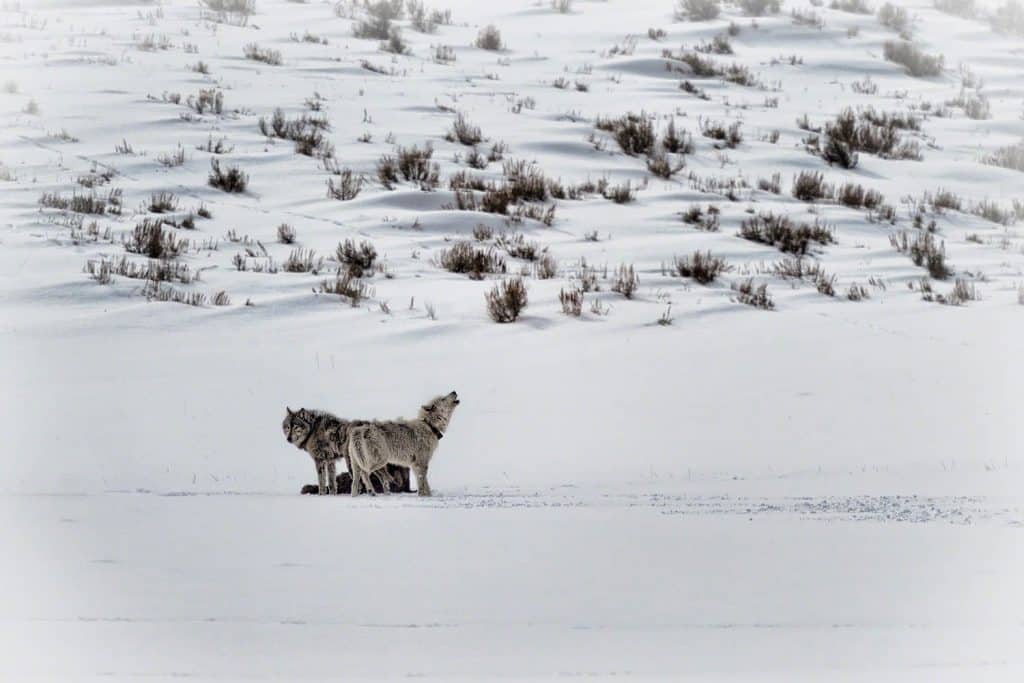
Decades after being eradicated, 14 wolves were reintroduced into Yellowstone National Park in 1995. Today there are hundreds–– and their bloodlines can be traced to that original pack.
Gray wolves in Yellowstone’s Lamar Valley. Credit: Scott Kublin / Flickr
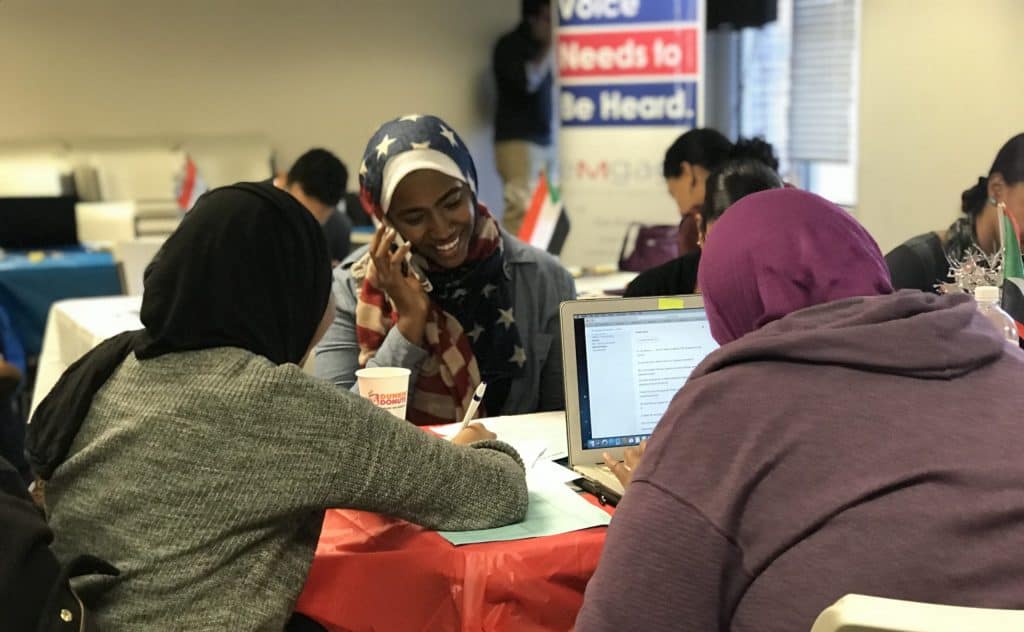
After canvassers engaged in empathy-based dialogue with 1,900 voters in a district that voted for Trump, that same district voted for the Democratic candidate in the 2018 mid-term elections.
A collective of women farmers in Mesopotamia have adopted ancient techniques that require no chemicals or irrigation. Their June harvest yielded 485 tons of wheat.
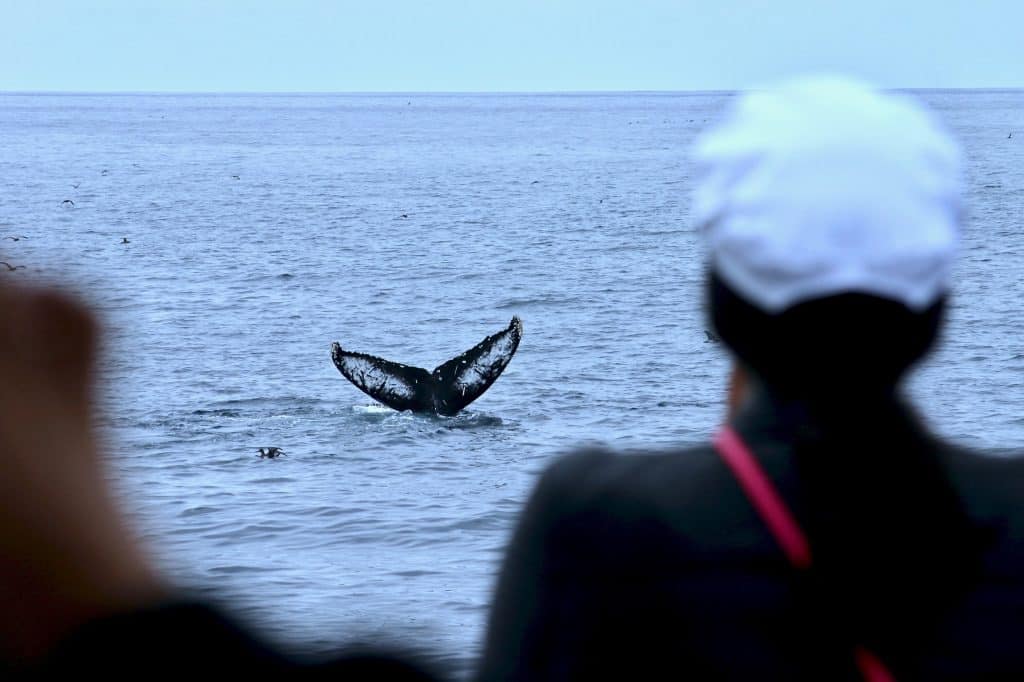
Chami, an economist at the International Monetary Fund, calculated great whales provide over $1 trillion in economic value, in large part due to their role in fighting climate change. Credit: Ju Lei / Flickr
A biologist invented a sensor that detects spikes in ethylene, the chemical that makes fruits ripen, so distributors can sell it before it spoils. It’s already saved one company $400,000 in wasted food.
In Denver, carbon dioxide captured from a beer brewery’s fermentation process is being used to stimulate the growth of 2,500 marijuana plants.
Atlanta is building soccer fields on the unused lots that surround its transit stations. 300 low-income kids are registered to play, and a “station vs. station” tournament is in the works.
Police in Durham, England are helping arrestees get access to social services instead of prosecuting them. Of the 2,600 people they’ve helped, only 6% have re-offended.
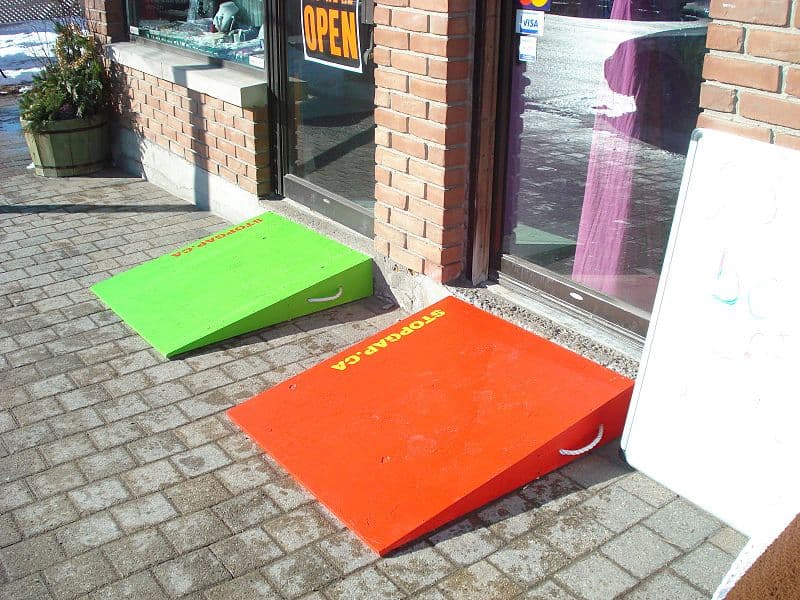
Since 2011, 2,000 businesses in 60 communities across Canada have become wheelchair accessible with simple, DIY ramps.
In Kentucky, an initiative to bring preschool to the people has provided portable schooling to over 100 families.
In the past decade, 546 coal-fired power units in the U.S. have either been closed or slated for retirement.
Over 720 hyper-local volunteer groups formed across the U.K. to help residents who are vulnerable to the coronavirus stay homebound and healthy.
French luxury perfume makers like Givenchy and Dior are reconfiguring their equipment to churn out hand sanitizer. The gel will be distributed for free to the country’s network of 39 teaching hospitals, serving eight million patients annually.
Credit: FWC Fish and Wildlife Research Center / Flickr
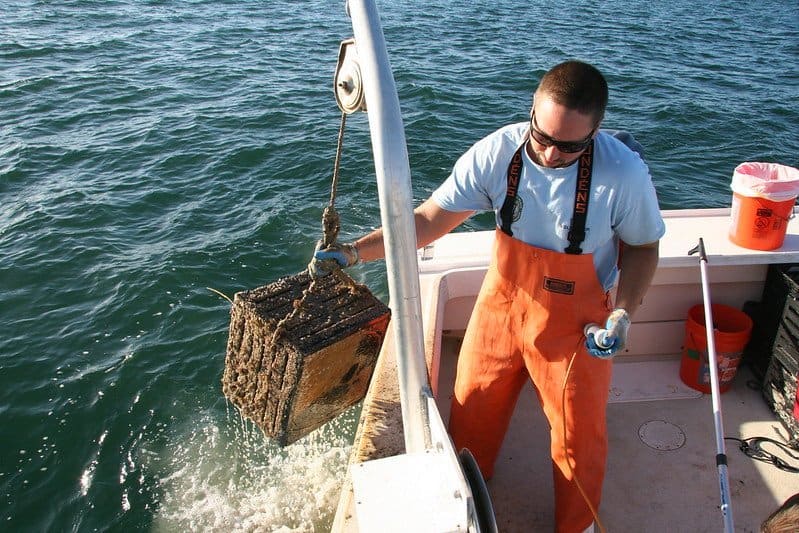
New Jersey fishermen are using sonar to clear the seabed of abandoned crab traps, which can continue to collect and kill crabs for years. So far they’ve hauled up over 2,200 traps.
A hospital in Columbus, Ohio has spent $80 million to build and repair homes in its neighborhood to make them healthier places to live.
Everyone in the Italian city of Vò was tested for coronavirus. 89 of those tests came back positive. The city instituted a nine day period of isolation and that number dropped to six.
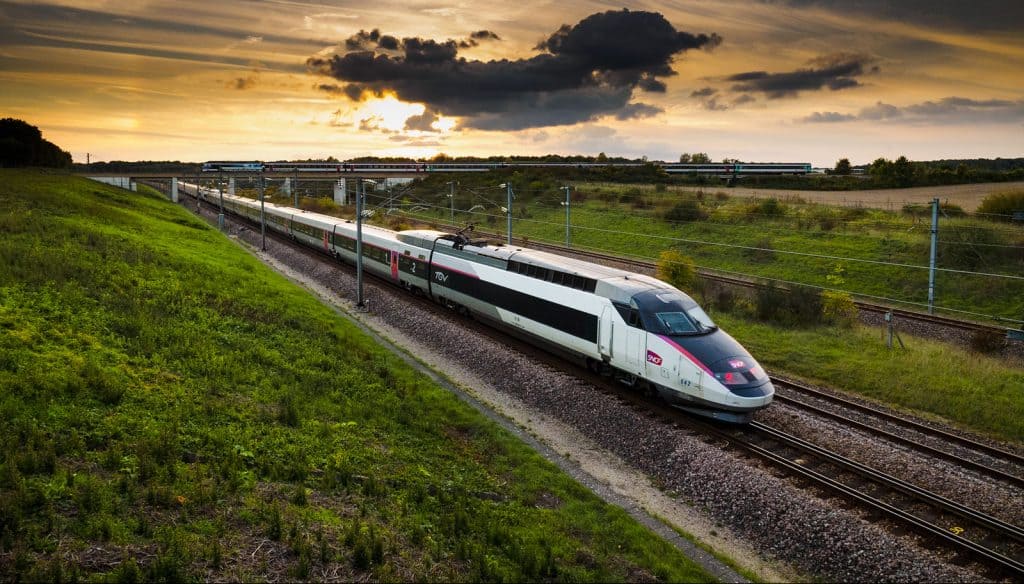
France converted a high-speed train into a 200-mile-per-hour hospital to race coronavirus patients to less-overwhelmed regions of the country.
Credit: Enzo Jiang / Flickr
The Twin Cities campus of the University of Minnesota has more than doubled its graduation rate for Native American students.
Young writers produced over 1,000 publications through the help of youth writing organizations.
Australian tour boat companies are taxiing scientists to the Great Barrier Reef to repair its coral. So far, over 1,000 pieces of coral have been replanted.
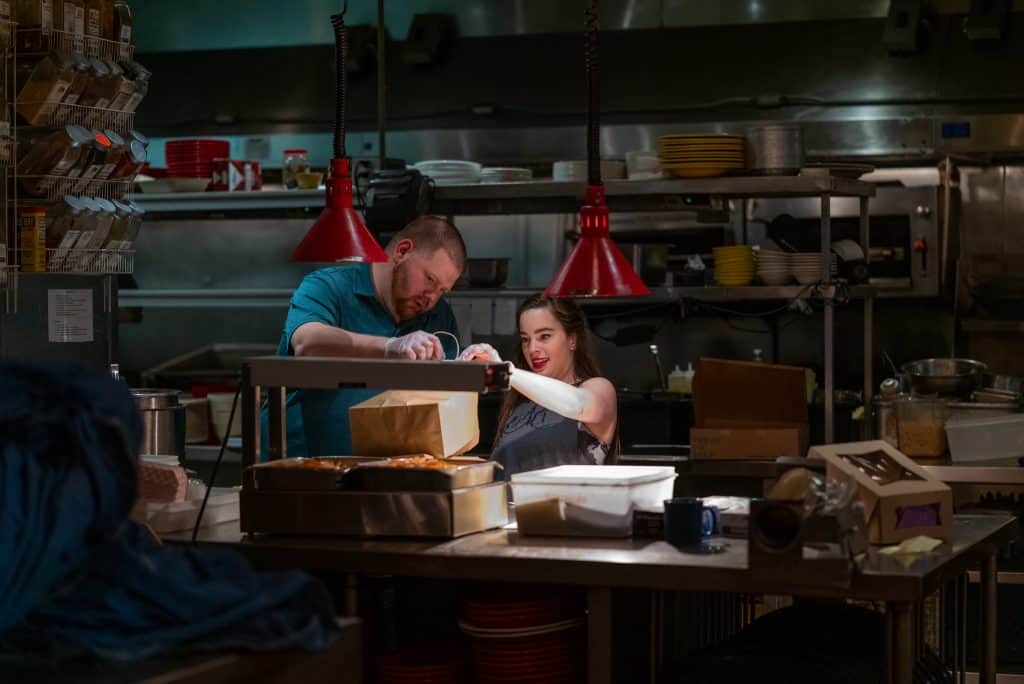
Cambridge, Massachusetts is paying its restaurants to keep the city’s homeless residents nourished. The initiative delivered 1,800 meals in its first week.
Staff of a closed restaurant in Cambridge preparing meals. Credit: Subhash Roy / Flickr
Cities are taking advantage of the dramatic decrease in car traffic to speed up transit projects. With Los Angeles traffic down 60% the city will expedite the extension of the city’s Purple Line.
In Brazil’s ranking of 5,000 school districts, the impoverished city of Sobral jumped from 1,366th to number one.
In a recent national poll, 59 percent of respondents said they’d support a government investment of $1.5 trillion in wind and solar.
California has spent nearly $200 million on over 100 machines that convert cow dung into clean energy, mitigating thousands of tons of greenhouse gases.
Paris is creating 650 kilometers of pop-up “corona cycleways” for travel once the lockdown ends.
Credit: Mikael Colville-Andersen / Flickr
Two years after reforms New Jersey started releasing defendants accused of low-level crimes rather than holding them on bail, violent crime decreased by 16%.
Buffalo in Rwanda’s Akagera National Park have rebounded in number from 500 to 3,500 in 10 years thanks to a partnership between poachers and park officials.
As part of Pakistan’s “Billion Tree Tsunami,” hundreds of thousands of trees have been planted, restoring the depleted Changa Manga forest by 85 percent in the last few years.
Even though schools are closed, school buses in Ohio’s Kanawha County are dropping off 12,500 weekly meals at “every bus stop along our normal routes.”
50 leading European financial firms endorsed a Covid-19 recovery plan to retrofit buildings, electrify transportation systems and build renewable energy and storage.
New York City’s census response rate is 49%. America’s is 60%. But one working-class community in the Bronx is winning the census with a 70% response rate.
In a Milwaukee high school where a violence-interruption group works with students, attendance has risen by 14% and graduation rates have been twice as high as projected.
At least 15 cities are taking steps to divert some of their policing budgets toward social services and neglected communities.
Thanks to conservation efforts, Oregon’s Fender’s blue butterfly, which numbered fewer than 1,500 in the 1990s, is now fluttering 30,000 strong.
Credit: LIHI
To fight homelessness during the coronavirus, Washington State is building tiny houses that cost 62% less than putting people up in hotel rooms. (And they’re permanent!)
After Camden, NJ reorganized its police force under a community-policing model, its crime rate dropped by half and reports of excessive force by police fell by 95%.
Elk were hunted to extinction in Kentucky before the Civil War. Thanks to reintroduction efforts, today some 13,000 elk roam the Bluegrass State.
A jazz club in Paris has re-opened for performances –– for one patron at a time. In just a few weeks, Le Gare hosted over 3,000 concerts for one.
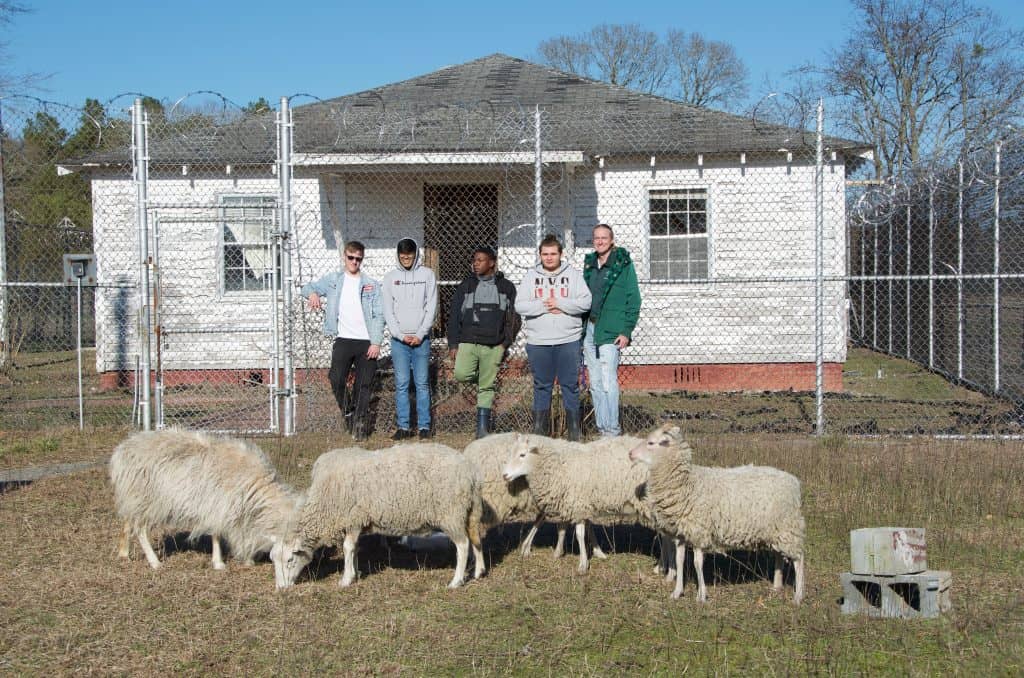
At-risk teenagers in North Carolina are turning an abandoned prison into a farm — the program has been 92% effective at preventing recidivism and adult incarceration.
West Virginia elected its first transgender official –– the 27th out trans person to be elected to office in the U.S.
Oregon’s vineyards are keeping their farmworkers safe. 400 workers have been tested for Covid-19 –– only two have been hospitalized and they are recovering at home.
A new app, cooperatively owned by 51 Latin American housekeepers, has increased some workers’ average hourly wages from $11 to $25.
The hashtag #NativeTikTok, where Indigenous users perform and share their stories, has reached almost 200 million views.
Seattle eliminated parking minimums in most of its central neighborhoods. The result? Some 18,000 fewer parking spaces, saving an estimated $537 million.
One in four Europeans either owns an e-bike or plans to buy one this year.
Credit: Zweirad-Industrie-Verband
Residents in a San Francisco housing project set up their own impromptu contact tracing effort and reduced their positive Covid-19 cases from 7% to 1%.
Indiana is requiring that its new 1,400-acre solar farm be seeded with pollinator-friendly plants.
7.6 million acres of the Great Bear Rainforest are completely off limits to logging thanks to a unique partnership between loggers and conservationists.
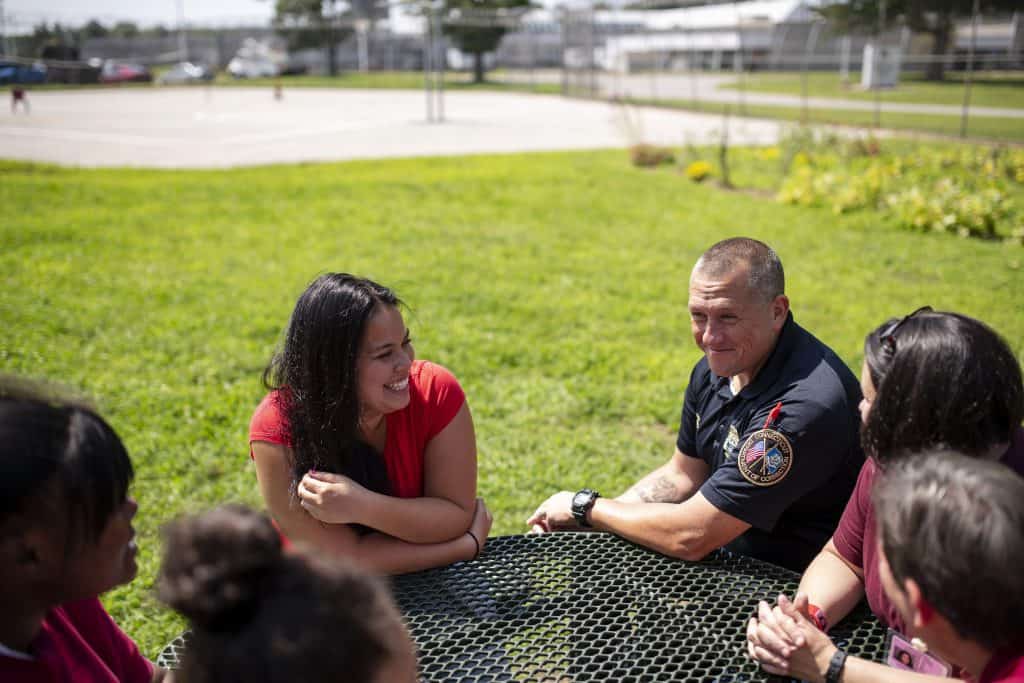
A program at a Connecticut prison houses 14 incarcerated young women with 10 older mentors who offer counseling, classes, job training and addiction help.
15 streets and intersections in Oakland were designated “essential places” to help essential workers get where they need to go.
Between April and June, grassroots organizations trained over 16,000 people on how to address everyday racism. Aftereward, 99% said they felt equipped to help if they witnessed a racist incident.
Last week Colorado passed Proposition 118, which guarantees new parents the right to three months of paid family leave.
After opening a supervised injection site for drug users, Vancouver saw overdose deaths within a 500 meter radius decrease by 35 percent.
When Switzerland started prescribing heroin to addicts in combination with methadone and therapy, their daily heroin use dropped from 81 percent to six percent.
The Mall of America is renting out space to 17 minority-owned businesses rent-free for the holiday season.
After a tornado, Greenburg, Kansas rebuilt itself as a wind-powered town, making it one of the few places in the U.S. that runs on 100 percent renewables.
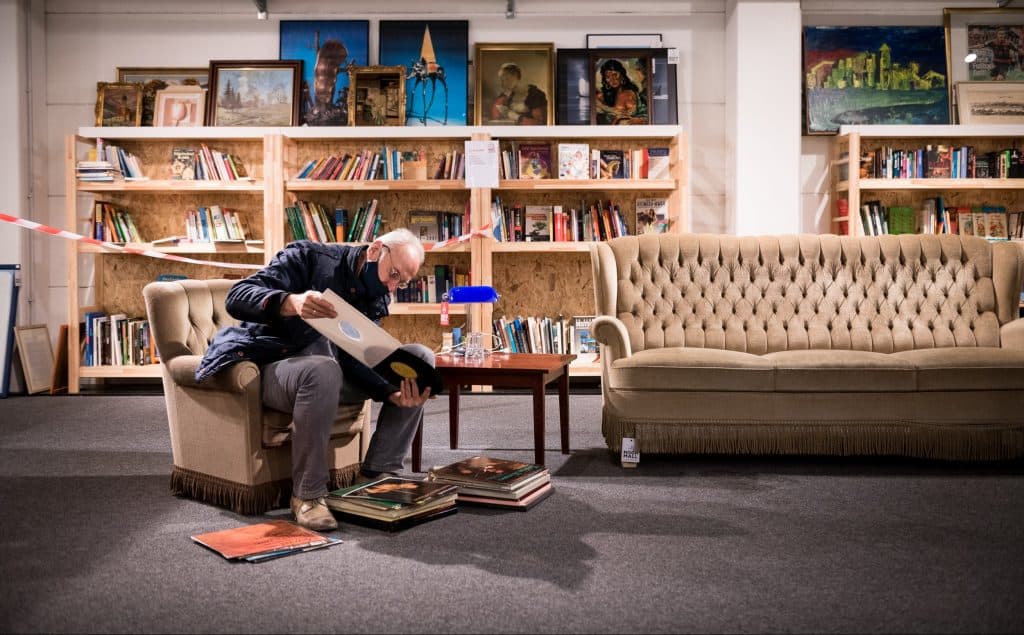
In an effort to become a “zero-waste city,” one of Berlin’s best-known department stores has dedicated 7,000 square feet to used goods.
A California program offers rent assistance for middle-income folks who make 80% of their area’s median income but don’t quite qualify for subsidized housing.