Showing posts with label Commitment. Show all posts

Wednesday, February 24, 2021

Malcolm X is still misunderstood – and misused. Fifty-five years after his assassination at the Audubon Ballroom in New York, we still get much wrong about Malcolm X

by Omar Suleiman, Al Jazeera:  https://www.aljazeera.com/opinions/2020/2/21/malcolm-x-is-still-misunderstood-and-misused

Image: Al Jazeera

Every semester in which I teach a course on Muslims in the Civil Rights Movement at Southern Methodist University, I give my students a selection of quotes from both Martin Luther King Jr and Malcolm X and ask them to guess who said what. So for example, I will posit the following two quotes and ask for their proper ascription:

“Ignorance of each other is what has made unity impossible in the past. Therefore, we need enlightenment. We need more light about each other. Light creates understanding, understanding creates love, love creates patience, and patience creates unity. Once we have more knowledge (light) about each other, we will stop condemning each other and a United front will be brought about.”

“The majority of white Americans consider themselves sincerely committed to justice for the Negro. They believe that American society is essentially hospitable to fair play and to steady growth toward a middle-class Utopia embodying racial harmony. But unfortunately this is a fantasy of self-deception and comfortable vanity.”

And every single time, they have been unable to identify the first quote as belonging to Malcolm, and the second to Martin. But it is not just a few students that have gotten it wrong. The American education system and most mainstream portrayals of Martin and Malcolm have been simplistic and sanitising.

Martin is the perfect hero who preached non-violence and love, and Malcolm the perfect villain who served as his violent counterpart, preaching hate and militancy. The result is not just a dishonest reading of history, but a dichotomy that allows for Dr King to be curated to make us more comfortable, and Malcolm X to be demonised as a demagogue from whom we must all flee. Reducing these men to such simplistic symbols allows us to filter political programmes according to how “King-like” they are. Hence, illegitimate forms of reconciliation are legitimised through King and legitimate forms of resistance are delegitimised through Malcolm X.

Malcolm was never violent, not as a member of the Nation of Islam, nor as a Sunni Muslim. But Malcolm did find it hypocritical to demand that black people in the United States commit to non-violence when they were perpetually on the receiving end of state violence. He believed that black people in the US had a right to defend themselves, and charged that the US was inconsistent in referencing its founding fathers’ defence of liberty for everyone but them.

Malcolm knew that his insistence on this principle would cause him to be demonised even further and ultimately benefit the movement of Dr King, which is exactly what he had intended. Just weeks before his assassination, he went to Selma to support Dr King and willingly embraced his role as the scary alternative. In every interview, in his meeting with Dr Coretta Scott King, and elsewhere, he vocalised that the US would do well to give the good reverend what he was asking for, or else.

But he never actually said what the “or else” was, placing a greater urgency on America to cede to King’s demands. Malcolm had no problem playing the villain, so long as it led to his people no longer being treated like animals. And while King may have been steadfast in his commitment to non-violence, the thrust of Malcolm fully served its purpose.

As Colin Morris, the author of Unyoung, Uncolored, Unpoor wrote, “I am not denying passive resistance its due place in the freedom struggle, or belittling the contribution to it of men like Gandhi and Martin Luther King. Both have a secure place in history. I merely want to show that however much the disciples of passive resistance detest violence, they are politically impotent without it. American Negroes needed both Martin Luther King and Malcolm X …”.

But it was not just that Malcolm and Martin had complementary strategies to achieve black freedom, they also spoke to different realities. Malcolm spoke more to the Northern reality of black Americans who were only superficially integrated, whereas Martin spoke to the Southern reality where even that was not possible.

Malcolm also spoke to the internalised racism of black people that was essential to overcome for true liberation. As the late James Cone states, “King was a political revolutionary. Malcolm was a cultural revolutionary. Malcolm changed how black people thought about themselves. Before Malcolm came along, we were all Negroes. After Malcolm, he helped us become black.”

That is why, despite the diminishing of Malcolm in textbooks and holidays, he has been consistently revived through protest movements and the arts. He has lived through the activism of the likes of Muhammad Ali and Colin Kaepernick, inspired the black power movement, and been an icon for American Muslims on how to exist with dignity and faith in a hostile environment.

And even in those claims to Malcolm as a symbol, Malcolm himself in the fullness of his identity is erased. In championing his movement’s philosophy, some seek to secularise him, intentionally erasing his Muslim identity. And in championing his religious identity, others seek to depoliticise him. This was a tension that Malcolm noted in his own life, saying: “For the Muslims, I’m too worldly. For other groups, I’m too religious. For militants, I’m too moderate, for moderates I’m too militant. I feel like I’m on a tightrope.”

Muslims too should be cautious not to sanitise Malcolm, as the US has sanitised Dr King. To restrict Malcolm solely to his Hajj experience is similar to restricting King solely to his “I have a dream” speech. Malcolm was a proud Muslim who never stopped being black. And while he no longer subscribed to a condemnation of the entire white race, he was unrelenting in his critique of global white supremacy.

Malcolm was consistently growing in a way that allowed him to not only champion his own people’s plight more effectively but to tackle a broader set of interconnected issues. And while history seems to posit Malcolm as his polar opposite, Dr King had begun to articulate many of the same positions that made Malcolm so unpopular.

In the words of the great James Baldwin, “As concerns Malcolm and Martin, I watched two men, coming from unimaginably different backgrounds, whose positions, originally, were poles apart, driven closer and closer together. By the time each died, their positions had become virtually the same position. It can be said, indeed, that Martin picked up Malcolm’s burden, articulated the vision which Malcolm had begun to see, and for which he paid with his life. And that Malcolm was one of the people Martin saw on the mountaintop.”

Perhaps it is time we ask why we only seem to celebrate one of them.

The views expressed in this article are the author’s own and do not necessarily reflect Al Jazeera’s editorial stance.

Sunday, December 27, 2020

VIDEO: The city planting a million trees in two years

by Yvonne Aki-Sawyerr, TED:  https://www.ted.com/talks/yvonne_aki_sawyerr_the_city_planting_a_million_trees_in_two_years

Yvonne Aki-Sawyerr, mayor of Freetown, Sierra Leone, is on a mission to plant a million trees over the next two years, increasing vegetation in her city by fifty percent while shoring up eroding riverbanks and increasing biodiversity. "This isn't just about planting trees; it's about growing trees, and it's about ensuring that each one of us is part of the process," she says. "A million trees is our city's small contribution to increasing the much-needed global carbon sink."


This talk was presented at an official TED conference, and was featured by our editors on the home page.

Sunday, December 20, 2020

In 2020, this organization has fed people through hurricanes, wildfires, an explosion and the pandemic. Here’s how

by Hasiba Haq, Ideas.Ted.com: https://ideas.ted.com/world-central-kitchen-feeds-people-jose-andres-nate-mook-crisis-pandemic-hunger/

Image: World Central Kitchen

Multiple hurricanes. Multiple wildfires. A deadly explosion. And a pandemic that won’t quit. 

2020 has been filled with crisis after crisis, with one relentless constant in their wake – hunger. And on the scene of as many crises as they can reach have been team members from  World Central Kitchen (WCK), a nonprofit founded by Spanish chef José Andrés that provides meals to those in need.

The WCK mission is simple: To feed people after disaster strikes. In 2010, Andrés went to Haiti to serve meals after the catastrophic earthquake. Inspired by the experience, he founded World Central Kitchen. Since then, WCK  has deployed relief teams around the world to sustain and nourish people when the worst happens. Despite their wealth of experience, 2020 has been a challenge … even for WCK. “It’s been the biggest, busiest year in our history — we’ve been on 5 continents, in 16 countries and almost 40 US states and territories,” says Andrés via email.

WCK credits its responsiveness to its ability to prioritize urgency. Their team understands that hunger requires immediate attention — there isn’t time to wait for ingredient approvals or fill out forms or navigate other bureaucratic hurdles. Instead, their staff and volunteers deploy as quickly as possible to disaster zones and work directly with those affected. The latter is a principle that’s central to their organization. “Everywhere we go, we get the same amazing lesson: A community knows what it needs, and we can achieve so much more when we listen to those needs and empower people to act locally,” says Andrés.

Another distinguishing feature of WCK is its ability to flex and adapt, something that many relief organizations and workers aren’t able to do. “You gotta be willing to go outside of the box and not wait around for somebody else to have the answer,“ says WCK CEO Nate Mook.

Mook joined WCK after leading and developing its #ChefsforPuertoRico initiative in the aftermath of 2017’s Hurricane Maria where its team served 4 million meals to island residents. Since 2018, he has led the organization’s operations as well as its emergency and disaster-relief efforts. We sat down with him over Zoom to understand just how WCK gets meals to those who need them, no matter where they are.

Get eyes on the ground ASAP 

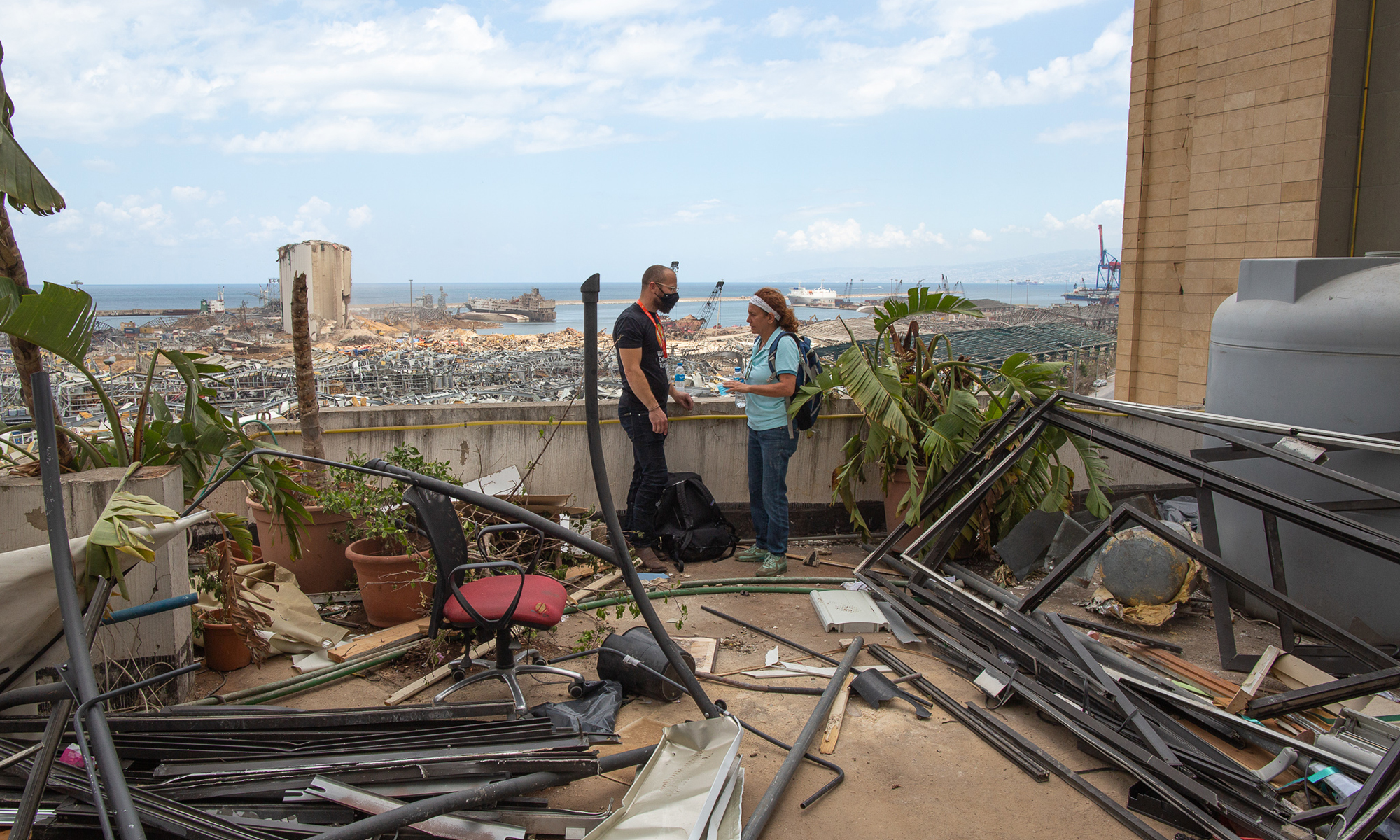
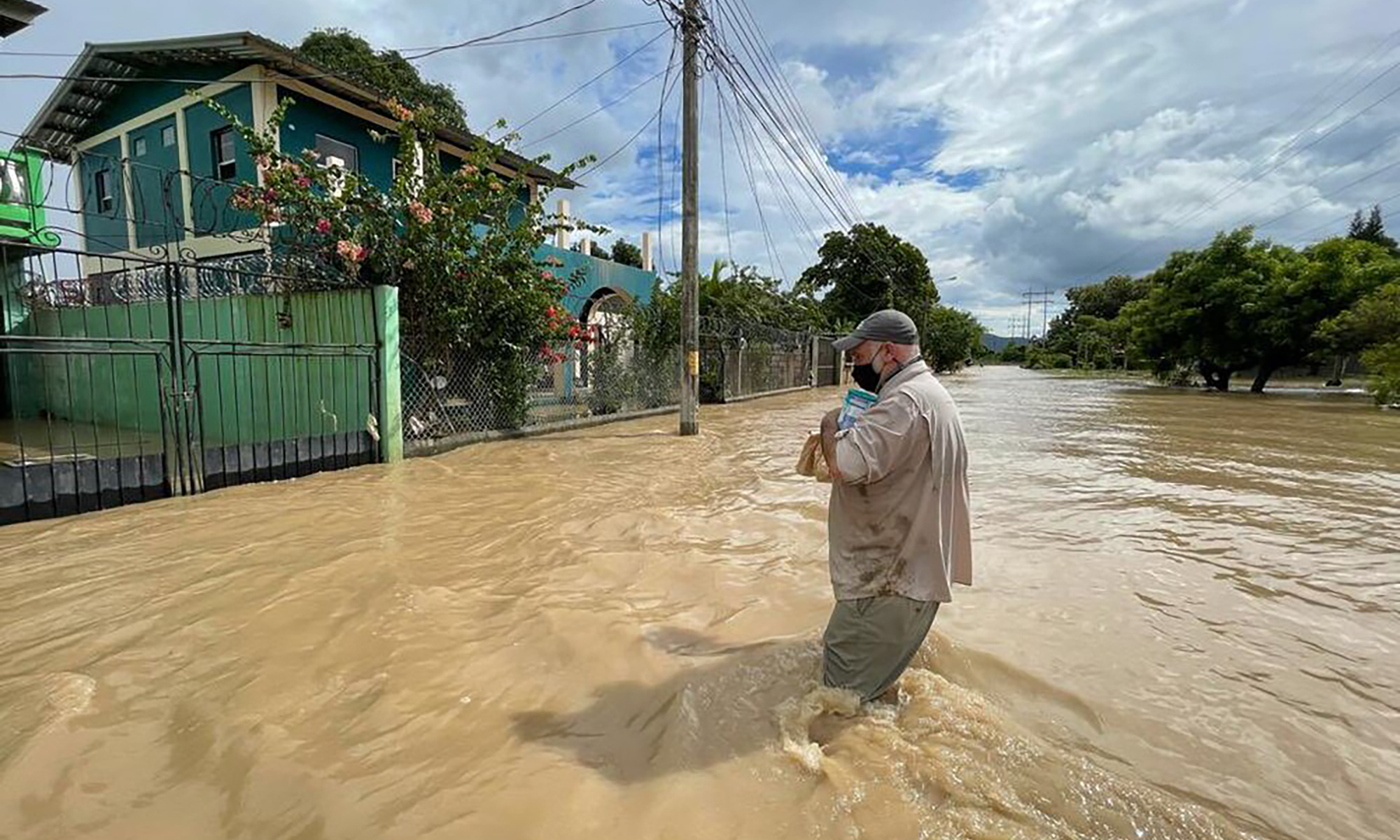
The first step to helping people in a crisis is to find out exactly what they’re facing. When an unexpected tragedy occurs, WCK dispatches an initial assessment team to the scene to understand exactly what happened and what is needed. The explosion in Beirut’s Port on August 4, 2020, was a perfect example. “We didn’t know what the situation was,” says Mook. “But we knew the damage was big, we knew that a lot of people were probably displaced, we knew that a lot of folks probably weren’t going to have electricity for a while, and we knew that a lot of restaurants, grocery stores and businesses were destroyed or damaged. But until you get on the ground, you know nothing.”

The humility of admitting they know nothing is essential to WCK’s work — leaving them open to input about how they can be most helpful and effective. Within 36 hours of the explosion, WCK had two members on the ground, who immediately connected with locals. “Their job is to put eyes on the situation, go to the places that were impacted, talk to the local leaders in those areas,” says Mook. “In Beirut, we connected with a bunch of local nonprofits that worked there.” They were able to determine where people were displaced, what the gaps were in terms of access to food, as well as what other organizations were already doing. These initial assessments are integral, because they reveal how urgent a situation is and how much effort and coordination is required on WCK’s part.

While an explosion is impossible to predict, extreme weather events like hurricanes can be tracked and monitored, which provides WCK with a huge advantage. “When it’s a hurricane and we roughly know what’s coming, we can pre-stage,” says Mook. “We can get people on the ground, set up a kitchen , and get everything ready to go. As Hurricane Florence hit North Carolina in September 2018, we were cooking as it was still hitting, delivering meals to shelters, firefighters, police and the emergency operation center.”

Lead with empathy

“Some of us assume that everyone has 72 hours of food in their house, but the reality is that a lot of people don’t,” says Mook. “When the grocery stores, electricity and water are all out, food is something you need now — it can’t wait until tomorrow or the next day.”

A guiding principle for WCK is to lead with empathy. This includes recognizing that not everyone is able to evacuate during a disaster. Some don’t have the resources to flee or they may not be physically mobile or they may not want to leave their home behind. WCK recognizes they’re on the scene in service to a community — not just giving to them. “It’s a subtle shift, but I think it is so critical,” says Mook.

Another part of leading with empathy is recognizing that not everyone is able — or ready — to ask for help. “It is not an easy thing to say: ‘I need your help,’” explains Mook. The WCK team has learned to be more pointed in their inquiries. Mook says, “You ask questions, like  ‘What’d you eat today?’, ‘What are your kids eating right now?’, ‘What type of food?’, and ‘Do you have enough water?’ Once you start asking these questions, then everything starts to crumble and you realize people need support.”

No need to reinvent the wheel — just add to it

Mook says WCK looks for smart and effective solutions that are already available on site, instead of introducing new ones. When Hurricane Maria hit Puerto Rico in 2017, the island was devastated. Neighborhoods were demolished, electricity was wiped out, and residents needed food and water. Humanitarian responders like FEMA tried to ship bread over from the mainland US, but they faced hurdles because many ports in Puerto Rico had been destroyed.

WCK took a different approach altogether. “We just said, ‘Well, how about we make sure that the local bakeries have fuel for their generators, fresh water and ingredients so they can start producing bread on the island again?’” recalls Mook. “That type of thinking is a no-brainer, right? Yet it’s often not how things are done.”

An important question that WCK always asks: “What and who are already there?” Their teams connect with community members and map resources by finding out the locations of local suppliers and kitchens and who already has access to food. “We make phone calls to chefs, and that’s what’s amazing about the chef community,” says Mook. “You make a phone call to somebody who makes a phone call to someone else, and before long, you’re connected with all the chefs in that area.”

During August’s Hurricane Laura, mapping resources was important. Nobody knew exactly where Laura would make landfall, but WCK wanted to prepare itself. So they sent some team members already based in Louisiana to Lake Charles, a city that was predicted to be in the storm’s path. They ended up staying the night at a local casino,  connected with its management, toured the space including its kitchen, and let management know about WCK’s work.

When Laura hit Lake Charles, says Mook, “we immediately reached back out to the casino.” Because the casino didn’t have water or power, WCK’s team got hold of a food truck — using it as a mobile relief kitchen — and started serving meals out of a parking lot. A few days later, after the casino had generators and access to clean water, casino staff contacted WCK. “They said they weren’t opening the casino to the public, so come on in,” says Mook. “Within four days, we had accommodations at the casino, we had a massive kitchen there, and we were able to tap into local knowledge and local resources.”

In recent times, much of WCK’s work has been driven by the climate crisis. “We find ourselves responding to more and more climate disasters each year — the wildfires up and down the West Coast of the US are getting worse, the Atlantic hurricane season is longer and more destructive, and climate change will continue to cause more tragedies around the world,” says Andrés. “But what drives me is knowing that, after the storms clear and the fires are extinguished, there’s a real opportunity to build resilience into a community against future disasters.”

Benefit from knowledgeable volunteers

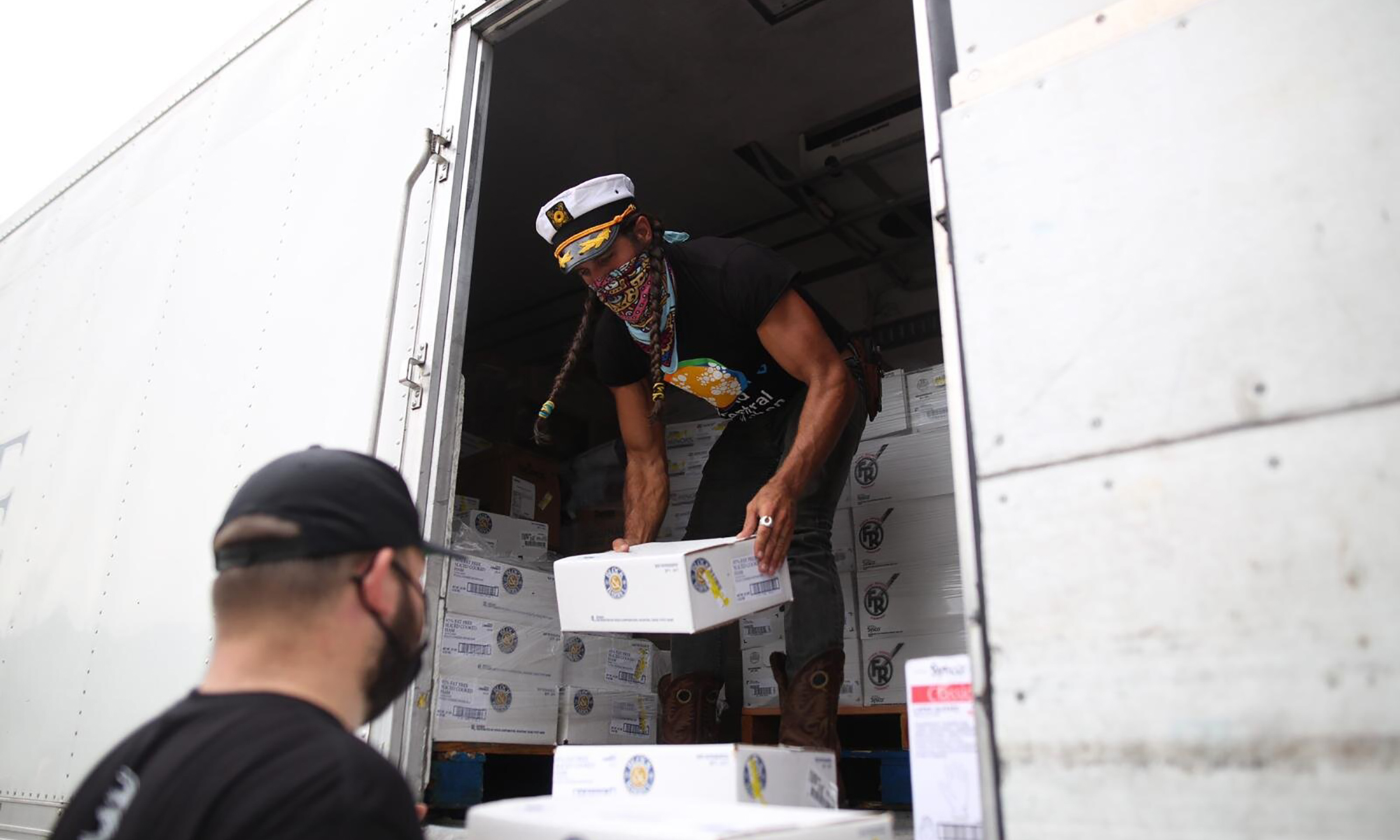
While WCK’s main office is based in Washington DC, its full-time staff — consisting of roughly 50 people — is located all over the world. It also relies on a global network of passionate contractors and volunteers. The volunteers are a mix of people local to the disaster area but also include seasoned supporters, such as a retired chef named Elsa, who fly in to help. “She’s not an employee at World Central Kitchen, but she’s part of the family,” Mook says warmly. Elsa is based in California, and she started working with WCK during wildfires. Since then, she’s travelled all over the world with them. This September, she led the feeding operations for the California wildfires. WCK covers the costs of all their food and non-food supplies by using funds raised from individual and corporate donations.

After an initial WCK team assesses the damage and the resources available in a disaster area, a WCK chef relief team comes in to get the work started. Experienced helpers like Elsa know how to keep operations going by organizing the local volunteers who frequently step up to help their neighbors in need. “After a disaster, people in the community — folks who aren’t as worse off as others — want to come in and volunteer,” says Mook.

Once the local volunteers are established, the WCK personnel can slowly pull back. They’ll oversee operations for a few weeks, and when things are relatively stable, they’ll shift their teams to the next place in need. After spending a few weeks in Louisiana in August, the WCK teams moved onto Oregon to help those affected by wildfires.

Get ready to toss out established ways of doing things 

Even though WCK has their own tried-and-true methods for doing their work, they recognize that every disaster is different. “The first rule of feeding people is adapting to the circumstances,” according to Mook.

Sometimes, that can mean recognizing what people need is not what you’re used to providing. “When we were in the Bahamas responding to Hurricane Dorian [in August 2019], we were having to deal with water filtration and getting water to places for a short period of time,” says Mook. “We were also performing medical evacuations. We’d go in with a helicopter to drop off food, and we’d bring back people [and take them to medical care]. In a disaster, you gotta be willing to make those quick decisions and you can’t expect somebody else to come in with the answer. You have to say, ‘You know what? I’m going to figure out what I can do and then do it.’”

Adapt yet again when the unexpected — an ongoing pandemic — happens

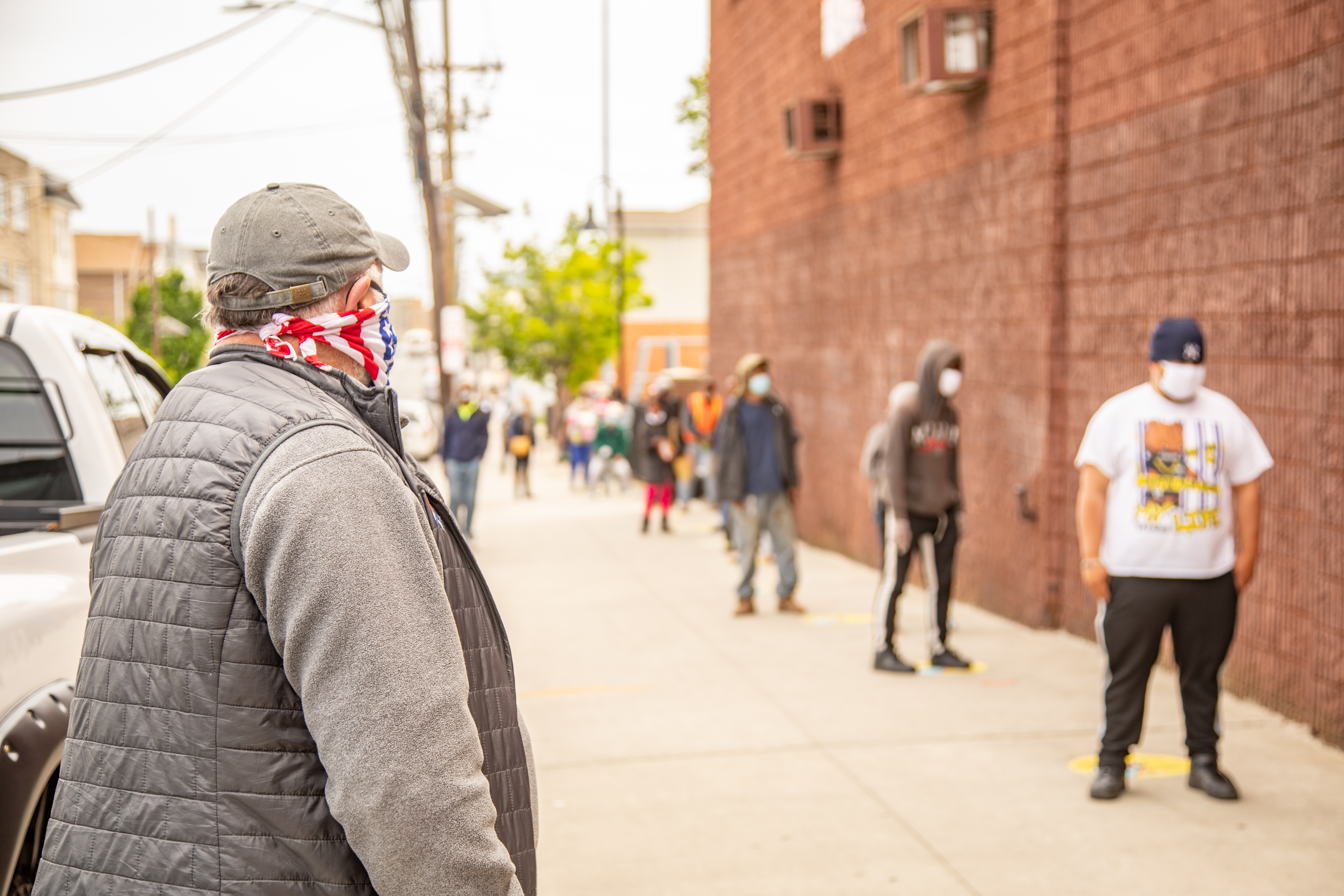
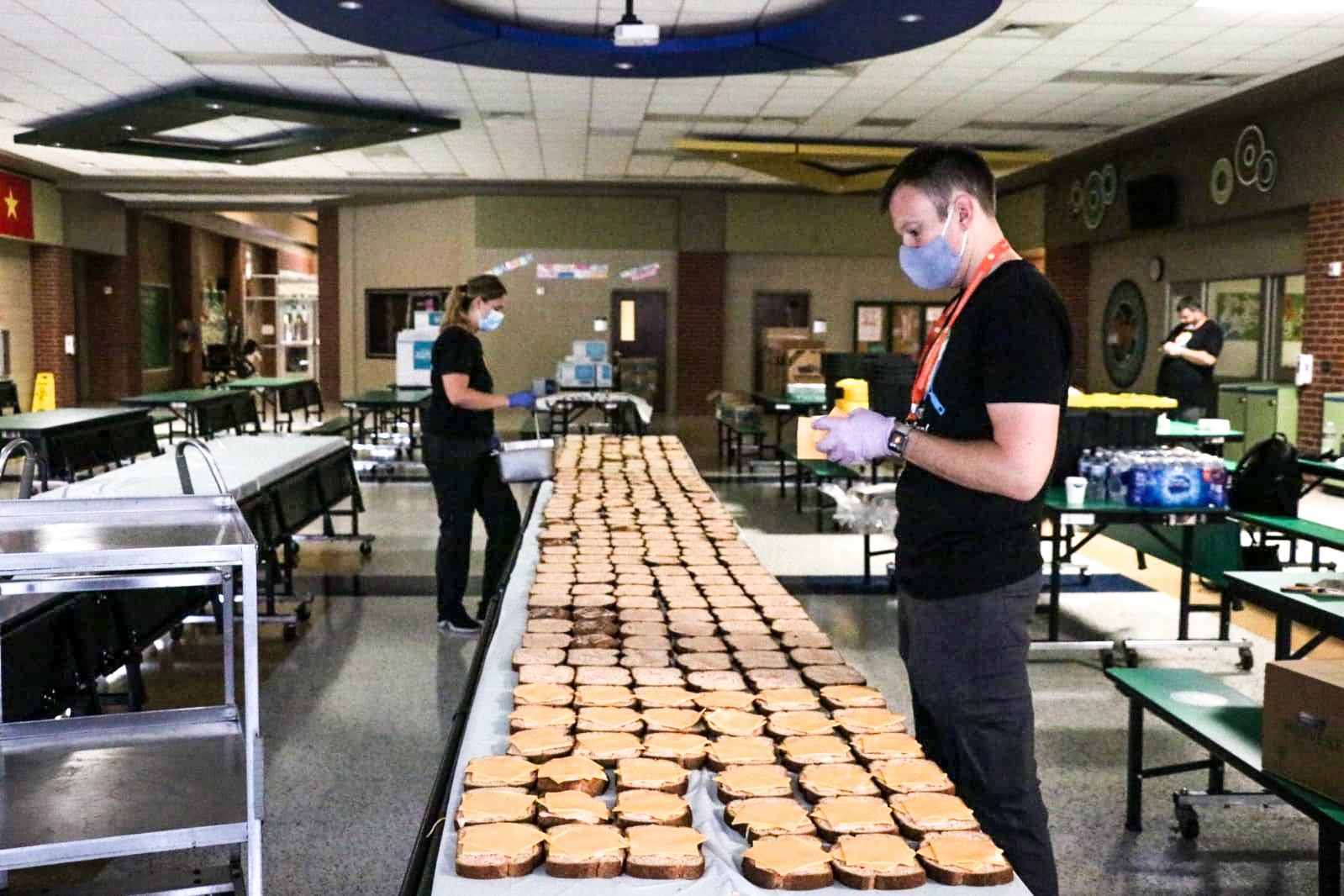
Of course, one of the most challenging crises in 2020 has been the COVID-19 pandemic. Unlike natural disasters, which tend to be concentrated in a single area, the pandemic affected most of the world, making it hard to figure out where to begin. WCK realized it couldn’t be everywhere so they pivoted again. “Normally, when we work with restaurants, we partner with them or take over their restaurant and set up a big kitchen operation there and it becomes our operation,” explains Mook. “In this case, what we said is ‘You do what you know how to do — you do the meals, you buy from your suppliers, you manage it. I’m just going to tell you how many meals I need and where it needs to go. So that was a very new thing for us, because we weren’t the ones doing the cooking.”

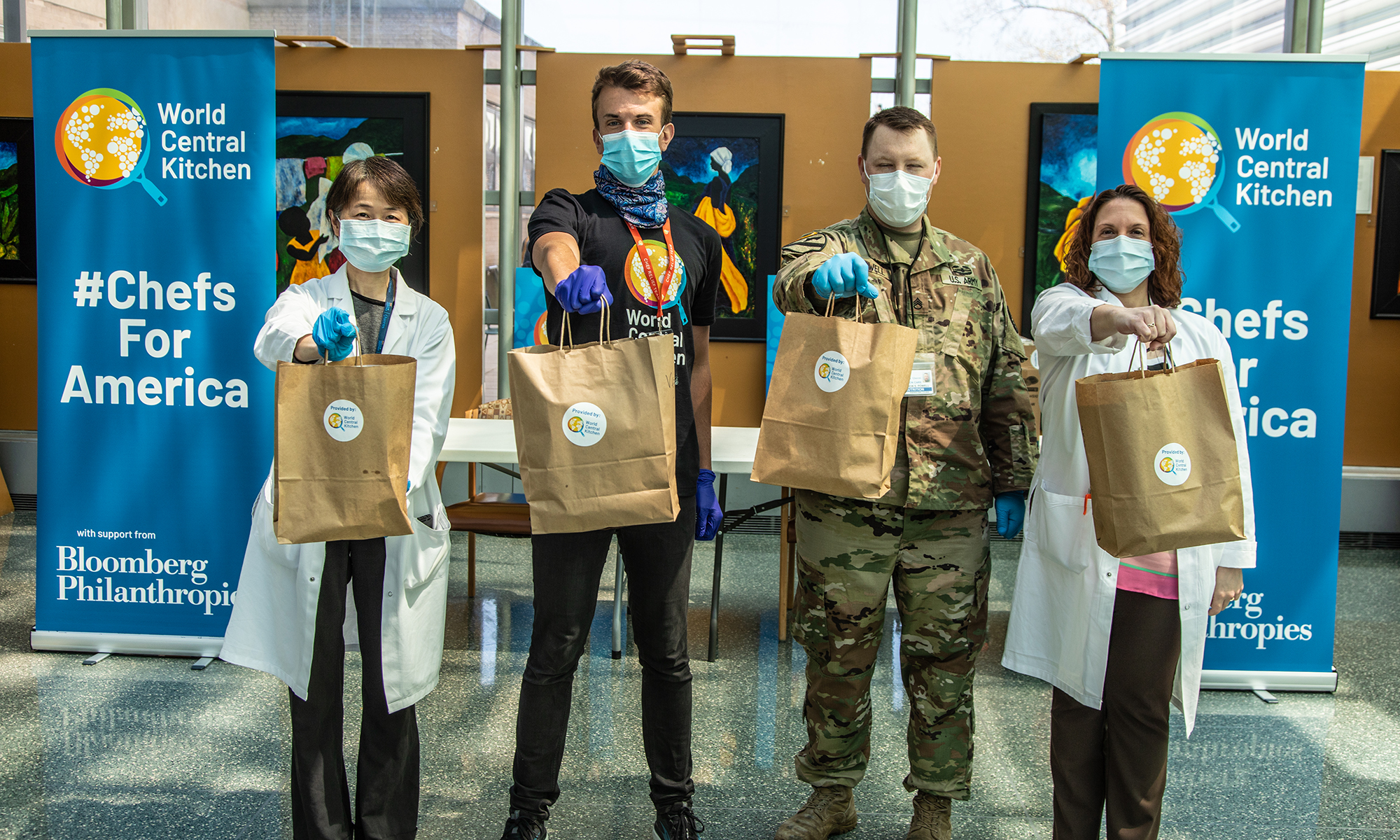
WCK’s Restaurants For The People has two goals: Keeping small restaurants and food businesses open while providing fresh meals to first responders, front-line workers and those struggling with hunger. WCK has worked with over 2,000 restaurants in 400 cities in the US, directly disbursing over $135 million to them and serving over 12 million meals to people who need them. And the program has had positive ripple effects, with demand from restaurants helping keep farmers, fisheries and ranchers in business.

For Andrés and WCK, regardless of the number of disasters that life brings, they’re committed to innovating and pushing forward. “At the beginning of 2020, we had no idea what the year would bring, and now our team of chefs, relief workers, volunteers and supporters has grown bigger beyond even what I could have dreamed,” says Andrés. “When I founded the organization in 2010, we knew there were big  opportunities to change the way that disaster relief is done and we’ve just started to scratch the surface of those changes. There is one thing I know, which is what drives our team every single day: Wherever hungry people need to eat, we will be there.”

All images: Courtesy of World Central Kitchen. 

World Central Kitchen is the recipient of a grant from The Audacious Project, a collaborative funding initiative that is unlocking social impact on a grand scale. Every year The Audacious Project — which is housed at TED — selects and nurtures a group of bold solutions to the world’s most urgent challenges and gets them launched thanks to an inspiring group of donors and supporters.

Watch José Andrés’s 2017 TED Talk here:

Sunday, June 28, 2020

Media have helped create a crisis of democracy - now they must play a vital role in its revival

In May 2020, with the world still in the grip of the coronavirus pandemic, Margaret MacMillan, an historian at the University of Toronto, wrote an essay in The Economist about the possibilities for life after the pandemic had passed.
On a scale of one to ten, where one was utter despair and ten was cautious hopefulness, it would have rated about six. Her thesis was that the future will be decided by a fundamental choice between reform and calamity.
She saw the world as being at a turning point in history. It had arrived there as a result of the conjunction of two forces: growing unrest at economic inequality, and the crisis induced by the pandemic.
It was at such times, she argued, that societies took stock and were open to change. Such a time, for example, was in the immediate aftermath of the second world war, which resulted in radical reforms to international political and economic frameworks.
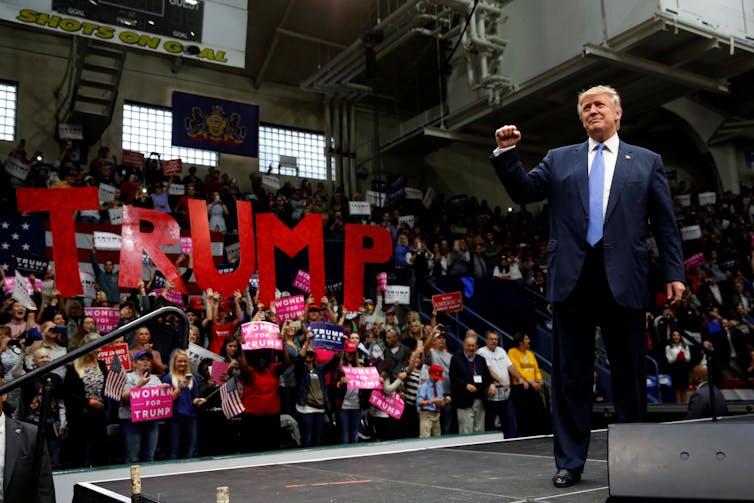
She was writing against a backdrop of a larger crisis – the crisis in democracy. The most spectacular symptoms of this were the election of Donald Trump as president of the United States and the Brexit referendum. Both occurred in 2016, and both appealed to populism largely based on issues of race and immigration.
The election of Donal Trump as US president in 2016 was symptomatic of democracy’s crisis. AAP/Reuters/Jonathan Ernst
In the four years since, many books have been written on this crisis, among them Cass Sunstein’s #republic, Steven Levitsky and Daniel Ziblatt’s How Democracies Die, and A. C. Grayling’s Democracy and its Crisis.
Then, somewhat surprisingly, in May 2020 a new spirit of what might be called “economic morality” announced itself.
This came from within the Republican Party of the United States. It happened while Trump, that most amoral of Republican presidents, was in office, and reasserted some of the fundamental values of conservatism.
It took the form of a new organisation, American Compass, https://americancompass.org/, founded by Oren Cass, who was domestic policy adviser to Mitt Romney’s 2008 and 2012 US presidential election campaigns. He is also the author of an acclaimed book on labour markets, The Once and Future Worker: A Vision for the Renewal of Work in America.
American Compass’s mission, as stated on its website, was to:
… restore an economic consensus that emphasises the importance of family, community, and industry to the nation’s liberty and prosperity.
As the coronavirus pandemic wreaked havoc across the United States, Cass described the nation’s response as an indictment of what he called an “economic piety” – a form of ideological purity – that ignored many values that markets do not take into their calculations.
These included the well-being of workers, the security of supply chains, and the running down of America’s self-sufficiency, exemplified by a shortage of medical supplies.
His line of argument was supported by a senior Republican, Senator Marco Rubio, in an article for The New York Times. Rubio’s critique of the failure of American economic policy over two decades was crystallised in one sentence:
Why didn’t we have enough N95 masks or ventilators on hand for a pandemic? Because buffer stocks don’t maximize financial return, and there was no shareholder reward for protecting against risk.
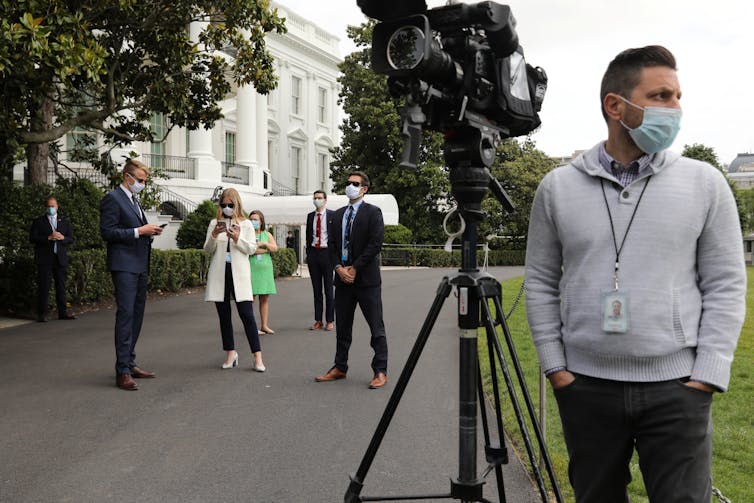
Has the coronavirus changed the way democracies operate? AAP/Reuters/Jonathan Ernst
The fact that this significant shift in economic thinking and socio-political priorities was coming out of elements in the Republican Party in the lead-up to the presidential election is perhaps an indication that MacMillan’s thesis has some substance. Perhaps democracies are on the cusp of a change in direction.

How the pandemic contracted the media landscape further

Alongside these developments, the existential crisis facing news media was made worse by the coronavirus pandemic. As business activity was brought to a stop by the lockdown, the need for advertising was drastically reduced.
Coming on top of the haemorrhaging of advertising revenue to social media over the previous 15 years, this proved fatal to some newspapers.
In Australia, the impact of this was worst in regional and rural areas. News Corp announced in May that more than 100 of its regional newspapers would become digital-only or close entirely.
In April, Australia’s largest regional newspaper publisher, Australian Community Media (ACM), announced it was  suspending the printing of newspapers at four of its printing sites, halting the production of most of its non-daily local newspapers. ACM has about 160 titles.
These developments represented a serious loss to local communities and added to the democratic deficit already apparent over more than a decade as advertising revenue flowed away from traditional media to the global social media platforms.

Defending against the digital onslaught

At a national level, the Australian government took up a recommendation by the Australian Competition and Consumer Commission to force the global platforms, particularly Facebook and Google, to pay for the news it took from Australian media.
The platforms mounted a fierce rearguard action against this proposal, which remains unresolved for now.
If a democratic revival is to occur, however, a strong media will be a necessary part of it. The necessity of a free press has been clear since the germination of modern democracy in the late 17th century, and in the late 18th century it was given powerful recognition in both legal and political terms.
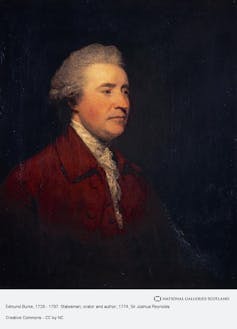
Edmund Burke. National Galleries of Scotland
In 1791 it was articulated in the First Amendment to the US Bill of Rights. In 1795, Edmund Burke stood up in the British House of Commons and  asserted that the press had become what he called “the fourth estate of the Realm”.
If the media are to play their part in any democratic revival, however, financial and material security will be only a part of what is required.
One factor that has contributed to the present crisis in democracy is polarisation, the opening up of deep divisions between the main political parties of mature democracies. This has been magnified by media partisanship.
There is a lot of research evidence for this. One of the most significant is a 2017 study that showed the link in the United States between people’s television viewing habits and their political affiliations.
A further factor in the crisis has been the emergence of the “fake news” phenomenon. In the resultant swirling mass of information, misinformation and disinformation that constitutes the digital communications universe, people have returned to traditional mass media in the hope that they can trust what they see and hear there.
The Edelman Trust Barometer, an annual global study of public attitudes of trust towards a variety of institutions, including the media, showed that since 2015, public trust in the traditional media as a source of news had increased, and their trust in social media as a source of news had decreased.

Populism and scapegoating

A third factor in the crisis, exacerbated by the first two, is the rise of populism. Its defining characteristics are distrust of elites, negative stereotyping, the creation of a hated “other”, and scapegoating. The hated “other” has usually been defined in terms of race, colour, ethnicity, nationality, religion or some combination of them.
Powerful elements of the news media, most notably Fox News in the United States, Sky News in Australia and the Murdoch tabloids in Britain, have exploited and promoted populist sentiment.
This sentiment is reckoned to have played a significant part in the election of Trump.
It is also considered to have played a part in the outcome of the Brexit referendum.
It follows that if these are contributing factors to the crisis in democracy, then the media has a part in any democratic revival.
To do so, it needs to take four major steps. One is to focus resources on what is called public interest journalism: the reporting of parliament, the executive government, courts, and powerful institutions in which the public places its trust, such as major corporations and political parties. This work needs to include a substantial investigative component.
A second is to recommit to the professional ethical requirements of accuracy, fairness, truth-telling, impartiality, and respect for persons.
The third is to take political partisanship out of news coverage. Media outlets are absolutely entitled to be partisan in their opinions, but when it taints the news coverage, the public trust is betrayed.
The fourth is to recalibrate the relationship between professional mass media and social media.
That recalibration involves taking a far more critical approach to social media content than has commonly been the case until now.
While it is true the early practices of simply regurgitating stuff from social media have largely been abandoned, social media still exerts a disproportionate influence on news values. Just because something goes viral on social media doesn’t make it news unless it concerns a matter of substance.
Social media still exerts too much influence on news values. Shutterstock
Social media is where fake news flourishes, so the filter applied by professional mass media to what appears there needs to be strong and close-meshed.
That is the negative side of the recalibration.
The positive side is to further develop the extraordinary symbiosis that has been shown to exist between social and professional mass media.
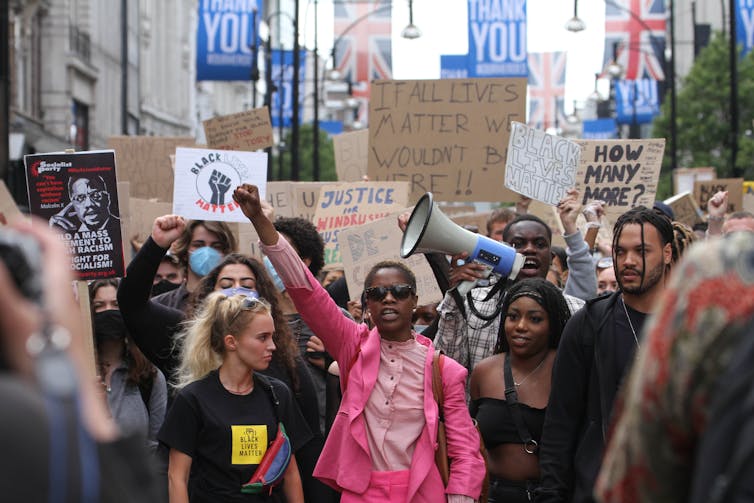
It was most spectacularly demonstrated by the Black Lives Matter protests that followed the death of George Floyd in Minneapolis.
Social media allowed millions of people all over the world to be eyewitnesses to this gross act of police brutality.
Professional mass media, by applying its standards of verification and corroboration then disseminating the footage on its mass platforms, ensured the killing became known to the community at large, well beyond the confines of echo chambers and filter bubbles.
It also added that element of long-established public trust that respected news brands have to offer.
The world saw how powerful that combination was. A single act of police violence with racist overtones in a relatively obscure American city set off protests not just in the United States but in many countries with a history of police brutality against people of colour: Canada, Britain, Belgium, France, Australia, the Dominican Republic.
Thanks to the power of the media, the killing of George Floyd triggered protests around the world. AAP/Sipa USA/Sopa Images
And then the same combination exerted a high level of accountability on the police for their further acts of violence against the protesters, which spilled over into police violence against the media covering those protests.
These events show the importance of the community having a common bedrock of reliable information on which to base a common conversation and a common response to an issue of common concern. It is the opposite of the fragmentation that is created by online echo chambers.
If Margaret MacMillan is right, and the world really is at a point where significant economic, political and social change is possible, let’s hope the media might be brave and honest enough to reflect on the contribution they have made to the creation of democracy’s crisis, and be prepared to change in order to help rebuild public trust in democratic institutions.

Wednesday, June 17, 2020

Revolutionary ideals of the Paris Commune live on in Black Lives Matter autonomous zone in Seattle

The Capitol Hill Autonomous Zone in Seattle. Stephen Brashear/EPA
A new autonomous zone set up in Seattle by the Black Lives Matter (BLM) movement bears some striking similarities with the Paris Commune of 1871. Despite its brutal ending, the seminal event in the French capital 150 years ago set the agenda for progressive urban politics and broader social justice movements ever since. But while what is happening in Seattle shares some of the political visions of the commune, it faces an altogether different and more sophisticated threat – of being co-opted by creative capitalists.
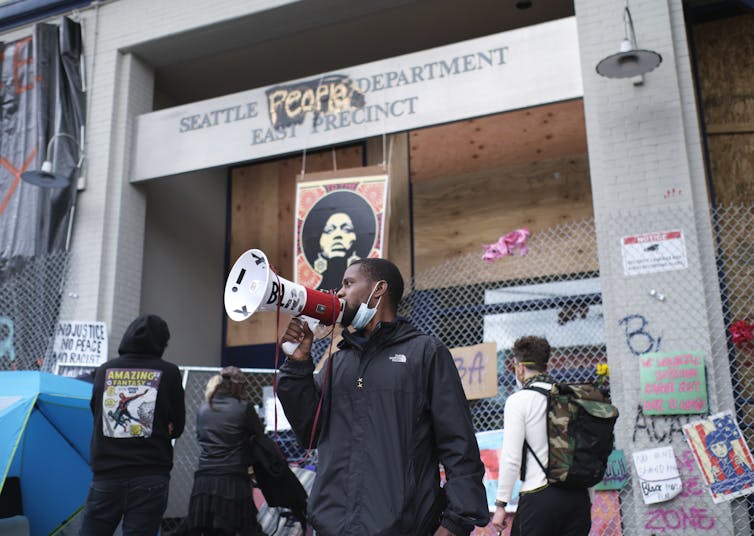
The Capitol Hill Autonomous Zone in Seattle – or Chaz as it has come to be known – was set up on June 8 in the Capitol Hill area of Seattle. It came about as a result of BLM  protesters moving in after the Seattle police abandoned the precinct due to clashes with protesters.
Since then, the protesters have barricaded the perimeter and set up a “no cop co-op” offering free water, hand sanitiser, face masks, food and other supplies. There are teach-ins, street art installations and other activities often associated with anarchist urban protest camps.

Centres of protest

Cities have been the focus of protests movements for centuries, because as urban sociologist Saskia Sassen has argued, the city has always been a place where the powerless can make history. As such, the creation of Chaz has the potential to cement the movement firmly within the pantheon of urban revolutionary histories. And given the list of demands that it has produced, which includes abolishing the police, retrials, amnesties for convicted protesters and rent control, there is a deeply radical politics at its heart.
So there are some obvious comparisons to make between Chaz and the Paris Commune. In Paris, the proletariat were reacting to their long economic oppression by the French elite. In response to an advancing French army looking to disarm them, they barricaded themselves in the capital.
The 2015 book Communal Luxury by the French culture and literature expert Kristin Ross paints a vivid picture of the Paris Commune as an important revolutionary moment. But more than simply accounting for the commune’s failure, she argued that its vision of a radically different world was more important than ever after the 2007-09 financial crash.

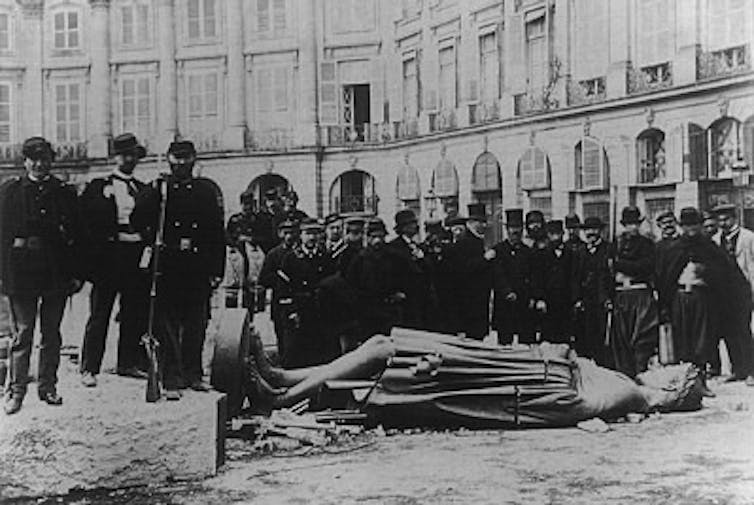
Communards with the Vendôme Column in 1871. André Adolphe Eugène Disdéri via Wikimedia Commons

In the three months that the commune existed, communards tore down imperialist statues such as the Vendôme column, changed the education system so that it empowered the working class and abolished the police. Debt was cancelled and rent suspended. There were street festivals and migrants, refugees and women were empowered. The commune, Ross argues so eloquently in her book, is more than a historical event; it is live resource that can also help us build a better world today.

Danger of co-option

Chaz creates a space for these radical politics to gestate, as a real-life urban laboratory of revolutionary thought.
But while there are certainly some similarities with the progressive ideals of the commune, there are some dangers too. The French capitalist state quickly and violently  massacred the commune’s inhabitants. While the Trump administration could potentially react with violence in Seattle, there is also the danger that the co-optive power of urban “creative” capitalism could soften – and eventually blunt – Chaz’s progressive ideals.
Similar autonomous zones have existed around the world for decades such as Christiania in Copenhagen, Denmark and  Užupis in Vilnius, Lithuania. But these and many others have become a kind of pastiche of their anarchist and anti-capitalist ideals. There may still be fundamental principles of solidarity, collective ownership and anti-capitalism within these places. However, they have become cocooned in a veneer of branding, advertising and commercialised and gentrifying versions of the “creative city”. This restricts and severely dilutes the dissipation of their ideologies.

An activist outside the abandoned police station in Seattle’s Capitol Hill neighbourhood. Stephen Brashear/EPA

With Chaz too, the lure of “protest chic” may be too much to resist – it is after all in Seattle, one of the US’s most heralded creative cities. For Chaz to resist this, it must resolutely be a space of the oppressed and the black voices of the movement. In essence, white people can help set it up and maintain it, but they must remain silent inside it and let the oppressed use the space to strategise and mobilise.
The Paris Commune didn’t end too well, and the murmurings from President Donald Trump are that the Capitol Hill Autonomous Zone may not last too long either. But that the commune is still taught and talked about today is testament to its lasting positive effect within urban politics. It may have been brutally quashed, but its anti-capitalist spirit set an example for nearly 150 years of subsequent urban struggles all over the world.
Cities have always been where the voiceless find their voice and articulate their demands most vociferously. For those who are deeply involved in the BLM movement (which should be all of us), let us hope that is still true.