Showing posts with label Community resilience. Show all posts

Sunday, March 14, 2021

Reviving the Cherokee language is a full-time job – literally

by Kristi Eaton, Next City: https://nextcity.org/daily/entry/reviving-the-cherokee-language-is-a-full-time-job-literally

A Cherokee language class in pre-COVID times (Photo credit: Cherokee Nation)

Though Jacob Chavez grew up around family members who spoke Cherokee - his grandmother was fluent and his father could understand the language - the 23-year-old didn’t learn it as a child.

Now, as a young adult, the Tahlequah, Oklahoma, resident is taking part in a unique program to train Cherokee Nation citizens and those interested in Cherokee culture to become highly proficient in the language by paying them to study it. It’s one that is quickly disappearing.

“It’s in my family and I would like to kind of like, build it back and strengthen it back amongst some of our younger generation that we have and then, it’s just a passion that I’ve had — probably since senior year of high school,” Chavez says. “I just wanted to have that part of my identity and I’ve just been working on it ever since. And I took a couple classes in high school and in college and then now I’m in this program.”

The Cherokee Language Master Apprentice Program is an immersion program for adult Cherokee language learners. The program is geared for novice language enthusiasts, and it is intense: The 40-hour-per-week program runs for two years. Participants are paid $10 per hour, says Howard Paden, Cherokee Nation Language Department executive director.

“It’s not a whole lot, but what we have learned is people who have been really dedicated to learn the language—you have to have that many consecutive hours so they have to have the ability to live and continue to put some groceries on the table and that sort of thing,” he says. “So, it’s worked out really well. You know, we haven’t expected to make them be rich by any means, but we do want them to survive while they learn the language. And so that incentive has allowed people to focus just on the language instead of other things.”

The program, which started about six years ago, has grown. It went from having four students per year to 16, so at any given time, there will be 32 participants taking part in the two-year program when fully filled, Paden says.

For the Cherokee Nation — the largest tribe in the United States by population with more than 380,000 citizens worldwide — the program is taking on extra importance. There are about 2,000 fluent Cherokee speakers, according to Paden, and in the last year, more than 100 have died, some due to COVID-19-related illnesses.

“Right now, we’re losing roughly 5% of our speakers per year,” Paden says. “But we know that it takes quite a bit of time [to learn the language] and it’s not happening organically in our communities anymore.”

Losing so many fluent elders is one reason that the tribe placed them among the top of their COVID-19 vaccination list. According to the tribe, since receiving the first distribution of vaccines on Dec. 14, the Cherokee Nation administered more than 6,500 vaccines, including about 900 Cherokee speakers, as of Jan. 19.

Due to the pandemic, the coursework for the Master Apprentice Program is taught online, something that Chavez says has been difficult but he is making work.

“I’m a very in-person type of learner,” he said. “I can’t really do this technology interface kind of stuff, but I’ve had to adapt and I’m willing to do that. I want to do whatever I’ve got to do to learn and so it’s just kind of a means to an end, really. If I’ve got to use a laptop and get on Zoom, I’ll do that. But I’d much rather be in a classroom. I think we all would. But this is the world we live in and it is what it is.”

The Cherokee Nation looked to several different initiatives to help guide them when creating the Master Apprentice Program. They looked at a program within the Sac and Fox Nation, also based in Oklahoma, as well as the Euchee (Yuchi) and even the Māori from New Zealand.

The Cherokee Nation’s reservation encompasses 14 countries in northeastern Oklahoma, including parts of Tulsa County. There are ongoing discussions to possibly host a class at one Tulsa high school, though Paden is unsure where that stands now with the pandemic — both the high school and the tribe are doing most things online now.

Chavez believes that a tribe can’t have culture without language, and so that’s why he focuses on the future and learning the language.

“Those two things are just kind of joined, and if you lose our language and you still have culture, it’s kind of just a history, almost, because language is so ingrained inside of a culture,” he said. “You know, there’s names for all this stuff like games and ceremonies and things like that. You need the language to use all that. And so it’s vital for our nation and other nations that struggle with their languages … we’ve lost that connection between our elders and our youth because mainly they didn’t want to pass on language. [T]he consensus is that we’re losing it, so we’re trying to build it back now. It’s really important for us.”

Kristi Eaton is a freelance journalist based in Tulsa, Oklahoma. Her work has appeared in The New York Times, The Associated Press, The Washington Post and elsewhere. Visit her website at KristiEaton.com or follow her on Twitter @KristiEaton.

Wednesday, February 17, 2021

Water injustice runs deep in Australia. Fixing it means handing control to First Nations

by Sue Jackson, Francis Markham, Fred Hooper, Grant Rigney, Lana D. Hartwig  and Rene Woods, The Conversation: https://theconversation.com/water-injustice-runs-deep-in-australia-fixing-it-means-handing-control-to-first-nations-155286

Image: The Conversation

It’s widely understood that rivers, wetlands and other waterways hold particular significance for First Nations people. It’s less well understood that Indigenous peoples are denied effective rights in Australia’s water economy.

Australia’s laws and policies prevent First Nations from fully participating in, and benefiting from, decisions about water. In fact, Indigenous peoples hold less than 1% of Australia’s water rights.

A Productivity Commission report into national water policy  released last week acknowledged the demands of First Nations, noting “Traditional Owners aspire to much greater access to, and control over, water resources”.

The commission suggested a suite of policy reforms. While the recommendations go further than previous official reports, they show a lack of ambition and would ensure water justice continues to be denied to First Nations.

Three Indigenous children smiling in water
Water plays a fundamental role in the cultural, spiritual and physical well-being of Indigenous people. Shutterstock

No voice, no justice

First Nations people have almost no say in how water is used in Australia. This denies them the power to prevent water extraction that will damage communities and landscapes, and in many cases means they’re unable to fulfil their responsibilities to care for Country.

It also means First Nations are excluded from much of Australia’s agricultural wealth, which is tied to access to water for irrigation.

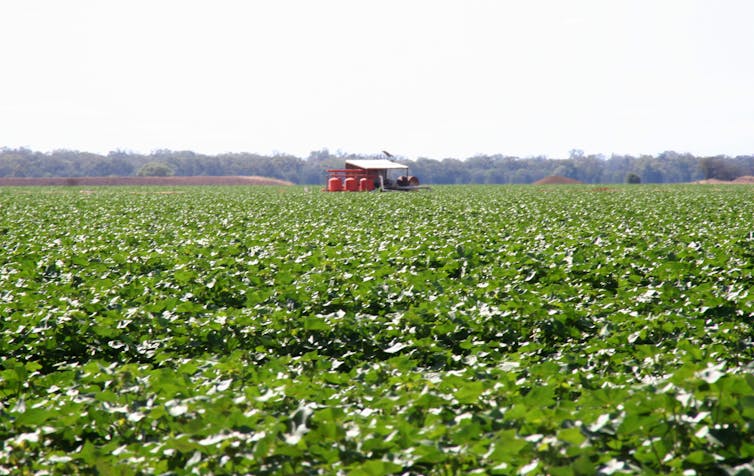
In the New South Wales portion of the Murray-Darling Basin, for example, our research found Indigenous peoples are almost 10% of the population yet comprise only 3.5% of the agricultural workforce. First Nations also own just 0.5% of agricultural businesses and receive less than 0.1% of agricultural revenue.

Cotton farm
First Nations people enjoy only a tiny portion of Australia’s agricultural wealth. Alvin Wong/AAP

Piecemeal water reform

The National Water Initiative – a blueprint for water reform signed by all Australian governments in 2004 – committed to consulting with Traditional Owners in water planning, accounting for native title rights to water and including cultural values in water plans.

The Productivity Commission report said progress towards these commitments “has been slow and objectives have not been fully achieved”.

The report contains several welcome recommendations, including that:

  • a new water policy be devised, with a dedicated objective and targets to improve First Nations access to water and involvement in water management

  • the recently formed Committee on Aboriginal Water Interests “co-design” new provisions relating to First Nations’ water interests, and have direct dialogue with water ministers

  • a First Nations-led model of water reform be adopted, centred on the concept of “cultural flows”. This concept calls for substantial increases to First Nations’ water access and more control in decision-making.

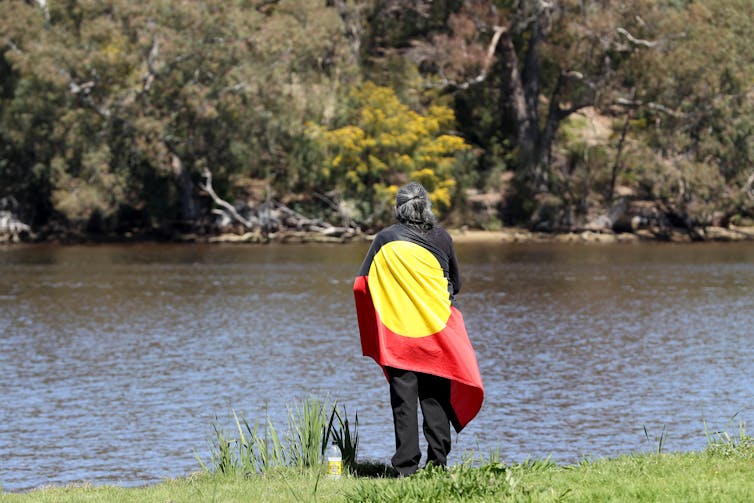
Man wrapped in Aboriginal flag stands on river bank.
The Productivity Commission recommended a First Nations-led model of water reform. Richard Wainwright/AAP

Cause of injustice ignored

Sadly, the Productivity Commission does not address the structural problems underlying inequities in Indigenous water rights.

In particular, it wrongly assumes policy success should be measured in terms of efficiency and the integrity of water markets, rather than justice for First Nations.

Water sold on markets goes to the highest bidder. This rewards large agricultural enterprises and others who historically held land and water rights, gained through the dispossession of First Nations people. And it penalises First Nations peoples who are unlikely to own productive farming land, or who don’t always wish to use water for irrigated agriculture.

In some cases, poorly funded Indigenous organisations have traded away their water rights to keep afloat, and will find it near-impossible to buy the water back. Our research shows this pattern drove a 17% decline in Indigenous water holdings in the Murray-Darling Basin over the past decade.

The commission’s recommendations rely heavily on policy architecture and legal foundations that fail First Nations.

For example, in 1998 the Howard Government legislated to  exclude water infrastructure and entitlements from parts of the Native Title Act. This means that infrastructure and licensing can proceed without negotiation with native title holders.

The Productivity Commission overlooked ways to correct this injustice – such as the Law Reform Commission’s proposal to change the law so native title holders can benefit from commercial use of water.

The commission’s response to conflict over developments such as dams is also inadequate. Rather than transfer final decision-making power to First Nations groups, it proposes that developments be more “culturally responsive”.

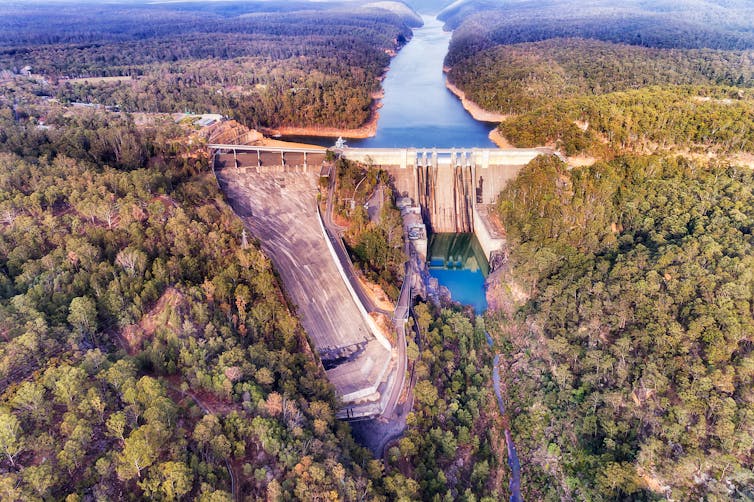
This will not protect cultural heritage. Case in point is the NSW government’s plan to raise the Warragamba Dam wall, creating a flood that threatens more than 1200 Indigenous cultural sites. Statutory protections are needed to head off such proposals.

Warragamba Dam
The Warragamba Dam plan threatens Indigenous cultural sites. Shutterstock

Stronger models for reform

The United Nations’ Declaration on the Rights of Indigenous Peoples is clear: Indigenous peoples should have the power to decide on development proposed on their lands and waters.

An agreement between the Ngarrindjeri nation and the South Australian government in the lower Murray River region  shows how even modest rights can both empower Traditional Owners and lead to successful environmental management.

The agreement enables a co-management approach where authority in developing natural resource management policy is shared. Unfortunately, reforms of this type are beyond the ambition of the Productivity Commission report.

Addressing water injustice also requires returning water to First Nations, such as by buying back water entitlements and guaranteeing cultural flows in water plans. The Productivity Commission outlines how this might occur, but falls short of recommending this vital measure.

The current policy framework has allowed some advances. But if water justice to Indigenous peoples is to be realised, changes to policy and laws must go far deeper.

Wednesday, January 27, 2021

The 15-minute city

by Carlos Moreno, TED: https://www.ted.com/talks/carlos_moreno_the_15_minute_city


Living in a city means accepting a certain level of dysfunction: long commutes, noisy streets, underutilized spaces. Carlos Moreno wants to change that. He makes the case for the "15-minute city," where inhabitants have access to all the services they need to live, learn and thrive within their immediate vicinity -- and shares ideas for making urban areas adapt to humans, not the other way around.

This talk was presented at an official TED conference, and was featured by our editors on the home page.

Sunday, December 20, 2020

In 2020, this organization has fed people through hurricanes, wildfires, an explosion and the pandemic. Here’s how

by Hasiba Haq, Ideas.Ted.com: https://ideas.ted.com/world-central-kitchen-feeds-people-jose-andres-nate-mook-crisis-pandemic-hunger/

Image: World Central Kitchen

Multiple hurricanes. Multiple wildfires. A deadly explosion. And a pandemic that won’t quit. 

2020 has been filled with crisis after crisis, with one relentless constant in their wake – hunger. And on the scene of as many crises as they can reach have been team members from  World Central Kitchen (WCK), a nonprofit founded by Spanish chef José Andrés that provides meals to those in need.

The WCK mission is simple: To feed people after disaster strikes. In 2010, Andrés went to Haiti to serve meals after the catastrophic earthquake. Inspired by the experience, he founded World Central Kitchen. Since then, WCK  has deployed relief teams around the world to sustain and nourish people when the worst happens. Despite their wealth of experience, 2020 has been a challenge … even for WCK. “It’s been the biggest, busiest year in our history — we’ve been on 5 continents, in 16 countries and almost 40 US states and territories,” says Andrés via email.

WCK credits its responsiveness to its ability to prioritize urgency. Their team understands that hunger requires immediate attention — there isn’t time to wait for ingredient approvals or fill out forms or navigate other bureaucratic hurdles. Instead, their staff and volunteers deploy as quickly as possible to disaster zones and work directly with those affected. The latter is a principle that’s central to their organization. “Everywhere we go, we get the same amazing lesson: A community knows what it needs, and we can achieve so much more when we listen to those needs and empower people to act locally,” says Andrés.

Another distinguishing feature of WCK is its ability to flex and adapt, something that many relief organizations and workers aren’t able to do. “You gotta be willing to go outside of the box and not wait around for somebody else to have the answer,“ says WCK CEO Nate Mook.

Mook joined WCK after leading and developing its #ChefsforPuertoRico initiative in the aftermath of 2017’s Hurricane Maria where its team served 4 million meals to island residents. Since 2018, he has led the organization’s operations as well as its emergency and disaster-relief efforts. We sat down with him over Zoom to understand just how WCK gets meals to those who need them, no matter where they are.
Get eyes on the ground ASAP 

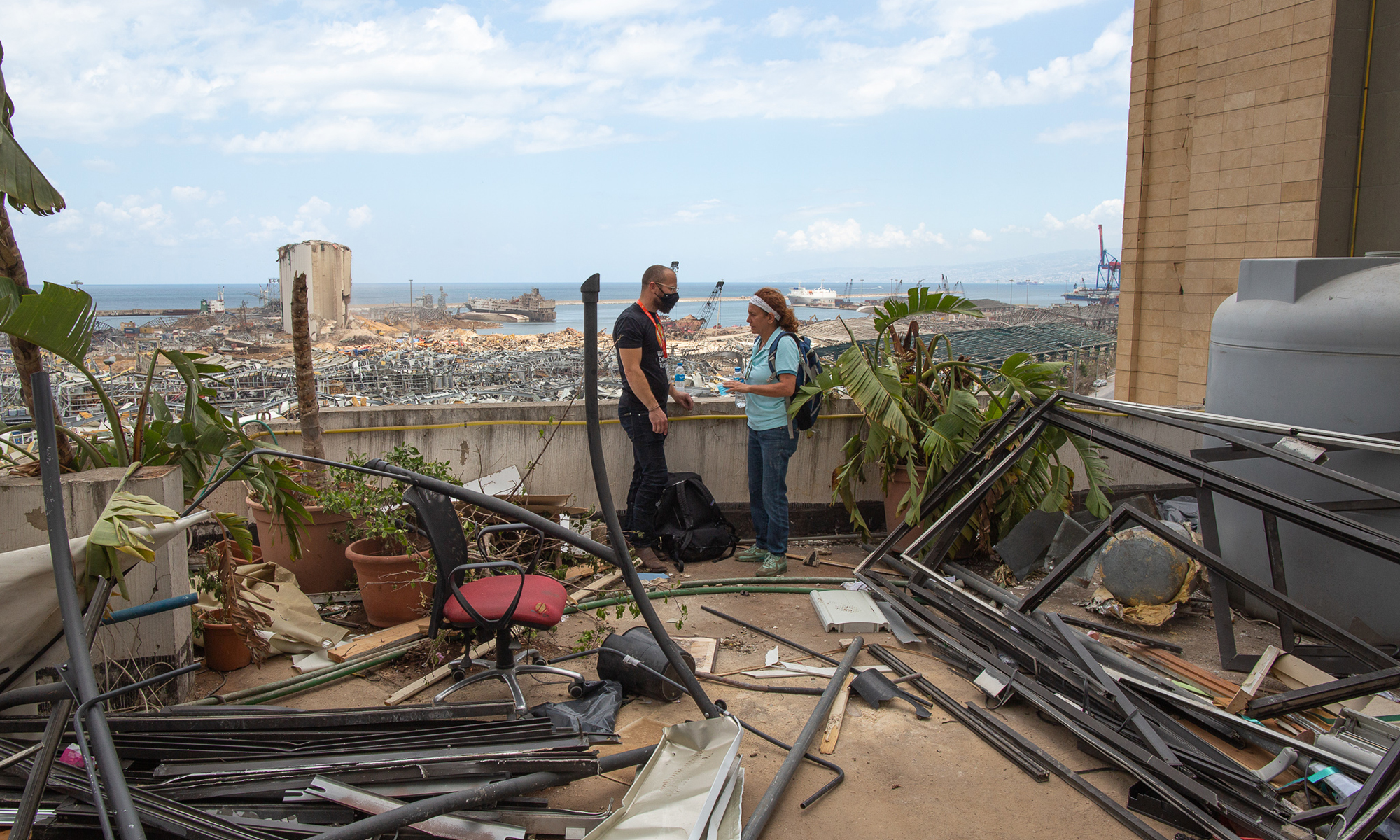
The first step to helping people in a crisis is to find out exactly what they’re facing. When an unexpected tragedy occurs, WCK dispatches an initial assessment team to the scene to understand exactly what happened and what is needed. The explosion in Beirut’s Port on August 4, 2020, was a perfect example. “We didn’t know what the situation was,” says Mook. “But we knew the damage was big, we knew that a lot of people were probably displaced, we knew that a lot of folks probably weren’t going to have electricity for a while, and we knew that a lot of restaurants, grocery stores and businesses were destroyed or damaged. But until you get on the ground, you know nothing.”

The humility of admitting they know nothing is essential to WCK’s work — leaving them open to input about how they can be most helpful and effective. Within 36 hours of the explosion, WCK had two members on the ground, who immediately connected with locals. “Their job is to put eyes on the situation, go to the places that were impacted, talk to the local leaders in those areas,” says Mook. “In Beirut, we connected with a bunch of local nonprofits that worked there.” They were able to determine where people were displaced, what the gaps were in terms of access to food, as well as what other organizations were already doing. These initial assessments are integral, because they reveal how urgent a situation is and how much effort and coordination is required on WCK’s part.

While an explosion is impossible to predict, extreme weather events like hurricanes can be tracked and monitored, which provides WCK with a huge advantage. “When it’s a hurricane and we roughly know what’s coming, we can pre-stage,” says Mook. “We can get people on the ground, set up a kitchen , and get everything ready to go. As Hurricane Florence hit North Carolina in September 2018, we were cooking as it was still hitting, delivering meals to shelters, firefighters, police and the emergency operation center.”
Lead with empathy

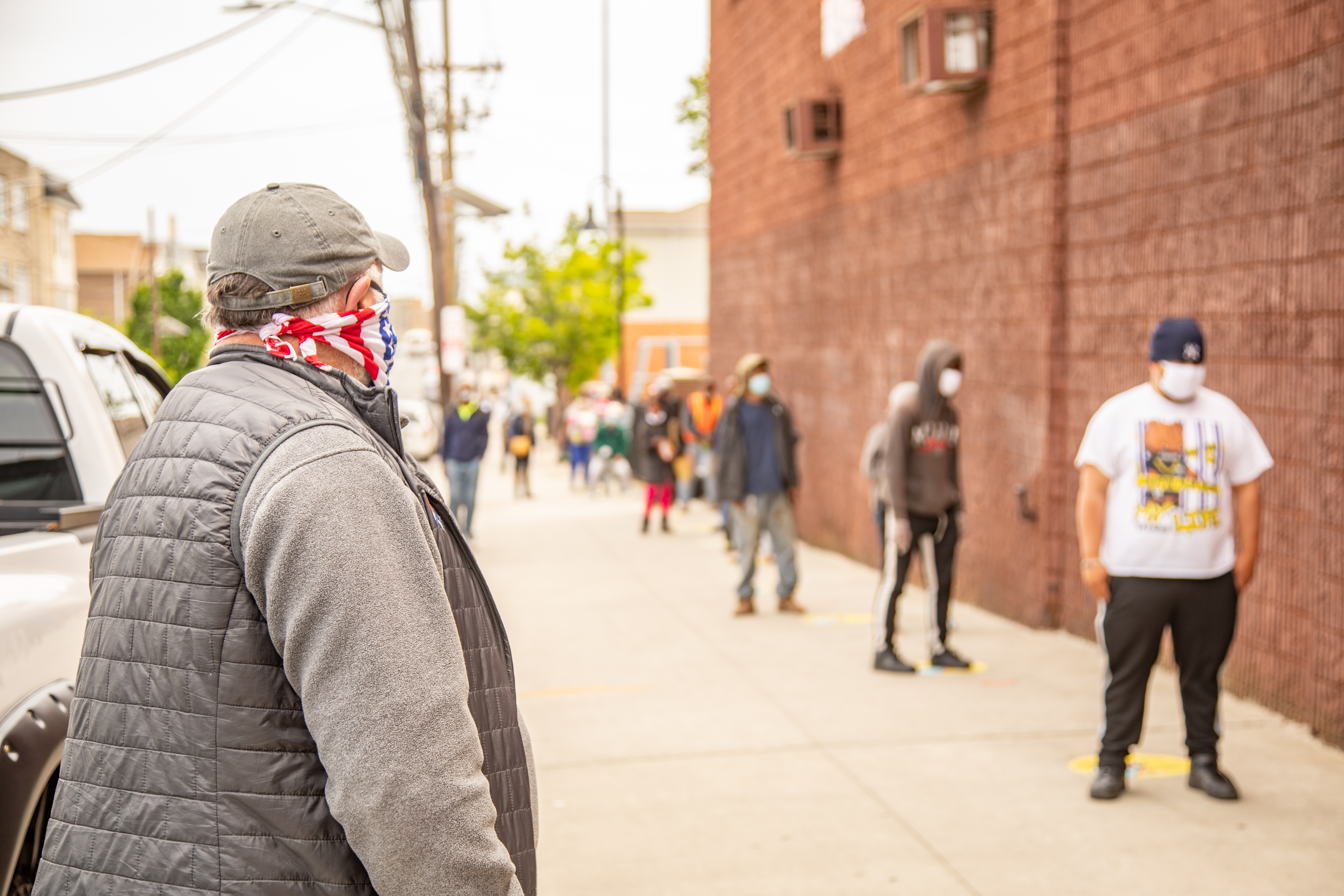
“Some of us assume that everyone has 72 hours of food in their house, but the reality is that a lot of people don’t,” says Mook. “When the grocery stores, electricity and water are all out, food is something you need now — it can’t wait until tomorrow or the next day.”

A guiding principle for WCK is to lead with empathy. This includes recognizing that not everyone is able to evacuate during a disaster. Some don’t have the resources to flee or they may not be physically mobile or they may not want to leave their home behind. WCK recognizes they’re on the scene in service to a community — not just giving to them. “It’s a subtle shift, but I think it is so critical,” says Mook.

Another part of leading with empathy is recognizing that not everyone is able — or ready — to ask for help. “It is not an easy thing to say: ‘I need your help,’” explains Mook. The WCK team has learned to be more pointed in their inquiries. Mook says, “You ask questions, like  ‘What’d you eat today?’, ‘What are your kids eating right now?’, ‘What type of food?’, and ‘Do you have enough water?’ Once you start asking these questions, then everything starts to crumble and you realize people need support.”
No need to reinvent the wheel — just add to it

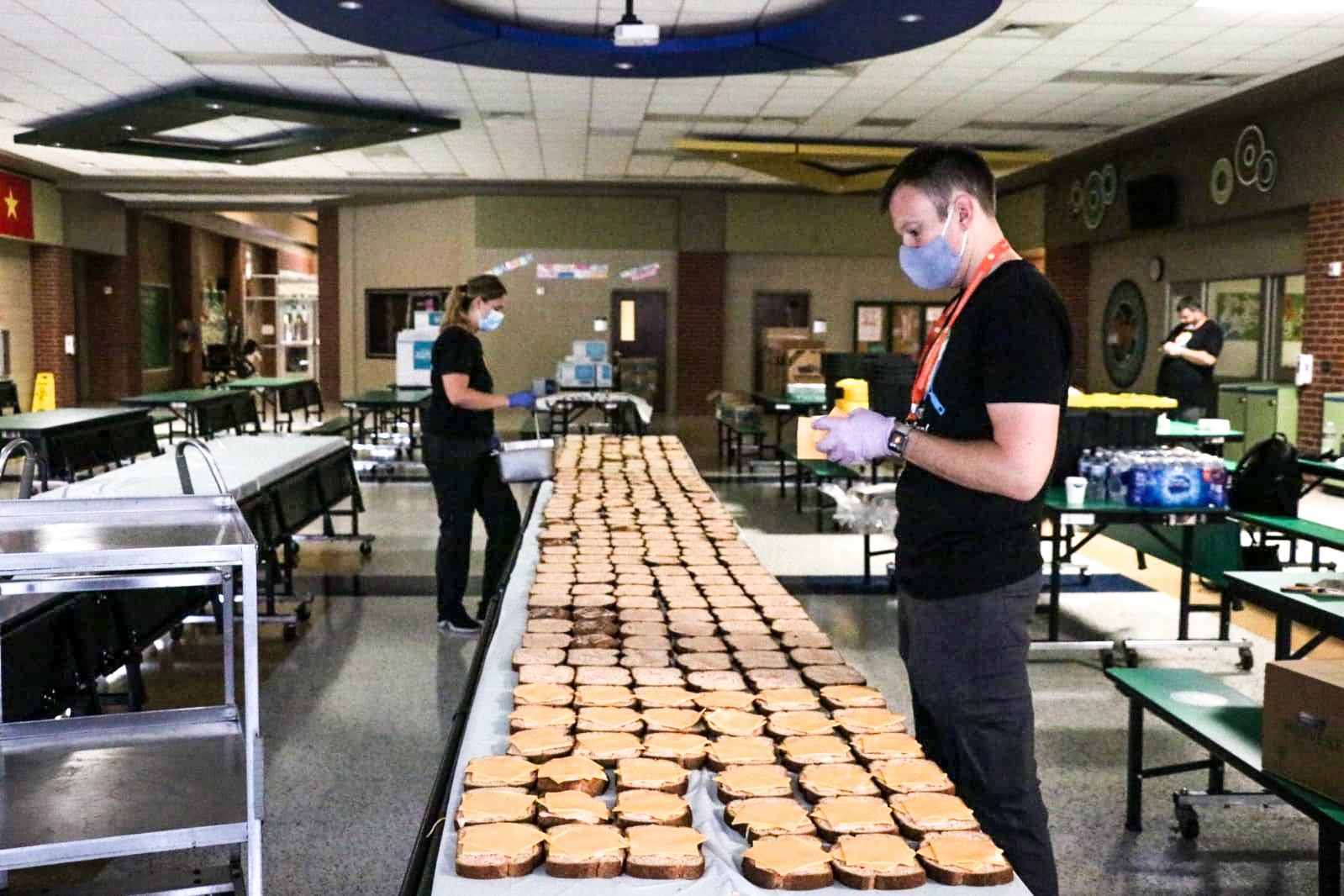
Mook says WCK looks for smart and effective solutions that are already available on site, instead of introducing new ones. When Hurricane Maria hit Puerto Rico in 2017, the island was devastated. Neighborhoods were demolished, electricity was wiped out, and residents needed food and water. Humanitarian responders like FEMA tried to ship bread over from the mainland US, but they faced hurdles because many ports in Puerto Rico had been destroyed.

WCK took a different approach altogether. “We just said, ‘Well, how about we make sure that the local bakeries have fuel for their generators, fresh water and ingredients so they can start producing bread on the island again?’” recalls Mook. “That type of thinking is a no-brainer, right? Yet it’s often not how things are done.”

An important question that WCK always asks: “What and who are already there?” Their teams connect with community members and map resources by finding out the locations of local suppliers and kitchens and who already has access to food. “We make phone calls to chefs, and that’s what’s amazing about the chef community,” says Mook. “You make a phone call to somebody who makes a phone call to someone else, and before long, you’re connected with all the chefs in that area.”

During August’s Hurricane Laura, mapping resources was important. Nobody knew exactly where Laura would make landfall, but WCK wanted to prepare itself. So they sent some team members already based in Louisiana to Lake Charles, a city that was predicted to be in the storm’s path. They ended up staying the night at a local casino,  connected with its management, toured the space including its kitchen, and let management know about WCK’s work.

When Laura hit Lake Charles, says Mook, “we immediately reached back out to the casino.” Because the casino didn’t have water or power, WCK’s team got hold of a food truck — using it as a mobile relief kitchen — and started serving meals out of a parking lot. A few days later, after the casino had generators and access to clean water, casino staff contacted WCK. “They said they weren’t opening the casino to the public, so come on in,” says Mook. “Within four days, we had accommodations at the casino, we had a massive kitchen there, and we were able to tap into local knowledge and local resources.”

In recent times, much of WCK’s work has been driven by the climate crisis. “We find ourselves responding to more and more climate disasters each year — the wildfires up and down the West Coast of the US are getting worse, the Atlantic hurricane season is longer and more destructive, and climate change will continue to cause more tragedies around the world,” says Andrés. “But what drives me is knowing that, after the storms clear and the fires are extinguished, there’s a real opportunity to build resilience into a community against future disasters.”
Benefit from knowledgeable volunteers

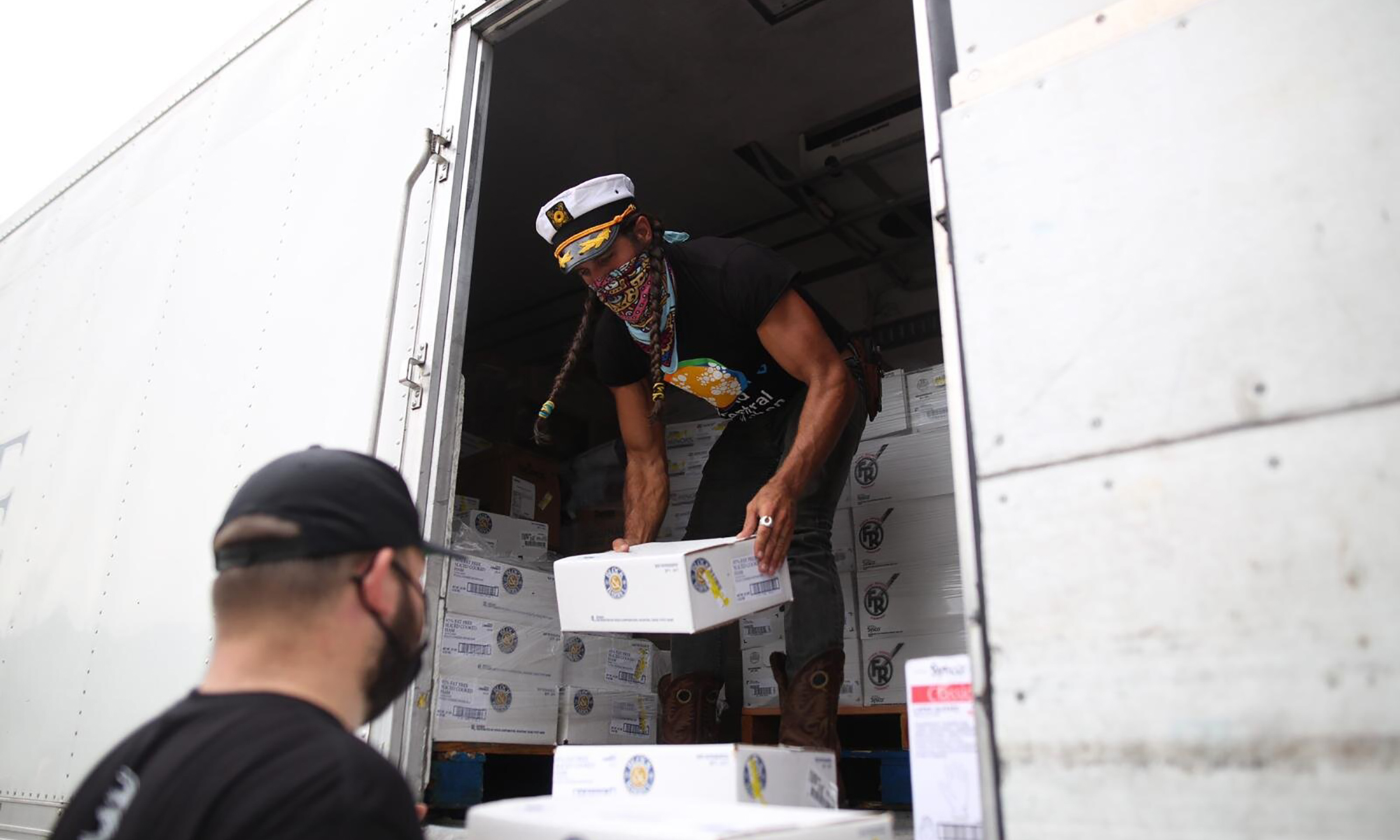
While WCK’s main office is based in Washington DC, its full-time staff — consisting of roughly 50 people — is located all over the world. It also relies on a global network of passionate contractors and volunteers. The volunteers are a mix of people local to the disaster area but also include seasoned supporters, such as a retired chef named Elsa, who fly in to help. “She’s not an employee at World Central Kitchen, but she’s part of the family,” Mook says warmly. Elsa is based in California, and she started working with WCK during wildfires. Since then, she’s travelled all over the world with them. This September, she led the feeding operations for the California wildfires. WCK covers the costs of all their food and non-food supplies by using funds raised from individual and corporate donations.

After an initial WCK team assesses the damage and the resources available in a disaster area, a WCK chef relief team comes in to get the work started. Experienced helpers like Elsa know how to keep operations going by organizing the local volunteers who frequently step up to help their neighbors in need. “After a disaster, people in the community — folks who aren’t as worse off as others — want to come in and volunteer,” says Mook.

Once the local volunteers are established, the WCK personnel can slowly pull back. They’ll oversee operations for a few weeks, and when things are relatively stable, they’ll shift their teams to the next place in need. After spending a few weeks in Louisiana in August, the WCK teams moved onto Oregon to help those affected by wildfires.
Get ready to toss out established ways of doing things 

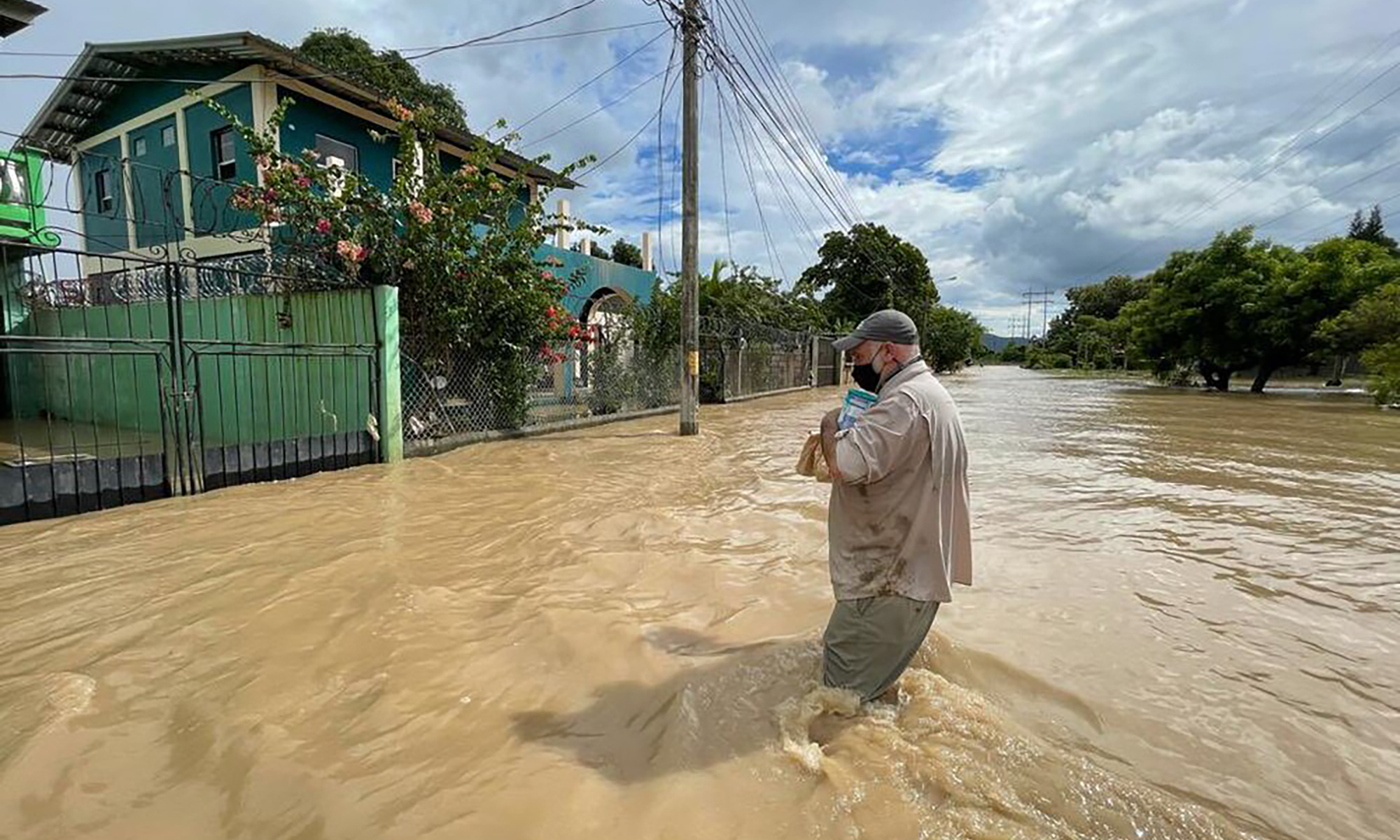
Even though WCK has their own tried-and-true methods for doing their work, they recognize that every disaster is different. “The first rule of feeding people is adapting to the circumstances,” according to Mook.

Sometimes, that can mean recognizing what people need is not what you’re used to providing. “When we were in the Bahamas responding to Hurricane Dorian [in August 2019], we were having to deal with water filtration and getting water to places for a short period of time,” says Mook. “We were also performing medical evacuations. We’d go in with a helicopter to drop off food, and we’d bring back people [and take them to medical care]. In a disaster, you gotta be willing to make those quick decisions and you can’t expect somebody else to come in with the answer. You have to say, ‘You know what? I’m going to figure out what I can do and then do it.’”
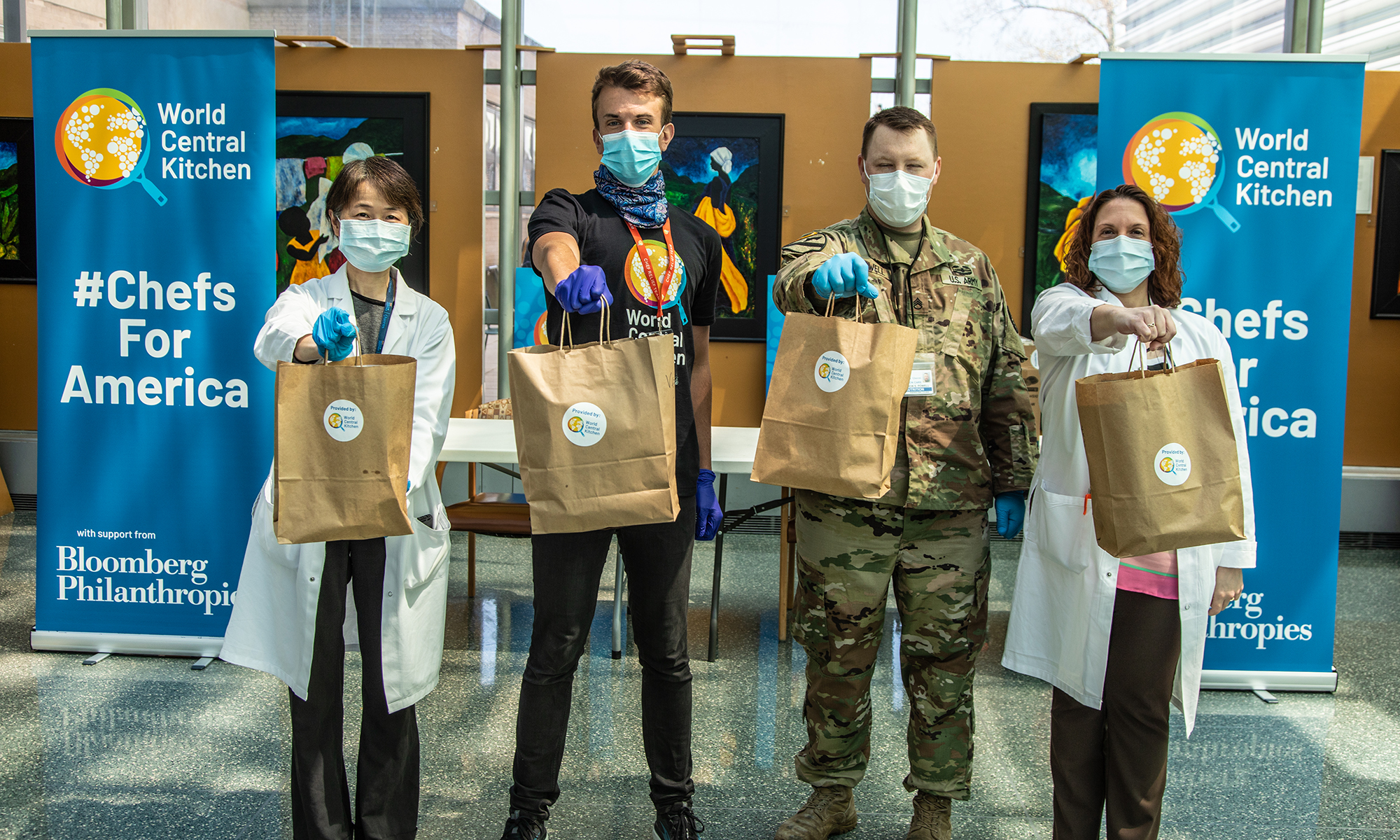
Adapt yet again when the unexpected — an ongoing pandemic — happens

Of course, one of the most challenging crises in 2020 has been the COVID-19 pandemic. Unlike natural disasters, which tend to be concentrated in a single area, the pandemic affected most of the world, making it hard to figure out where to begin. WCK realized it couldn’t be everywhere so they pivoted again. “Normally, when we work with restaurants, we partner with them or take over their restaurant and set up a big kitchen operation there and it becomes our operation,” explains Mook. “In this case, what we said is ‘You do what you know how to do — you do the meals, you buy from your suppliers, you manage it. I’m just going to tell you how many meals I need and where it needs to go. So that was a very new thing for us, because we weren’t the ones doing the cooking.”

WCK’s Restaurants For The People has two goals: Keeping small restaurants and food businesses open while providing fresh meals to first responders, front-line workers and those struggling with hunger. WCK has worked with over 2,000 restaurants in 400 cities in the US, directly disbursing over $135 million to them and serving over 12 million meals to people who need them. And the program has had positive ripple effects, with demand from restaurants helping keep farmers, fisheries and ranchers in business.

For Andrés and WCK, regardless of the number of disasters that life brings, they’re committed to innovating and pushing forward. “At the beginning of 2020, we had no idea what the year would bring, and now our team of chefs, relief workers, volunteers and supporters has grown bigger beyond even what I could have dreamed,” says Andrés. “When I founded the organization in 2010, we knew there were big  opportunities to change the way that disaster relief is done and we’ve just started to scratch the surface of those changes. There is one thing I know, which is what drives our team every single day: Wherever hungry people need to eat, we will be there.”

All images: Courtesy of World Central Kitchen. 

World Central Kitchen is the recipient of a grant from The Audacious Project, a collaborative funding initiative that is unlocking social impact on a grand scale. Every year The Audacious Project — which is housed at TED — selects and nurtures a group of bold solutions to the world’s most urgent challenges and gets them launched thanks to an inspiring group of donors and supporters.

Watch José Andrés’s 2017 TED Talk here:

Wednesday, December 16, 2020

Sustainable cities after COVID-19: are Barcelona-style green zones the answer?

by Anupam Nanda, The Conversation: https://theconversation.com/sustainable-cities-after-covid-19-are-barcelona-style-green-zones-the-answer-150774

Image: The Conversation

The lockdowns and restrictions introduced to control the spread of COVID-19 have resulted in huge changes to urban life. Previously bustling city centres remain empty, shunned in favour of suburban or rural areas where social distancing is easier and connections to the outdoors are abundant.

The roll out of vaccines provides hope for a partial restoration of normality in cities. However, the impact of COVID-19 could last much longer.

In particular, the pandemic has shown how damaging congestion, pollution and lack of green space can be – including how these factors have contributed to the severity of suffering for city dwellers. We have an opportunity to change city living for the better.

Barcelona offers an example of how city areas can be transformed to reduce pollution and increase access to green space.

The city pioneered the concept of superblocks, first introduced in 2016, as part of green urban planning. Superblocks are  neighbourhoods of nine blocks. Traffic is restricted to major roads around the superblocks, leaving the streets inside for pedestrians and cyclists.

Recently, further plans have been announced to expand green zones in the city’s central district, Eixample. This is a major expansion of low-traffic zones, giving priority to pedestrians and cyclists to reduce pollution and provide green spaces.

The new plan will cover 21 streets and have space for 21 new pedestrian plazas at intersections. At least 80% of each street  is to be shaded by trees in summer and 20% unpaved. A public competition in May 2021 will decide the final design.

The purpose of the plan is to ensure that no resident will be more than 200 metres from a green space.

There are many benefits to creating urban green spaces like these. They include an improvement in air quality and noise levels on the car-free streets, and a reduction in levels of nitrogen dioxide (NO₂) from road traffic. Exposure to high level of NO₂ can lead to a range of respiratory problems.

Green spaces have been shown to improve mental health, as well as lead to a reduction in risk of obesity and diabetes – conditions which significantly increase vulnerability to COVID-19.

COVID-19 has made the case for green urban planning even more compelling. However, these plans can come at a cost.

Barriers to green cities

A particular negative impact of green zones could be a high demand for housing, leading to subsequent rises in property prices. This can lead to gentrification and displacement of local residents and businesses. Care must be taken to make sure that homes remain affordable and urban green zones do not become rich enclaves.

The COVID-19 lockdowns highlighted the difference in living conditions faced by city dwellers. Green initiatives must work for all socio-economic groups, and must not exacerbate  existing inequalities.

In addition, while city centres are the usual focus areas for greening initiatives, suburbs and other peripheral areas also need attention. The goal is to reduce carbon dependence in total – not shift it from one area to another, or one sector to another.

The plan should also include steps to make private and public transport completely green. This could include replacing carbon-producing transport system with zero-emission vehicles and providing ample infrastructure such as dedicated lanes and charging stations for electric vehicles.

Cities differ hugely in how they look, shape and operate. One size will not fit all. If other cities choose to follow Barcelona’s model, local issues must be carefully considered. Superblocks work really well in a neat grid system such as in central Barcelona. But many cities do not have a well-designed grid system.

Cyclist on cycle lane
Many cities are looking to expand green initiatives. Robsonphoto/Shutterstock

However, the principles of green, environmentally friendly, car-free or restricted-traffic neighbourhoods can be adopted in any city. Examples of schemes include low-traffic neighbourhoods  in London, the 15-minute city initiative in Paris, or Manchester’s plans for a zero-carbon city centre.

While adopting such interventions, it is important to keep citizens’ daily needs in mind to avoid adding extra burdens on them. If motor traffic is to be limited, the availability of public transport must be considered, safe infrastructure for walking and cycling as well as adequate road structure for essential services or deliveries.

Significant capital investment is needed to support these plans. The Barcelona plan is projected to cost €38 million (£34 million). Much more will be required if it is to roll out to more areas. Cities in the developing world and poorer countries cannot afford such huge sums. Moreover, COVID-19 has left several cities laden with a huge amount of debt.

Green city initiatives need to be long-term – and created with the support of local people. Recognition of the benefits of green living and informed support of developments will result in positive behaviour changes by the citizens.

Wednesday, December 2, 2020

More parks, longer lives

by Elva Yanez, National Recreation and Park Association:  https://www.nrpa.org/parks-recreation-magazine/2020/december/more-parks-longer-lives/

2020 December Equity More Parks Longer Lives 410

Urban parks and green spaces protect our health by providing opportunities for physical activity, time in nature, social connection and respite. During the coronavirus (COVID-19) pandemic, they’ve helped us maintain our sanity when, day after day, we and our children have been cooped up indoors. Parks also filter air, remove pollution, buffer noise, cool temperatures, filter stormwater and replenish groundwater.

But access to parks and green spaces is starkly unequal across lines of race and class. Too many communities go without these health-promoting resources, facing greater exposure to pollution and other environmental hazards and higher rates of premature death from chronic illnesses, like heart disease and type 2 diabetes.

Tracking the Data

To better understand the potential health impacts of expanding park acreage in areas that face park deficits and lack trees, Prevention Institute partnered with the University of California, Los Angeles’ (UCLA’s) Department of Environmental Health Sciences and an advisory board of community-based organizations to study census tract-level data made available recently through the U.S. Small-Area Life Expectancy Estimates Project (USALEEP). We looked at life expectancy - the number of years a person can expect to live averaged across the population.

This new research (tinyurl.com/yxta6lu8) is based on data from the Los Angeles, California, region, but provides insights for park agencies across the country. In Los Angeles (L.A.) County, more than half of residents live in areas with high or very high park need, and these areas are concentrated in low-income communities of color.The research reveals that:

Increasing park acreage in areas that face park deficits and low levels of tree canopy could lead to significant population-level increases in life expectancy.

Targeted investments in park infrastructure would significantly benefit the health of Latino and Black community members.

This is especially important in communities, like South Los Angeles, where the median life expectancy is 77 years, which is well below the upper bound for the county as a whole. In Beverly Hills, less than 15 miles away, life expectancy is as high as 90 years - 13 years longer.

The research suggests that if all the census tracts in L.A. County expanded park access up to the county median, it could add up to 164,700 years in life-expectancy gains for residents living in park-poor tracts. Latino and Black community residents comprise almost 72 per cent of the gain (118,000 years).

Park inequities in Los Angeles and other cities across the United States reflect the systematic production of inequities through historical and current-day policies, practices and procedures. Factors contributing to park inequities have included racial segregation, biased planning decisions and exclusionary zoning, among others. Present-day drivers of park inequities include shifting responsibility for public services and reduced ability of cities with limited tax bases and large lower income populations to provide parks and recreation services.

Achieving park equity will require developing new policies and practices and reforming existing ones to prioritize investments in communities experiencing the greatest park deficits. Other actions agencies could take include: collecting data on park inequities and making it publicly available; building relationships with community-based organizations that work in and with marginalized communities to secure their input regarding park investments; evaluating agency policies and initiatives to assess their impact to reverse or reinforce park inequities and make corrections as necessary; and including line-item funding in public finance measures for parks (e.g., bonds, assessments, etc.) to explicitly eliminate park deficits. They also should ensure transparency and community oversight of park investments.

Most importantly, park agencies should engage with and listen to people living in low-income communities of color that have been historically excluded from park-related decision making. The materials in the Advocacy Toolkit for Park Equity, Life Expectancy, and Power Building (tinyurl.com/yxta6lu8), which were developed based on the research described above, are designed to support community-based organizations, their members and others who are building power to secure equitable investments in park infrastructure in disinvested communities.

Note: This work was supported by the Urban Institute through funds provided by the Robert Wood Johnson Foundation. It was guided by an advisory board that includes the Center for Health Equity at the Los Angeles County Department of Public Health and seven local base-building organizations: Community Coalition, Esperanza Community Housing Corporation, Long Beach Forward, National Health Foundation, Social Justice Learning Institute, Pacoima Beautiful and Promesa Boyle Heights.

Elva Yañez is the Director of Health Equity at the national nonprofit Prevention Institute (elva@preventioninstitute.org).