Showing posts with label Ecopsychology. Show all posts

Thursday, February 11, 2021

Nature: how do you put a price on something that has infinite worth?

by Tom Oliver, The Conversation: https://theconversation.com/nature-how-do-you-put-a-price-on-something-that-has-infinite-worth-154704

Image: The Conversation

There’s a new nature conservation strategy in town – and it means business. During the 1970s, 80s and 90s the main tactic to protect wildlife was to highlight the plight of charismatic “flagship” species (remember the WWF Save the Panda campaign?). Since the millennium, however, a new strategy backed by major conservation organisations such as The Nature Conservancy is to price the benefits that nature provides.

Not all conservationists agree, as borne out by fierce debates  in a major international initiative assessing global biodiversity. Yet the idea is now mainstream, as evidenced by the high profile Economics of Biodiversity: Dasgupta Review  commissioned by the UK government and lead by the economist Partha Dasgupta.

Proponents of the economic approach argue that if we don’t give nature a price, then we essentially treat it as having zero value. In contrast, if we articulate value in monetary terms, then this can be factored into government and business decisions. Harmful costs to the natural world are no longer “externalised”, to use the economic jargon, and instead the value of “natural capital” is incorporated into balance sheets.

There is certainly some merit to this approach, as shown in  pilot projects where land owners are paid to improve water quality or reduce flooding. Although it’s worth noting that decisions can go the other way too, as occurred when a major airport and trade zone in Durban, South Africa, got the go-ahead when forecasted jobs and economic growth were deemed to outweigh the economic value of the environment  that would be destroyed.

Obviously, not all aspects of nature’s value can be captured in economic terms. Nature is also valued in ways that are spiritual, for example. This is fully recognised by advocates of the approach, who suggest their estimates simply convey minimum values.

Red green and yellow parrot on a branch.
The large city of Durban is found in an official ‘biodiversity hotspot’. Slow Walker / shutterstock

On the other side of the debate, concerns about monetary valuation relate to how it might undermine other aspects of nature protection.

To give an example, consider the EU-funded NatureTrade  project, in which computer algorithms are used to quantify benefits from nature (such as carbon storage, pollination, recreation) derived on someone’s land. Landowners are then helped to draw up a contract so they can be paid for these, in an auction the researchers behind the project describe as an “eBay for ecosystem services”. This may seem a great idea, but studies have found that many landowners already protect nature simply because it’s the “right” thing to do, and paying them “crowds out” these social norms.

A hierarchy of needs

Despite the debate, both viewpoints can in fact be complementary.

As an analogy, take psychologist Abraham Maslow’s idea of the hierarchy of needs for human development. These are often illustrated as a pyramid, with quantifiable physiological needs and security at the bottom, and the less tangible values of belonging, esteem, and transcendence at the top. A recent book reveals that Maslow intended improvement of all these aspects simultaneously (after all, what use is security and safety if we do not have hope and meaning?).
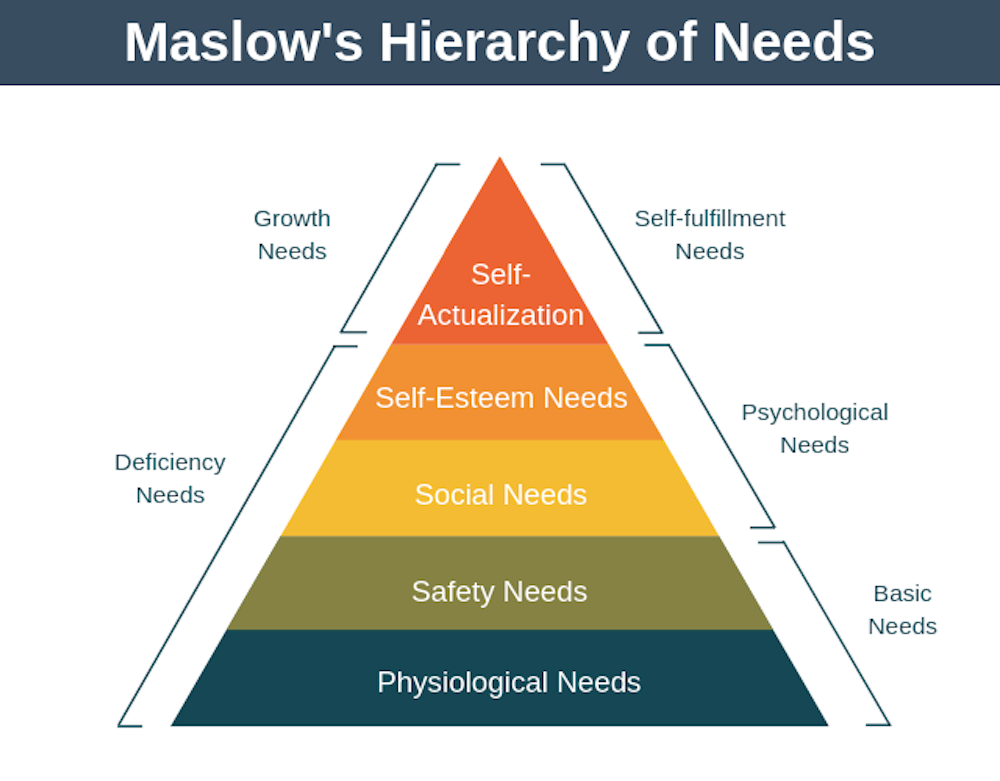
The hierarchy of needs pyramid
There is some debate over whether Maslow himself ever represented his theory as a pyramid. nmilligan / wikiCC BY-SA

If we were to draw up a similar pyramid representing a healthy environment, at the bottom would be the bare essentials provided by nature, such as having clean air and water, and insects to pollinate crops. Higher up in the pyramid would be the benefits of nature for mental health, and the transcendental aspects which give purpose and spiritual meaning. Different types of people and academic disciplines focus on different layers of the pyramid, but we need them all.

Sometimes the language used by economists doesn’t help. The Dasgupta Review provocatively states: “Nature is an asset.” Yet the boundaries between our self and the natural world are more fuzzy than they may first seem, as I evidence in my book The Self Delusion. As Sigmund Freud realised in 1930, when we feel kinship with – or to use the non-scientific term “love” – something, then we don’t objectify it. Instead, boundaries disappear and it merges with our sense of identity. It is antithetical to many people to refer to a dancing swift, an elegant swan or friendly-looking robin as an “asset”.

Words matter, and there is also danger that such language of commodification can encourage psychological distancing. People who feel less connected to nature do less to protect it. This is why there is a growing movement involving organisations such as the RSPB (the UK’s largest bird charity), to restore a sense of connection to nature, especially in children.

Given the worry that commodification of nature will pollute our worldviews, the big question is whether we can restrict such parlance to domains of policy and business accounting (where it can arguably do some good). I think we can. Consider how human life is valued: in monetary terms by insurance companies and for medicine procurement by health services, yet still in terms of infinite worth to most of us. Just because monetary valuation is used in some sectors doesn’t mean it will flood across to all.

A diversity of viewpoints and approaches is essential to protecting nature effectively. The “economics of nature” are likely here to stay, but that does not replace the tireless efforts of those who have worked for decades to convey the awe-inspiring and transcendental value of nature. As the naturalist  Henry David Thoreau put it: “If you have built castles in the air, your work need not be lost; that is where they should be. Now put the foundations under them.”

Wednesday, January 27, 2021

The Fundamental Connection to Nature

by Dr Robert Muller, Medium: https://medium.com/@DrRobertMuller/the-fundamental-connection-to-nature-e96cdb2886e4


So … we have moved so far from nature — or have we?

I mean, I’m not a spiritual guy. I don’t believe in any higher being, and I certainly don’t believe God or any such concept. And yet … I walk into the forest and I feel peace. Let me fill you in.

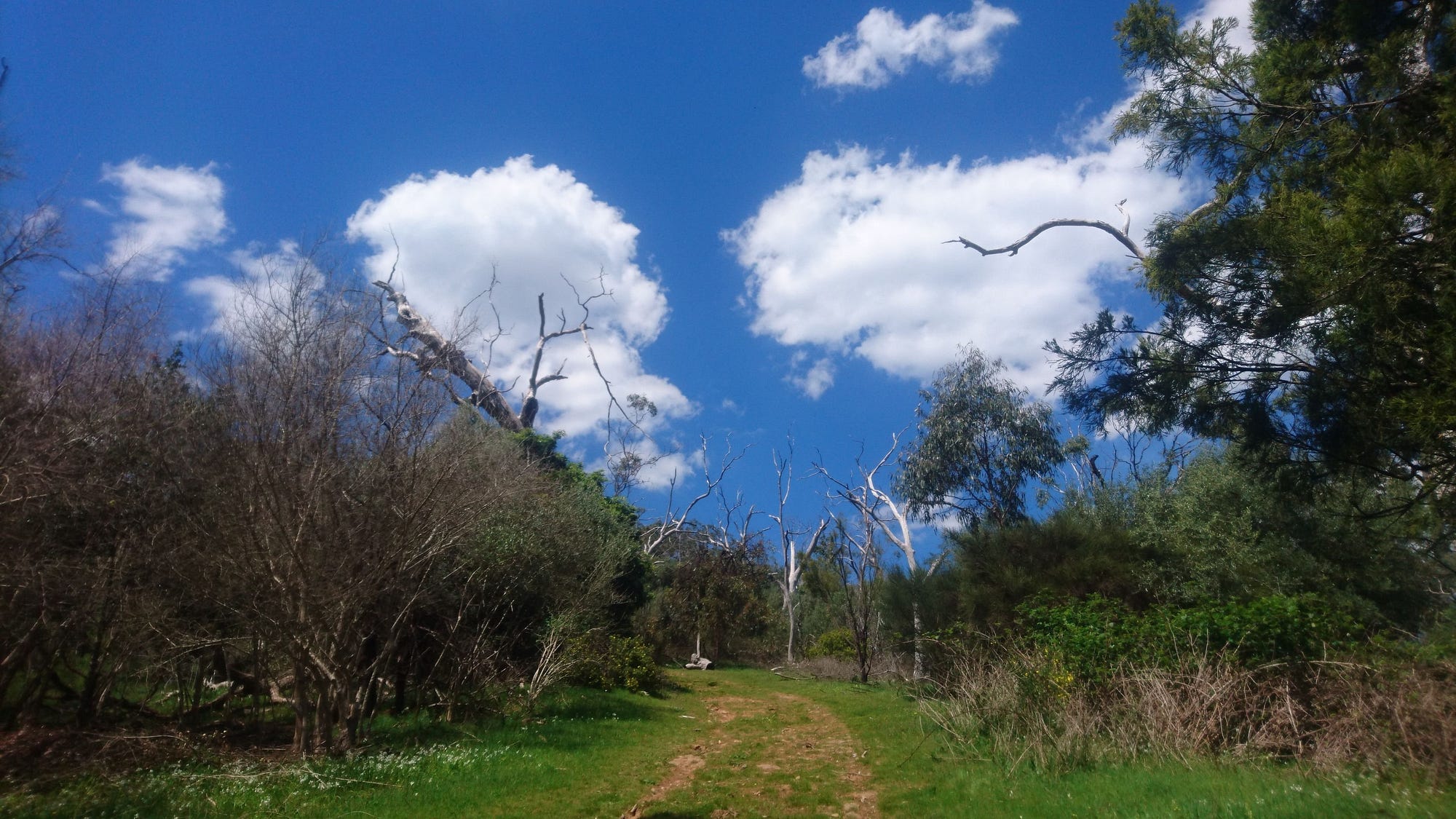
I work from home — my work is in community building and education, but when I want inspiration, I head for the forest which is within a ten minute drive of my home.

Image for post

(Image by Dr Robert Muller)

Give me the blue sky, the animals running free, the beautiful thick vegetation — even if I’m not trying to create ideas, they come to me when I’m out here.

Image for post

(Image by Dr Robert Muller)

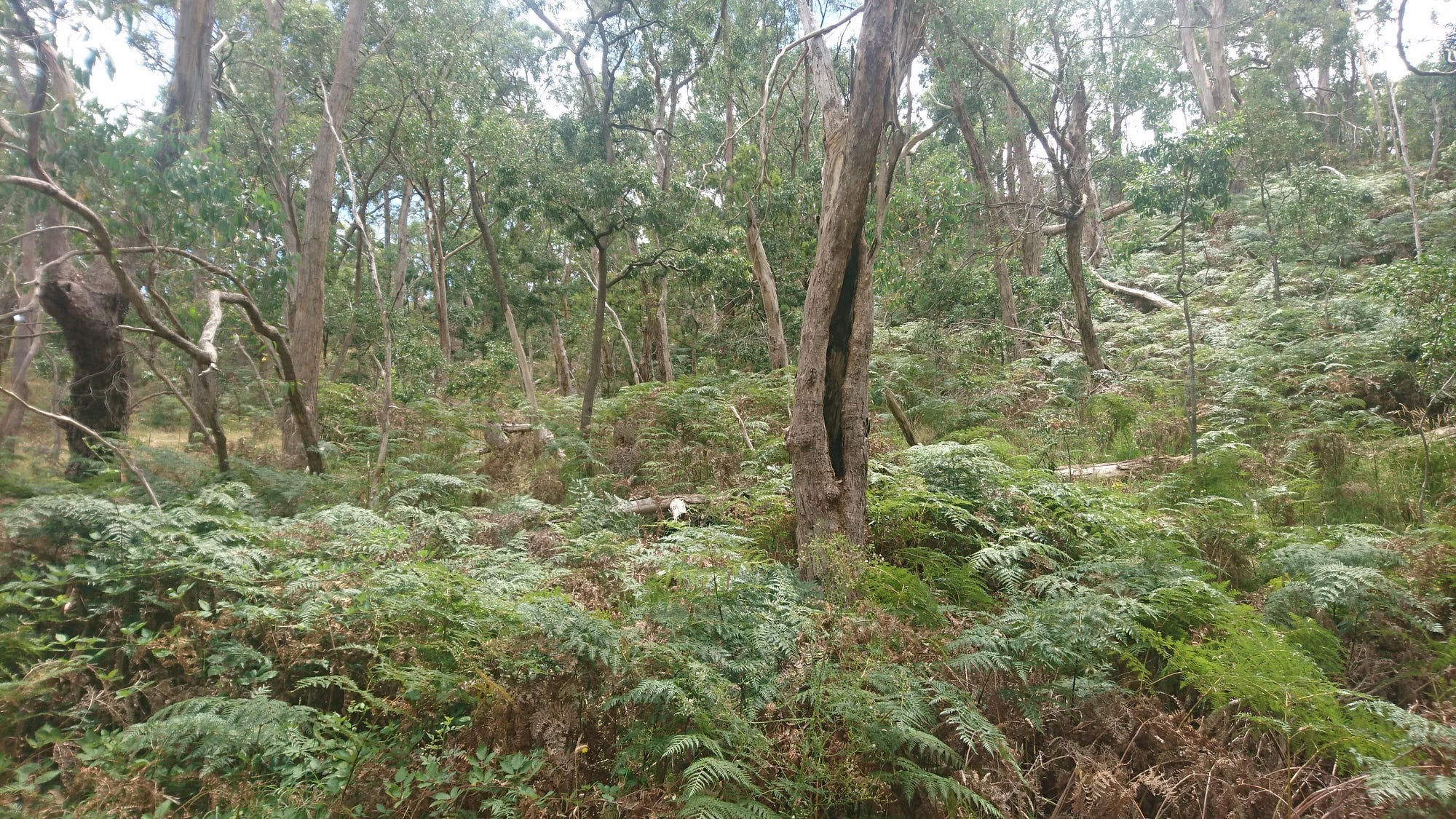
My local forest is a haven. It’s a sizeable wilderness area in the foothills on the edge of a city of 1.2 million people. When life gets too hectic, I drive into the forest where my shoulders drop, my lungs open, and my frowns just melt away. But … I do this EVERY day — EVERY lunchtime as a break from my work.

This sense of a haven in the midst of the fast pace of modern life — a place where you can be still with your thoughts but still with a feeling of being out there in the world — this is what it’s all about.

Image for post

(Image by Dr Robert Muller)

Sunday, October 11, 2020

VIDEO: Why we need national parks

by Elyse Cox, Ted-ED: https://www.youtube.com/watch?v=XJasV-itdoc&feature=youtu.be&utm_source=newsletter&utm_medium=social&utm_campaign=weekly-newsletter&utm_source=TED-Ed+Subscribers

Explore the creation of national parks and the importance of finding a balance between public use and ecological preservation.

In 1903, US President Theodore Roosevelt took a camping trip in California’s Yosemite Valley with conservationist John Muir. Roosevelt famously loved the outdoors, but Muir had invited him for more than just camping: Yosemite was in danger. It was part of a struggle to set aside land for both preservation and public use. Elyse Cox details the delicate balancing act of creating a national park. Lesson by Elyse Cox, directed by Boniato Studio.
Animator's website:
https://www.boniato.studio/ Sign up for our newsletter: http://bit.ly/TEDEdNewsletter Support us on Patreon: http://bit.ly/TEDEdPatreon Follow us on Facebook: http://bit.ly/TEDEdFacebook Find us on Twitter: http://bit.ly/TEDEdTwitter Peep us on Instagram: http://bit.ly/TEDEdInstagram View full lesson: https://ed.ted.com/lessons/why-we-nee... Thank you so much to our patrons for your support! Without you this video would not be possible! Brandy Jones, Shawn Quichocho, Gi Nam Lee, Joy Love Om, Miloš Stevanović, Ghassan Alhazzaa, Yankai Liu, Pavel Zalevskiy, Claudia Mayfield, Stephanie Perozo, Joe Giamartino, Filip Dabrowski, Barbara Smalley, Megan Douglas, Tim Leistikow, Andrés Melo Gámez, Renhe Ji, Ka-Hei Law, Michal Salman, Peter Liu, Mark Morris, Catherine Sverko, Misaki Sato, Tan YH, Ph.D., Rodrigo Carballo, SookKwan Loong, Bev Millar, Merit Gamertsfelder, Lex Azevedo, Noa Shore, Taylor Hunter, Kyle Nguyen, MJ Tan Mingjie, Cristóbal Moenne, Goh Xiang Ting Diana, Kevin Wong, Dawn Jordan, Yanira Santamaria, Prasanth Mathialagan, Savannah Scheelings, Susan Herder, Samuel Doerle, David Rosario, Dominik Kugelmann, Siamak H, Tracey Tobkin, Dwight Tevuk, Anthony Kudolo, Mrinalini and Yanuar Ashari.

Friday, August 19, 2016

Are We Feeling Collective Grief Over Climate Change?

Star Jet roller coaster after Hurricane Sandy (Wikipedia)
by Margaret Hetherman, Common Dreams: http://www.commondreams.org/views/2016/08/18/are-we-feeling-collective-grief-over-climate-change

In 1977, I was in middle school in Michigan, and a science teacher shared a tidbit off-curriculum.

Some scientists had postulated that as a result of "pollution," heat-trapping gasses might one day lead to a warming planet. Dubbed "the greenhouse effect," the image was clear in my 12-year old mind: people enclosed in a glass structure, heating up like tomatoes coaxed to ripen. It was an interesting concept, but something in the very, very distant future.

Fast-forward ~ 30 years later. The year was 2006, my daughter was three, and my dreams of a White Christmas were going to hell in a hand basket. There wasn't a snowflake to be seen in Brooklyn and it was DECEMBER - a far cry from childhood memories of jumping off the roof into fluffy mounds after a blizzard.

Something was awry. An Inconvenient Truth had just been released, and those graphs and slides were suspiciously coinciding with what we were beginning to see in the form of extreme weather, à la Hurricane Katrina. Any number of idioms might well have marked the juncture: "canaries in the coal mine" comes to mind.

"The disconnect is almost understandable: we are hitting tipping points of no return, etching our fate in glacial ice while the full consequence of our inaction remains hidden from view." So why weren't we coming together to nip this in the bud? Why were we failing to embrace what appeared to be so obvious?

The deterioration of our planet - the only home we have ever known and an assurance we used to take for granted - is bound to elicit a wide range of emotions in different individuals. Mourning is personal, but as a species, could it be that we are making our way through the stages of grief as outlined by the late Dr. Elisabeth Kübler-Ross?

Psychiatrist and climate activist Lise Van Susteren, M.D. doesn't necessarily think so. She points out that the Kübler-Ross framework was a response to people who hear devastating news and feel personally very involved, extremely vulnerable and know that the diagnosis is essentially inescapable. "That's not where most people are with climate," Dr. Van Susteren states. "It takes a long time for some people to lay down the sense within that something is true."

Yet she speaks of a collective anxiety that is insidious, even if we haven't managed to connect all the dots. "There isn't the slightest shred of doubt in my mind, that everyone on some level is anxious, deeply anxious, about climate change," the forensic psychiatrist says. She attributes her belief to decades of experience with people who have difficulty knowing what they are feeling on a deeper level, and she understands that anxiety comes from many headwaters.

"We can be anxious about ISIS, we can be anxious about our kids ... our health, our finances and all the rest. The confluence is such that it becomes amorphous and we walk around with a great deal of indescribable unease. And it can be either very difficult, or people will outright deny - depending on how deep or great their walls are - that it is coming from an overwhelming sense that the world is turned upside down from climate." 

Denial

Denial has been rampant since the earliest years of climate change awareness. Virtually every day brings reports of a new catastrophe. Bolivia's second-largest lake recently dried up and we won't soon forget the melting of tennis shoes at the Australian Open. Sure, there are cycles of nature to consider. But when you find yourself crossing Main Street in a rowboat on a regular basis? Or happening upon femur bones off the bank of Virginia's Tangier Island because the cemetery is underwater?

The disconnect is almost understandable: we are hitting tipping points of no return, etching our fate in glacial ice while the full consequence of our inaction remains hidden from view.

Dr. James E. Hansen, renowned climatologist and former Director of NASA's Goddard Institute for Space Studies in Manhattan speaks to the matter of timescale. "The problem is that the inertia of the system is not our friend," states the founder of and Adjunct Professor in Columbia University's Climate Science, Awareness and Solutions Program Earth Institute. It has caused the effects to appear only slowly. "That has been the fundamental difficulty. It looks like something in the far future."

Sitting across the table from the 75-year old scientist, it becomes rapidly clear that his greatest concern is for future generations. That, he says, was the point in writing his book, Storms of my Grandchildren. It also inspires his participation as guardian for future generations in a current landmark federal climate change lawsuit against the government for failing to protect children's constitutional rights to life, liberty, and property - a case that Dr. Van Susteren has collaborated on as well.

"These children are going to be around late in this century, so even though the large effects are not so soon, we can now see that they are going to occur if we don't rapidly phase down emissions," states Dr. Hansen. "And I think some of them - mainly the sea level issue - is [coming] sooner than has been assumed by many." Hansen believes people are moving in the direction of accepting that climate is changing and that humans are at least a factor if not the dominant factor.

But there is also the matter of our wiring.

"Denial is something that allows us sometimes to get through the day," says Dr. Van Susteren. "And in some cases that's really good, that's adaptive, but in other cases it's going to kill you ... and this one's going to kill you." 

Anger

While many in the denial camp have now set their tents up elsewhere, stragglers remain, buttressed by a heavily financed machine that has deliberately cultivated and preserved that pesky first stage of mourning. ExxonMobil and The American Petroleum Institute have long sowed doubt about the science behind climate change, taking their lessons from the tobacco industry playbook.

The Koch Brothers estimated by Forbes to be worth $44.2 billion each, have funneled mind-blowing sums through "charitable family trusts" and "think tanks" to influence policy and public opinion, planting seeds of uncertainty among the general public, and blocking attempts to regulate emissions, thereby ensuring that their pockets remain literally coated in oil.

What does it mean when our Senate Majority Leader urges the country's governors to defy regulations to reduce carbon pollution?

Some powerful forces have been messing with our opportunity to process the truth, and move beyond the stage of denial toward a stance of action. From where I sit, the angriest entities at the moment are those whose political and financial fortunes are at stake.

The truth is that our children, and their children, will be the ones to really know the rage. There's no telling how the devastation will play out, as the regions least responsible for the demise become uninhabitable; and the world as we know it, perhaps ungovernable.

"Right now, the path is, as the Buddhists like to say: if we're not careful we're going to end up where we're headed," offers Van Susteren. She believes we are headed to a place where the world will look at our country and recognize that our per capita emissions, the droughts, floods, and searing hot days will be "because we gaily or callously, or with willful ignorance went about our ways, consuming what we wished, emitting what we felt like." 

Bargaining

When the Kyoto protocol was signed in 1997, the atmospheric CO2 level was 368 ppm. Today, it stands at 404 ppm and I'm scratching my head because living in the Holocene has been good (think of it as "life with benefits"), and I'll be sad to lose Miami to the rising sea.

The lengths we've gone to with our bargaining, pollution trading, and decades-away targets are staggering. This year brought April in Paris and 175 countries signed a historic climate accord. The deal, which supports the cap-and-trade system, strives to keep global temps from rising more than 3.6°F by 2100.

Hansen, a proponent of an alternative Carbon Fee-and-Dividend model, argues that the UNFCC and IPCC scenarios assume negative emissions in the second half of the century, and that this will saddle young people with the task of having to phase out fossil fuels.

"They're going to have to somehow achieve negative emissions, which means you're going to have to suck that CO2 out of the atmosphere," says the scientist. "We have to make clear what the burden is, that we're leaving for young people."

The bottom line is that we best make haste. If a heat wave in Phoenix sounds brutal, consider Abu Dhabi and Dubai, which are slated for a heat index of 177°F during this century if we don't mitigate the magnitude of warming. 

Depression

In 2010, the NIH issued "A Human Health Perspective On Climate Change." The report portends dark consequences ranging from sexual dysfunction to the migration of large communities, hostile political environments, conflict, and war.

"Climate change has the potential to create sustained natural and humanitarian disasters beyond the scale of those we are experiencing today," reads the NIH report. "Extreme weather events, sea-level rise, destruction of local economies, resource scarcity, and associated conflict due to climate change are predicted to displace millions of people worldwide over the coming century."

But the future grief on our planet will not be like that of a natural disaster, according to Dr. Van Susteren, when there is a low point and then the worst is over - when people grieve, work together and then pick up. "The fingerprints of humans are all over the frequency and intensity of climate disasters ... what will happen when future generations look back and know that we could have taken action - that we knew - and we didn't?"

Dr. Van Susteren can't shake off a sense of shame when she speaks about how future generations will feel: "That we abandoned them willfully, negligently, intentionally, and out of dereliction of duty." 

Acceptance

Hansen, who first brought global warming to the attention of the Senate Energy and Natural Resources Committee 28 years ago, seemed initially taken aback by the proposition that humanity might be working through a framework typically associated with death and dying.

"That model sort of assumes that ... the consequences are all inevitable," expressed the man who is arguably the planet's most reliable champion of climate health. "So I'm not yet willing to accept that, and here’s the real story - that this is tragedy. Because it's avoidable."

Hindsight may prove the only true vantage by which to see how we've worked through the scaffold of bereavement, and it will be left to our progeny to judge whether we conducted business as usual, or reversed course when approaching the most critical thresholds.

Meanwhile, the cauldron simmers with a stew of emotions, actions and inactions. The realities hit closer to home with every Hurricane Sandy, each new Zika hot spot on the map, and with the ever-dwindling array of animals, from the Monarch butterfly, to the pelican and stork and 1300 other types of birds whose collective song, or lack thereof, might well serve as warning: we, too are a threatened species.

© 2016 Scientific American
Margaret Hetherman is a writer, editor and essayist. Her opinions have appeared in the Op-Ed pages of The New York Times, and other media work has appeared on CNN, MTV and the BBC.