Showing posts with label Happiness. Show all posts

Wednesday, January 27, 2021

The good life, balance and moderation, hospitality, and resilience: Aristotle and Epicurus

by Dr Robert Muller, Medium: https://medium.com/@DrRobertMuller/the-good-life-balance-and-moderation-hospitality-and-resilience-aristotle-and-epicurus-859008bebc8

Image for post

(Image: thequotes.net)

A vital part of the resilience toolbox is the notion of exploring the good life. This has been a major topic of debate over the centuries, starting with the ideas put forward by Aristotle and Epicurus, both great Greek Philosophers of the Classical Age of Athens.

Aristotle professed that the ‘good life’ could be attained through balance and moderation in all aspects of life, from eating and drinking through to doing business. Rather than an Eastern circular notion of ‘completing the cycle’ through balance, for the Greeks, balance and moderation was more of a pendulum in which the further from the centre that the pendulum would swing, the less moderation and balance there was. As one guided their life towards the centre, meaning a lesser swing of the pendulum, the more likely one would be to find balance through moderation. There are similarities here to the notion of resilience. If one has extreme thoughts and emotional swings, that person is less likely to be resilient. This does not mean that the resilient person cannot be passionate. What it does mean is that the passion must be channelled into action. This is a moderation of passion and a very positive and powerful outcome.

Epicurus has a somewhat different view from Aristotle, but it is still associated with a search for the meaning of the ‘good life’. For Epicurus, the main motivation is to avoid pain. This is somewhat controversial in terms of resilience because it may well be that going through the downs of life is somewhat educative in terms of being able to rebuild one’s life. However, let us explore Epicurus’ position a little further.

Firstly, many people see Epicurus as the epitome of excess, hence the notion of epicurian delights and the associated connotations. However, Epicurus was a highly moderate character whose argument was that excess in anything would only lead to some form of pain. Thus, the consumption of too much food would lead to heartburn, feeling overly-full, or in the long run, obesity, all of which lead to either uncomfortable physical sensations, including a lack of fitness, or feelings of guilt.

Likewise, exercise was considered to be good if it was a stroll in the park or a long, leisurely walk, just enough to keep one relatively fit. But, exerting oneself too much would lead to muscle aches and so on, which would be considered to be painful. For Epicurus, life was about avoiding pain. As a result, he created a haven on his own property where his friends and acquaintances would come together to eat, drink and philosophise, but all in moderation of course.

The implications of this philosophy for resilience may well lie in the idea that moderation, as similar to Aristotle, may be one of the keys to resilience. However, the jury is out on the concept of avoidance of pain.

The concept of hospitality also plays a significant part in resilience, particularly the Greek interpretation of the concept. Hospitality or Xenia, as it is known in Greece, is much wider than the notion that we understand in the English-speaking world.

Xenia is the idea of welcoming and entertaining the stranger who comes from far away. Of course, trust comes into this, but it is seen as the obligation of the host, not as something reciprocal that might be repaid at some time in the future, but as ‘the right thing to do’, because the stranger is at least temporarily displaced and in need of support in an unfamiliar environment.

The value of hospitality for resilience is about the spirit of hospitality, that we should treat those around us with hospitality, so that a sense of community can be built. If a community is strong, this holds the potential for greater personal resilience of community members as a source of support. More on community later, but at this point, one can say that indeed hospitality as the basis of community IS the social support side of the resilience equation. The final point on hospitality is that it is a reciprocity that drives it; instead, it is done through a sense of ‘doing the right thing’ (even though reciprocity itself is a valuable tool as well).

The Fundamental Connection to Nature

by Dr Robert Muller, Medium: https://medium.com/@DrRobertMuller/the-fundamental-connection-to-nature-e96cdb2886e4


So … we have moved so far from nature — or have we?

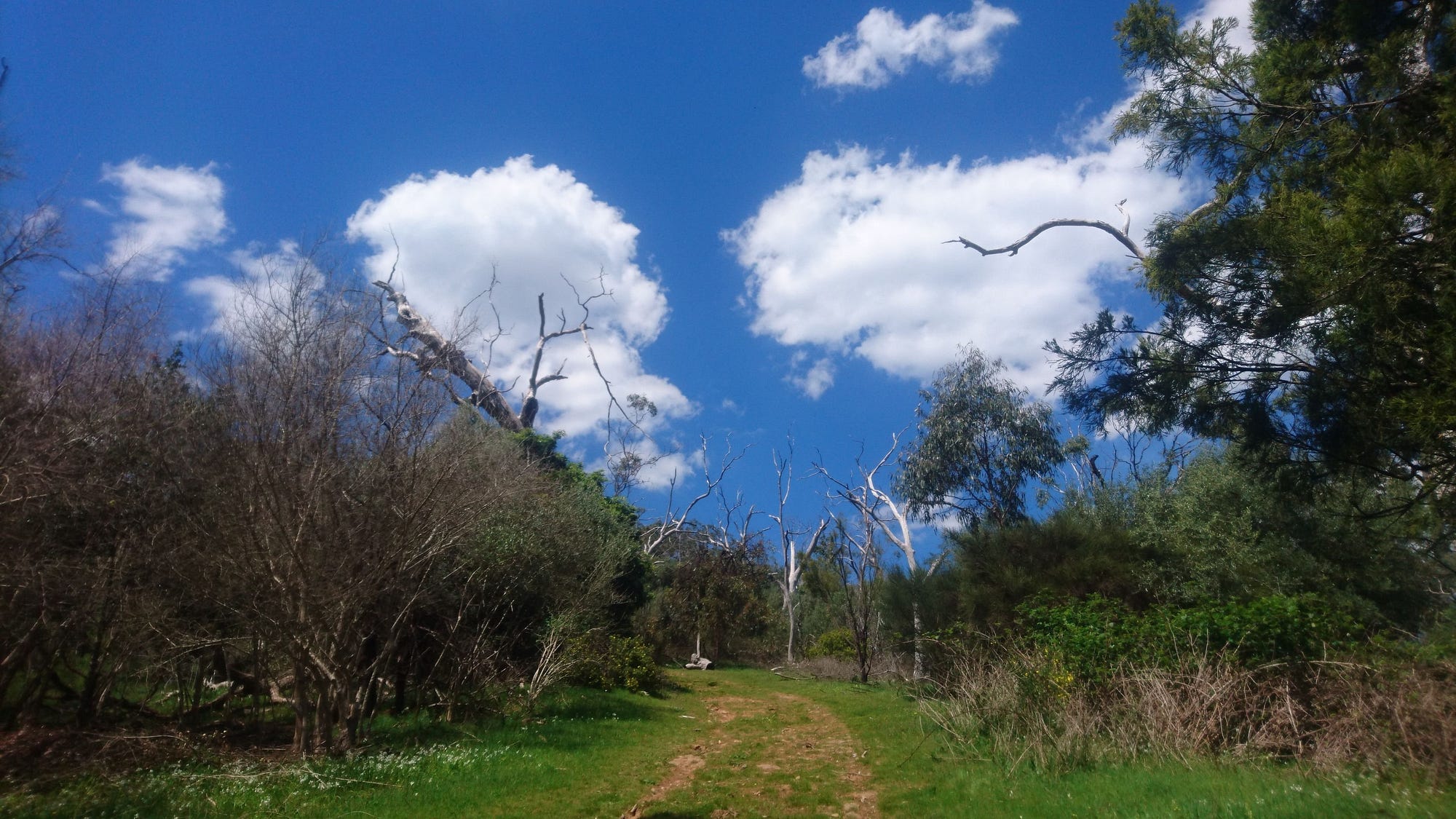
I mean, I’m not a spiritual guy. I don’t believe in any higher being, and I certainly don’t believe God or any such concept. And yet … I walk into the forest and I feel peace. Let me fill you in.

I work from home — my work is in community building and education, but when I want inspiration, I head for the forest which is within a ten minute drive of my home.

Image for post

(Image by Dr Robert Muller)

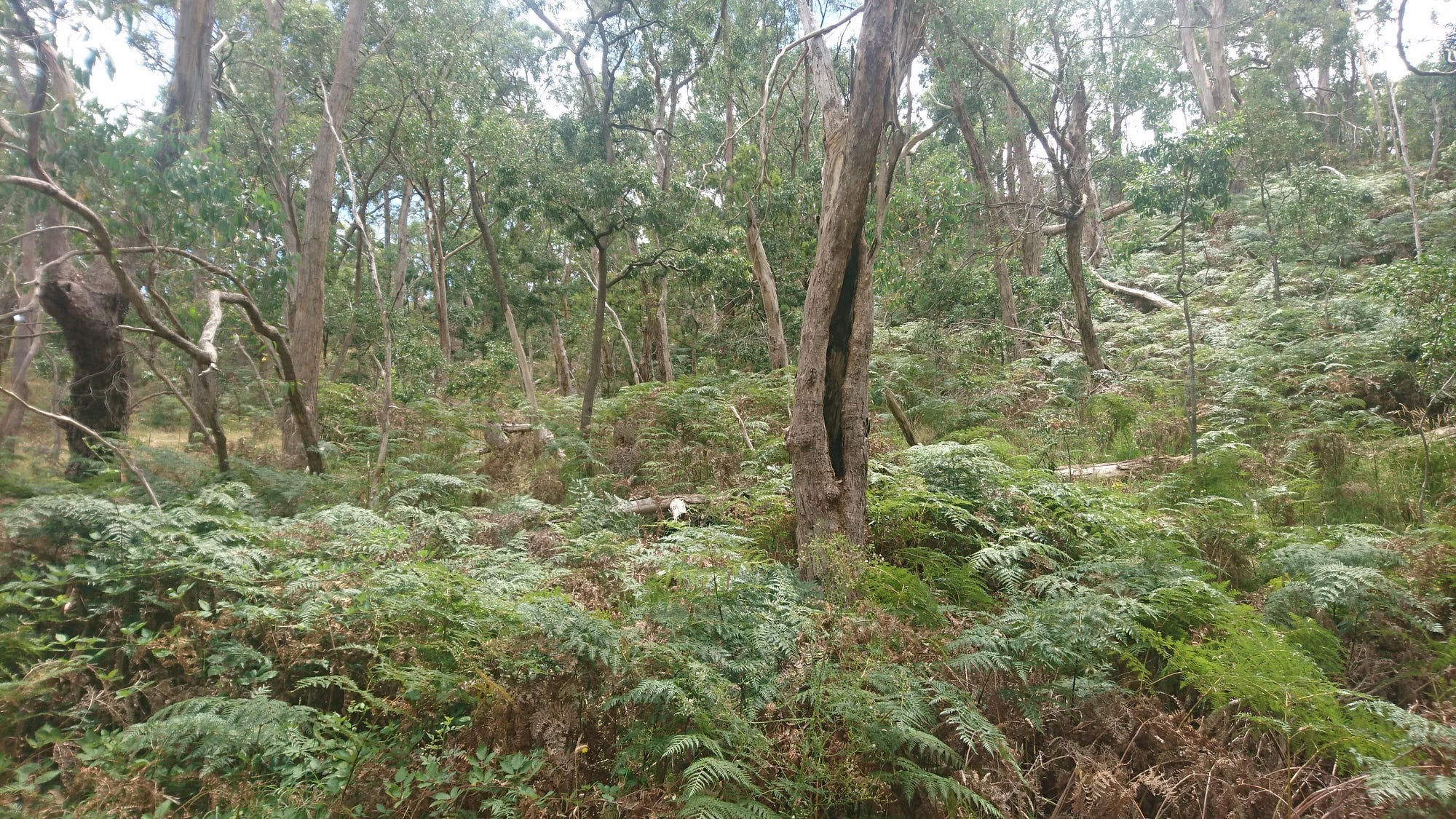
Give me the blue sky, the animals running free, the beautiful thick vegetation — even if I’m not trying to create ideas, they come to me when I’m out here.

Image for post

(Image by Dr Robert Muller)

My local forest is a haven. It’s a sizeable wilderness area in the foothills on the edge of a city of 1.2 million people. When life gets too hectic, I drive into the forest where my shoulders drop, my lungs open, and my frowns just melt away. But … I do this EVERY day — EVERY lunchtime as a break from my work.

This sense of a haven in the midst of the fast pace of modern life — a place where you can be still with your thoughts but still with a feeling of being out there in the world — this is what it’s all about.

Image for post

(Image by Dr Robert Muller)

Monday, July 16, 2018

According to Study, These are the Key Features a ‘Happy City’ Needs

Copenhagen, Denmark (Image: Nat Geo Traveller India)
City planners and designers want to build cities that are liveable, healthy and smart. Yet, in the abundance of research and guidelines on how to make healthy cities, happiness seems to be missing.
Research shows urban environments have an impact on our well-being and mental health, affect our behaviour and moods, interactions, day-to-day lives and even alter how our brain functions.
Our recent study found people associate their happiness with particular natural and built elements in the environment. This highlights how we can improve the design of cities to enhance people’s happiness.
Searching Instagram
In the first part of our study, we searched Instagram for images of the city people associated with happiness. We did this using four hashtags:
  • #cityhappy
  • #happycity
  • #cityofhappiness
  • #urbanhappiness
The images came from all corners of the globe, with no geographical limitation.
We sifted through hundreds of images, excluding photographs that were “selfies”, had non-urban attributes, or if they included people posing. Overall, we narrowed it down to 196 images, all of which exhibited characteristics of an urban area.
We found photographs tagged with one of the above hashtags consistently featured particular design elements. These were:
  • open space
  • natural elements (vegetation, sand, rocks)
  • historic or heritage buildings
  • colour
  • medium density buildings (up to six storeys)
  • water
  • human scale buildings (horizontal rather than vertical).
The same features came up time and again, irrespective of demographic and geographic location. This supports the idea there may be universal urban features that enhance happiness.
We then tested these themes on Brisbane residents through an online questionnaire.

Online survey

Twenty-two people took part in the online survey. They were asked to evaluate their happiness relative to different features, characteristics and images of areas in Brisbane. The survey comprised a series of multiple choice, selection and rating questions.
The results showed participants associated happiness with the same features as those who had posted on Instagram using the above hashtags. Most common to happiness was open space (86 per cent of respondents) and natural lighting (81 per cent).
Natural spaces with greenery such as parks, gardens and areas with trees, as well as areas that had water, had a significant positive impact on respondents’ happiness. Proximity to facilities, walkability of the area, green belts and views to mountains were also significant factors.
Historic or heritage character buildings ranked pretty highly (72 per cent), over the more modern style buildings. Laneways also scored pretty highly (72 per cent) as did views of the city (68 per cent) and colour (59 per cent). We noticed people liked other things, such as the materials used on sidewalks, roads and building facades.
This pilot study confirms there are specific elements which can be incorporated and factored into the planning and design of cities to enhance people’s happiness. Our further research is currently building on these initial findings, focusing on the relationship between density, urban design and happiness.

How can we use this?

Happiness is a major component of human well-being. But it isn’t factored into the widely recognised quality of life (including health, well-being and a number of economic factors) and liveability (including the standard of living) surveys of cities.
Some evidence suggests average happiness levels in Western nations haven’t improved in the last 68 years (since 1950). This is despite first-world incomes more than doubling in that time.
Happiness studies look at the links between human “subjective well-being” and the environment. We can determine people’s preferences, subjective view and association with elements of the built environment through research, and then apply the lessons to design to improve the quality of the urban environment.
Our research highlights the key elements to be cognisant of in urban transformation projects and designing for future urban areas. These findings show we can use such knowledge and apply this to existing cities to retrofit them for happiness.
People are increasingly leaving the broad acre, single detached home to live in denser, more compact urban areas. There are many benefits to this urban settlement. But to make this lifestyle compatible with human happiness and foster mental health, the design, planning and governing policy needs to consider such factors.
Originally Published by Domain.com.au, continue reading here.

Tuesday, June 19, 2018

Walking the City with Jane: An Illustrated Celebration of Jane Jacobs and Her Legacy of Livable Cities

by Maria Popova, Brain Pickings:
thebubble.com
Jacobs saw urban communities as vibrant ecosystems and fought fiercely against power-hungry developers like Robert Moses, who tried to turn them into commodities for economic growth. Governed by her conviction that “people ought to pay more attention to their instincts” — a countercultural idea in a mechanical age, amid the mid-century boom of blind consumerism and industrialism — she revolutionized our ideas about what makes a livable, human-centric city. Her legacy inspired the wonderful Jane’s Walk — an annual festival of free, citizen-led peripatetic conversations in cities around the world, in which people get to hear and share the stories of their neighborhoods and communities.
Joining the loveliest picture-book biographies of cultural heroes is Walking in the City with Jane: A Story of Jane Jacobs (public library) by the prolific Canadian children’s book author Susan Hughes and French-Canadian illustrator Valérie Boivin.
The story begins with young Jane organizing her first citizen protest — when the teacher introduces the class to a toothbrush and demands that the kids promise to use it daily for the rest of their lives, Jane sees the demand as tyrannical and refuses to make the promise, rallying her classmates to do the same. Irate, the teacher sends her home.
Uncompelled by school, Jane finds herself learning best in the real world, exploring the curiosities all around her.
After high school, she moves to New York City and falls in love with its blooming, buzzing chaos of humanity.
She takes the subway to random stops, explores the neighborhoods around them, and marvels at the details of the city, finding patterns and connections between things like the letters on manhole covers and the complex grid of electricity, gas, and water undergirding the city.
Out of this arises the awareness that a city, like a niche in nature, is an ecosystem. The synergy of its various human and nonhuman components — neighborhoods, parks, stores, streets, sidewalks — is what makes it thrive.
It was a radical notion at a time when urban planners were labeling certain neighborhoods “slums” and mercilessly tearing down homes to replace them with grey, soulless high-rise office buildings.
After Jane marries the architect Bob Jacobs, she continues working as a journalist and championing humane cities in articles criticizing the dehumanizing forces of commerce-minded urban planning, all the while raising her three children.
One day, she receives the shocking news that Robert Moses has labeled her very own neighborhood a “slum” and is pushing a plan to bulldoze parts of it to expedite downtown traffic. A four-lane highway would slice through the local park.
After Jacobs leads a protest at the meeting where Moses is presenting his plan, he reports to city officials that nobody objects to the development — “NOBODY, NOBODY, NOBODY but a bunch of… a bunch of MOTHERS!” (One is reminded of Roosevelt’s timeless admonition that of all ruthless politicians, citizens should most mistrust “the man who appeals to them to support him on the ground that he is hostile to other citizens of the republic, that he will secure for those who elect him… profit at the expense of other citizens of the republic.”)
But Jacobs refuses to back down and persuades the city government to temporarily close the park to traffic. She comes up with the inspired idea of a “ribbon-tying ceremony” — a counterpoint to the ribbon-cutting ceremonies that mark openings, this celebration of the closure to traffic is led by her three-year-old daughter, Burgin, and a friend. The girls tie the ribbon on the iconic arch of Washington Square Park as neighbors rejoice in the triumph of Jacobs’s vision of a city made not for cars but for humans and bicycles and dogs and songbirds.
Moved by this unprecedented upswell of citizen resistance, the city eventually rejects Moses’s plan to sunder the park with a highway. Jacobs continues to protest Moses’s various plans prioritizing the city as a product over the city as a haven for people. She organizes protests that successfully prevent a colossal expressway aimed at the spine of Manhattan. Eventually, she is arrested, only to be celebrated as a local hero.
In an embodiment of Thoreau’s assertion that “under a government which imprisons unjustly, the true place for a just man is also a prison,” her arrest itself becomes a turning point as outraged “nobodies” use their civic might to deter city officials from moving forward with Moses’s plan.
The story ends with Jacobs’s move from New York to Toronto, where she continues fighting against the dehumanizing forces of development, modeling the civic courage by which communities stand up for themselves, and inspiring generations to walk wakefully through their cities — “to listen, linger, and think about what they saw.”
Complement the altogether delightful Walking in the City with Jane with cognitive scientist Alexandra Horowitz on how to walk the city with new eyes, then revisit other wonderful picture-book biographies of great artists, writers, scientists, and revolutionaries: Ada Lovelace, Louise Bourgeois, Frida Kahlo, E.E. Cummings, Paul Gauguin, Henri Matisse, Louis Braille, Pablo Neruda, Albert Einstein, John Lewis, Paul ErdÅ‘s, Nellie Bly, and Muddy Waters.
Illustrations courtesy of Kids Can Press