Friday, January 31, 2020

Climate Crisis: We are not Individuals Fighting a Faceless System – We are the System That Needs to Change

Climate change no longer seems just a future threat. In 2019, major fires in Australia, Russia and California burned over 13.5 million hectares of land - an area four times greater than the size of Belgium. Major floods and cyclones displaced over four million people in Bangladesh, India and Iran, while entire townships were laid to waste by storms such as hurricane Dorian in the Bahamas.
This year, things show no sign of letting up: the Australian fires continue, Greenland ice sheets are expected to lose another 267 billion tonnes of ice and thawing Arctic permafrost is causing positive feedback effects that will intensify climate heating and future impacts.
In the face of such a global catastrophe, it can seem futile to take any action, individually. Over 36 billion tonnes of CO₂ are emitted globally every year, with each of us responsible for a fraction of this (for example, each person in the UK is responsible for around 5.8 tonnes; each person in India 1.8 tonnes). Even if we reduce personal CO₂ emissions, there are billions of other people who might not, plus a vast global economic system whose trajectory seems immovable. It seems unlikely that our lone actions and voices can really make a difference.
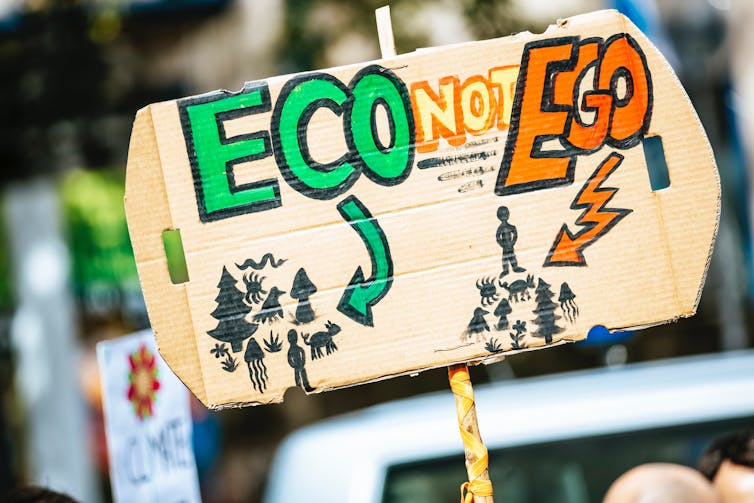
A sign at the global climate change strike. Markus Spiske/Unsplash, FAL
But our actions do matter. The global environment is withering from the accumulation of billions of small impacts. Each of our individual purchases or travel choices is a vote for how we treat other people and the natural world, and even if we don’t directly see the results, our votes do count.
Our choices ripple across the surface of the globe and accumulate to create seemingly unstoppable tidal waves of destruction. And those big global institutions that seem so powerful are actually just made up from our collective worldviews (past and present). We are not individuals fighting against some kind of faceless system: we are the system that needs to change.

Do individuals exist?

As I explore in my new book The Self Delusion, scientific evidence from a wide range of disciplines shows that we are not isolated individuals, despite often perceiving ourselves this way.
There are many ways in which this can be observed. To start with, most of our 37 trillion human cells have such a short lifespan that we are essentially made anew every few months, directed by a genetic code that is a shared heritage not just of humanity but all life on Earth.
Our minds, meanwhile, are deeply influenced by other people - every word, touch, pheromone received from others alters  the neural network in your brains, so you cannot really call yourself the same person you were when you woke up this morning. And the new science of social networks shows that we are linked together so closely that ideas, behaviours and preferences flow between us in a way that makes it unclear where one mind ends and another begins.
What’s more, new research in the field of environmental psychology finds that when we acknowledge this interconnectedness, we care more for others and the natural world. This idea was first speculated by “deep ecology” philosophers such as Arne Naess and has now been confirmed through modern quantitative surveys.
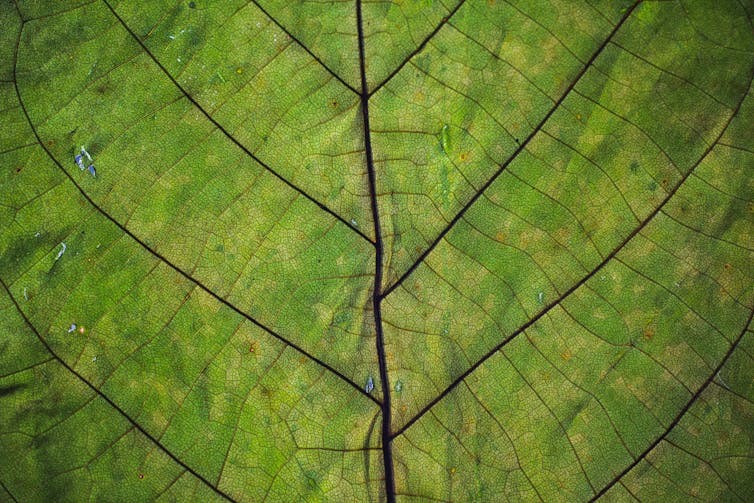
The world is far more intricate and interconnected than we think. Markus Spiske/Unsplash, FAL
When people feel more connected to nature according to various metrics, they tend to have greater happiness, autonomy and personal growth, as well as stronger attitudes and behaviours towards protecting the environment. Similarly, when people score highly on metrics assessing social connectedness, they tend to have lower anxiety, greater wellbeing and more empathy.

Collective change

To gain all these benefits, we need a change of mindset. It is often said that when we are young and optimistic, we strive to change the world around us, but when we are older and wiser, we realise the futility of this and aspire to change ourselves instead.
Yet to solve the major environmental problems the world now faces, we actually need to do both - to change the world and ourselves. In fact, it is even more nuanced than that - because changing ourselves is a prerequisite for changing the world. Realising the true nature of our human connectedness actually engenders more ethical and environmentally responsible behaviours.
So how do we achieve this? Once again, recent scientific research can help by identifying the most effective approaches. Outdoor community activities and environmental education increase both our psychological connectedness to others and the natural world, as do meditation and similar practices. Even computer games and books can be designed to increase empathy. These offer empowering ways to become part of something bigger, to overcome the delusion of individual isolation.
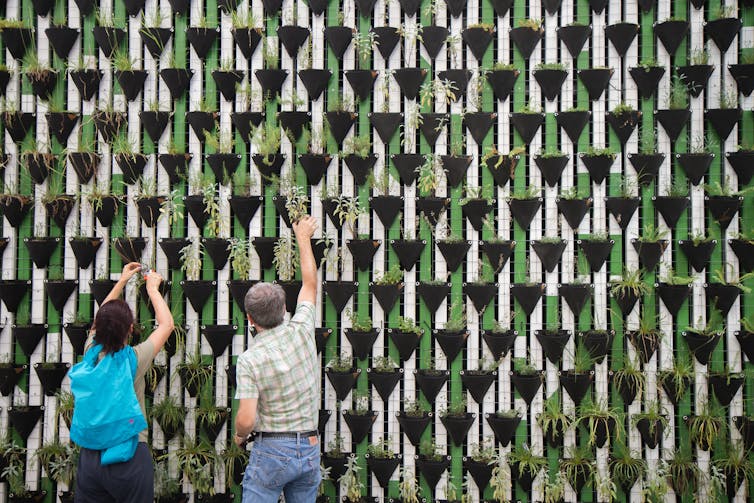
Community projects outdoors foster connection with one another and the natural world. Daniel Funes Fuentes/Unsplash, FAL
So although the impact of a lone individual to tackle climate change is negligible, fortunately, you are not just a lone individual - you are part of something much greater. We are deeply connected to one another at both a physical and psychological level, and when that truth is genuinely acknowledged, we act differently, becoming more compassionate and caring for each other and the environment.
Our interconnectedness also means that positive behaviours can cascade to influence many others. When we consider ourselves part of a collective, we can tackle the climate crisis.

Yes, Australia was Invaded in 1788: An International Law Expert Explains

by Rowan Nicholson, University of Sydney, The Conversation: https://theconversation.com/yes-this-continent-was-invaded-in-1788-an-international-law-expert-explains-130462


Should we remember January 26 1788 as “Invasion Day”?  The colonisation of Australia was an invasion from an Aboriginal and Torres Strait Islander perspective.

But critics of the name “Invasion Day” object that it emphasises just one side of the story - that from a European perspective the British merely “settled” land they did not think belonged to anyone, and there was no invasion in the strict legal sense. That is, similar to the way Germany invaded Belgium in 1914.

This objection is misplaced. The name “Invasion Day” does not just reflect an Aboriginal and Torres Strait Islander perspective. It also reflects the meaning of “invasion” within a European system of law - international law as it operated in the 18th and 19th centuries.

International law and colonialism

International law played a central role in colonialism that is sometimes overlooked today.

Debates about our history often focus instead on the domestic law that applied inside Britain and its empire. This law denied the pre-colonial peoples of Australia had either property rights in land (the issue that the High Court of Australia reassessed in 1992 in the Mabo case) or sovereignty (meaning the authority to govern territory).

But international law is a separate legal system. It is concerned with whether one nation has sovereignty in relation to other nations. And that is what matters here because it underpins the meaning of “invasion”.

International law in the colonial period, unlike today, had nothing to say about human rights, self-determination or genocide. It was shaped by and for Europeans, who used it to legitimise colonialism.

In the 1880s, for example, Henry Morton Stanley journeyed up the Congo River in Africa and made more than 200 treaties with chiefs in which they ceded their sovereignty to the king of the Belgians in exchange for trinkets or pieces of cloth.

Some international lawyers at the time even divided the world into a hierarchy based on supposed levels of “civilisation”, with Europeans at the top and peoples of Africa and Australia at the bottom.

But even within this system - European, colonialist and sometimes racist - there was pressure to accord a legal status to the supposedly least “civilised” peoples.

Take the African chiefs who signed Stanley’s treaties. The king of the Belgians wanted to be able to exhibit the treaties to rival colonial powers to show he had acquired sovereignty from the chiefs.

To advance his self-interest in this way, however, the king had to accept implicitly that the chiefs had originally had sovereignty themselves. This approach to acquiring colonial territory was common.

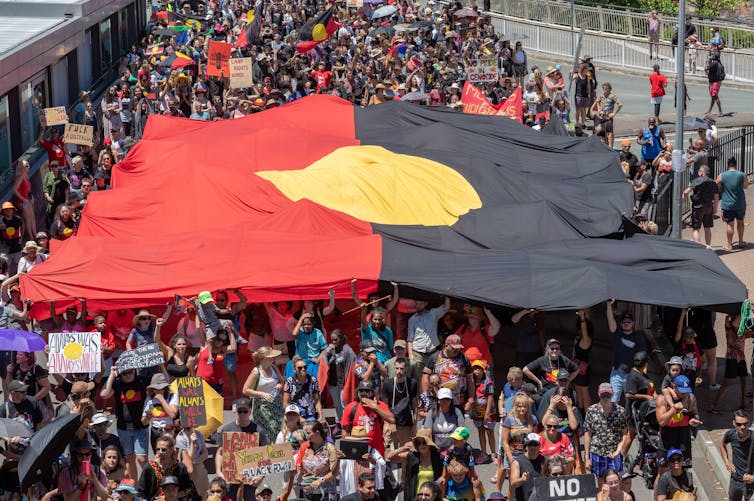
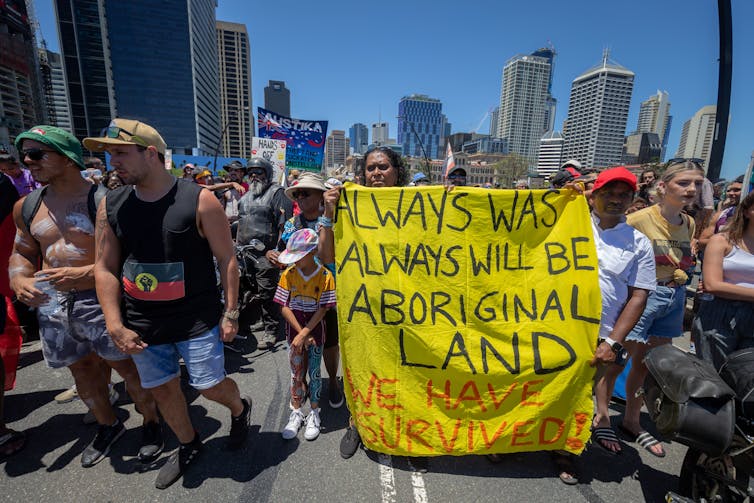
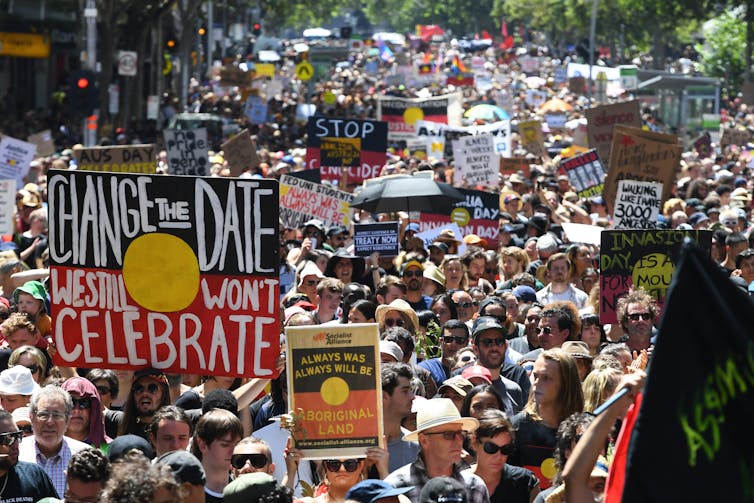
Invasion Day protesters during the Australia Day celebrations in Brisbane last year. Glenn Hunt/AAP

The test for sovereignty

International lawyers of the time disagreed about how to explain evidence that the supposedly least “civilised” peoples had sovereignty. Some denied they really had it. As usual with legal issues that were never litigated, we cannot be completely certain.


But a new analysis of the various explanations (published this month in the Melbourne Journal of International Law) shows, on the most convincing view, these peoples generally did have sovereignty.


The key factor was either whether they were politically organised or whether they had an understanding of sovereignty that was compatible with the European understanding.


The pre-colonial peoples of Australia passed the test for having sovereignty. In fact, they passed it comfortably. An early 20th-century anthropologist, Gerald Wheeler, observed:

The evidence we have been able to collect from the Australian tribes shows us many of the ideas of International Law clearly developed - territorial sovereignty, the sacredness of messengers and envoys, a normal and recognized intercourse over wide areas […]

So, was Australia invaded in a legal sense?

This allows us to answer the question of whether Australia was invaded in a strict legal sense.

Carlos Calvo, in his dictionary of international law of 1885, gave three overlapping definitions of invasion:
  • occupation by force of the territory of others
  • irruption by an army or a large multitude of people into another land in order to seize it
  • the action of invading a country by force of arms.
As these definitions suggest, the central meaning of the word “invasion” in international law was the entry by force by one sovereign into the territory of another sovereign.

This happened on January 26 1788, when agents of the British government, including military officers and marines, entered the sovereign territory of the Gadigal people at Sydney Cove.

It happened again and again over the following century, whenever British governmental forces entered the territory of another Aboriginal or Torres Strait Islander people to seize that territory.

Indigenous protesters have long sought to change the date of Australia Day. James Ross/AAP

Why ‘Invasion Day’ is a fitting term

International law is, of course, only one point of view. For advocates of the name “Invasion Day”, it is more important that Australia was invaded from an Aboriginal and Torres Strait Islander perspective. We do not need European law to validate that perspective, especially not law from the 18th and 19th centuries that is tainted by colonialism and racism.

But if Australia was invaded even from the perspective of this system of law, there is little room left for critics to argue. The name “Invasion Day” cannot be dismissed as one-sided or legally inaccurate. It might even be seen as a neutral description, in that it accords both with the views of colonised peoples and with a system of law accepted by the colonisers at the time.The Conversation

Rowan Nicholson, Associate Lecturer and Co-director of the Sydney Centre for International Law, University of Sydney

This article is republished from The Conversation under a Creative Commons license. Read the original article.