Showing posts with label Problem Solving. Show all posts

Sunday, February 14, 2021

How working less could solve all our problems - really

by Rutger Bregman, Ideas.Ted.com: https://ideas.ted.com/how-working-less-could-solve-all-our-problems-really/

Image: Stocksy

Shorter workweeks could help reduce accidents, combat climate change, make the genders more equal, and more, contends historian and author Rutger Bregman.

Had you asked the greatest economist of the 20th century what the biggest challenge of the 21st would be, he wouldn’t have had to think twice.

Leisure.

In the summer of 1930, just as the Great Depression was gathering momentum, British economist John Maynard Keynes gave a curious lecture in Madrid titled “Economic Possibilities for Our Grandchildren” — in other words, for us. At the time, Madrid was a mess. Unemployment was spiraling out of control, fascism was gaining ground, and the Soviet Union was actively recruiting supporters. 

Speaking in a city on the precipice of disaster, the British economist hazarded a counterintuitive prediction. A hundred years from then, he said, humankind would be confronted with the greatest challenge it had ever faced: what to do with a sea of spare time. And he anticipated that within a century the Western standard of living would have multiplied to at least four times that of 1930.

His conclusion: In 2030, we’ll be working just fifteen hours a week. We are long past due for the fulfillment of this prophecy. Around the year 2000, countries such as France, the Netherlands and the US were already five times as wealthy as in 1930. Yet nowadays our biggest challenges are not leisure and boredom, but stress and uncertainty. Why are we working so much? 

In notable experiments by Henry Ford and W.K. Kellogg, it’s been found that productivity and long work hours do not go hand in hand. In the 1980s, Apple employees sported T-shirts that read, “Working 90 hours a week and loving it!” Later, productivity experts calculated that if they had worked half the hours, the world might have enjoyed the groundbreaking Macintosh computer a year earlier.

Consuming less starts with working less — or, better yet, with consuming our prosperity in the form of leisure.

There are strong indications that in a modern knowledge economy, even working 40 hours a week is too much. Research suggests that someone who is constantly drawing on their creative abilities can, on average, be productive for no more than six hours a day. It’s no coincidence that the world’s wealthy countries, those with a large creative class and highly educated populations, have also shaved the most time off their workweeks. And working less could actually solve many of the world’s greatest problems.

Working less could reduce stress — countless studies  have shown that people who work less are more satisfied with their lives. In a recent poll conducted among working women, German researchers even quantified the “perfect day.” The largest share of minutes (106) would go toward “intimate relationships.” “Socializing” (82), “relaxing” (78) and “eating” (75) also scored high. At the bottom of the list were “parenting” (46), “work” (36), and “commuting” (33). The researchers dryly noted that “in order to maximize well­-being, it is likely that working and consuming (which increases GDP) might play a smaller role in people’s daily activities compared to now.”

Could working less even slow climate change? Turns out, yes. A worldwide shift to a shorter workweek could cut the CO2 emitted this century by half. Countries with a shorter workweek have a smaller ecological footprint. Consuming less starts with working less — or, better yet, with consuming our prosperity in the form of leisure.

Since long workdays lead to more errors, shorter workdays could reduce accidents. Overtime is deadly. Tired surgeons have been found to be more prone to slip­ups, and soldiers who get too little shuteye are more prone to miss targets. From Chernobyl to the Space Shuttle Challenger, overworked managers often prove to have played a fatal role in disasters. It’s no coincidence that the financial sector, which triggered the biggest disaster of the last decade, is absolutely drowning in overtime.

The countries with the biggest disparities in wealth are precisely those with the longest workweeks.

Working less could reduce unemployment. In times of recession, with spiking unemployment and production exceeding demand, sharing jobs can help to soften the blow. Researchers at the International Labour Organization have concluded that work sharing — in which two part-­time employees share a workload traditionally assigned to one full-time worker — went a long way toward mitigating the effects of the 2008-2009 recession on workers.

Gender equality could come closer to being a reality.  Countries with short workweeks consistently top gender­ equality rankings. The central issue is achieving a more equitable distribution of work. Not until men do their fair share of cooking, cleaning and other domestic labor will women be free to fully participate in the broader economy. 

Nowhere is the time gap between men and women smaller than in Sweden, a country with a truly decent system in place for childcare and paternity leave. And paternity leave, in particular, is crucial: Men who spend a few weeks at home after the birth of a child devote more time to their wives, to their children, and to the stove than they would have otherwise. Plus, this effect lasts — are you ready for it? — for the rest of their lives. 

Research in Norway has shown that men who take paternity leave are then 50 percent more likely to share laundry duty with their wives. Canadian research shows that they’ll spend more time on domestic chores and childcare. Paternity leave is a Trojan horse with the potential to truly turn the tide in the struggle for gender equality.

Working less could also reduce inequality. The countries with the biggest disparities in wealth are precisely those with the longest workweeks. While the poor are working longer and longer hours just to get by, the rich are finding it ever more “expensive” to take time off as their hourly rates rise. 

Nearly a hundred years ago, our old friend John Maynard Keynes made an outrageous prediction — he understood that the stock -market crash of 1929 hadn’t called curtains on the entire world economy. Producers could still supply just as much as they had the year before; only the demand for many products had dried up. “We are suffering, not from the rheumatics of old age,” Keynes wrote, “but from the growing­ pains of over-­rapid changes.”

Today, the dream of a shorter workweek has been trampled — there is hardly a politician willing to endorse it, even with stress and unemployment surging. Yet Keynes wasn’t crazy. In his own day, workweeks were shrinking fast and he simply extrapolated into the future the trend that had begun around 1850. So imagine that the leisure revolution were to gain steam again in this century. Even in conditions of slow economic growth, we could work fewer than 15 hours a week by 2050, and earn the same amount as in 2000. If we can indeed make that happen, it’s high time we start to prepare.

 True leisure is as vital to our brains as vitamin C is to our bodies.

First we must ask ourselves: Is a shorter workweek what we want? Pollsters have already asked people all over the world this question, and the answer is “Yes, very much, please.” When US scientists surveyed employees to find out whether they would rather have two weeks’ additional salary or two weeks off, twice as many people opted for the extra time. 

And when British researchers asked employees if they would rather win the lottery or work less, again, twice as many choose the latter. Plenty of evidence points to the fact that we can’t do without a sizable daily dose of unemployment. Working less provides the bandwidth for other things that are also important to us, like family, community involvement and recreation.

And the second question is: How can we manage to work less? We can’t all just go ahead and switch to a 20-hour or 30-hour workweek on our own. Reduction of work first has to be reinstated as a political ideal; from there, we can curb the workweek step by step, trading in money for time, investing more money in education, and developing a more flexible retirement system and good provisions for parental leave and childcare. It all starts with reversing incentives. 

Currently, it’s cheaper for employers to schedule one person to work overtime than to hire two people. That’s because many labor costs, such as health care benefits, are paid per employee instead of per hour. And that’s also why we as individuals can’t just unilaterally decide to start working less. At the end of the workday in almost every office you can find exhausted staff sitting at their desks aimlessly browsing the Facebook profiles of people they don’t know, waiting until the first of their coworkers has left for the day. Breaking this vicious circle will require collective action — by companies or, better yet, by countries.

True leisure is neither a luxury nor a vice. It is as vital to our brains as vitamin C is to our bodies. There’s not a person on earth who on their deathbed thinks, “Had I only put in a few more hours at the office or sat in front of the tube some more.” Sure, swimming in a sea of spare time will not be easy. A 21st-century education should prepare people not only for joining the workforce, but also, and more important, for life. And we can handle the good life, if only we take the time.

Excerpted from the new book Utopia for Realists: How We Can Build the Ideal World by Rutger Bregman. Reprinted with permission from Little, Brown and Company, a division of Hachette Book Group, Inc. © 2017 Rutger Bregman.

Thursday, July 2, 2020

VIDEO: The beauty and complexity of finding common ground

by Matt Trombley, Ted Talks: https://www.ted.com/talks/matt_trombley_the_beauty_and_complexity_of_finding_common_ground

How can we disagree with one another, respectfully and productively? In this thoughtful talk, team builder Matt Trombley reflects on "agonism" -- the tendency to take a rigid stance on issues -- and shares why finding aspects of agreement can be the first step in resolving conflict. "When you can find even the smallest bit of common ground with somebody, it allows you to understand the beautiful wonder and complexity and majesty of the other person," he says.

This talk was presented at a TED Institute event given in partnership with Wells Fargo. TED editors featured it among our selections on the home page. Read more about the TED Institute.

Saturday, September 8, 2018

Creating a Sense of Village in Your Neighbourhood

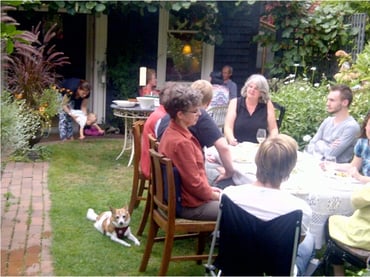
garden party
There is a growing understanding about the richness of life that has been lost with our fragmented and isolated lives, and attention is now being given to restore the historic nature of neighbourhoods.
The close proximity and frequency to run into neighbours is what builds social capital - that relational fabric in a community. 
Sociologists have been sounding the alarm regarding our plummeting social capital; the absence of it is impoverishing our lives and communities. It is what builds civil society. This social connectedness is a primary contributor to a person’s sense of wellness and it is shaped by our local, daily life.
How do we combat the trends of ‘living above place’ versus being rooted, the trend of valuing the private over the common, and of the increasing isolation, fragmentation and speed of life? How do we live out our values – not as professionals – but as neighbours? I have become convinced that it is the local neighbourhood that is the best context for people to thrive.
Several years ago, I began a process of reorienting my entire way of life within the proximity of the neighbourhood, out of a longing for a more integrated way of living and a deeper experience of community. I began deceptively simple practices (that I now think have the potential to be staggering in its scope in helping us and others live well). My imagination was sparked for another way of living and being.
I moved into a 100-year-old house with six bedrooms and began offering a few rooms to rent. In the process, I discovered a need to hold space for people in transition, what some call the post-modern homeless. I eventually opened all the rooms for whosoever and invited them to stay as long as they wanted. There has now been over 200 that have lived in my house. It is a miracle of grace that I love this! I have moved away from a privatized way of living where your home is seen as a sanctuary, to the place of making your personal possessions more public, as Augustine argued for.
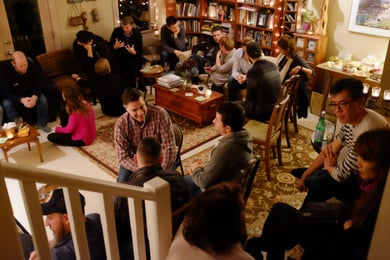
I quickly learned you couldn’t be present and be busy, so I spent the first year learning a radically foreign rhythm that had enough margin. I stopped using the word busy so as to not increase its value (my life is people, intense and full, but I no longer live on adrenaline and deadlines which I did most of my life). A culture built on speed tends to neglect relationships - especially those deemed optional - and the simple, ordinary practices that enable a community to flourish tend to diminish in value when we don’t depend on each other practically, and productivity and dehumanizing efficiency dominate our lives. It takes time to get to the place where you know your neighbours and can experience connection as a neighbourhood.House gathering
Alan Hirsch reminds us that to connect in our neighbourhood we need proximity, frequency, and spontaneity. For most of my life, I embraced the value of self-sufficiency and independence (what a delusion they are). Now, most of my life is shared - not with family, but with strangers; my home, car, food, resources, possessions, and time. It is wonderful, hard and beautiful, and I would never go back. 
I’ve also discovered how food builds relationship! Simple hospitality, around good food – and hosted regularly in homes - provides the best foundation for developing a social fabric in a neighbourhood. I moved from a compartmentalized practice of entertaining just friends and family – to a lifestyle of radical hospitality - to strangers and neighbours.
Eight years ago, I started hosting regular Sunday Soup Nights for the neighbours. In wanting to make it easy for people to come, I kept the barriers low; they didn’t need to RSVP, they could come late and leave early and didn’t need to bring anything (except their own drinks). I made a pot of homemade soup and some bread. We now average 45-55 neighbours coming, made up of every decade, from 20-70 years old and their children. Most people tend to only gather with their tribes, so people have loved it! Where else like the neighbourhood can diversity gather? Neighbours who have lived next door to each other for 15+ years and had never met till they came to our house, have now exchanged emails and even house keys. I think this is a taste of living well! We now have over 100 people on our neighbourhood email list.

Soup Night
Several women have shown up at the door on Soup Nights saying they wanted to meet the woman who invites strangers into her home. Even though many people are entrenched in fear and isolation, I have found how hungry people are for another way of being human. These very simple, ordinary practices that we do – have profound impact. Neighbourliness seems to have become a lost art. The idea of neighbourhood helps me think about fostering a sense of village, where as Peter Blocks suggests: every gift can be given.
After a few years of building relational connection in the neighbourhood, we put our hand to work together toward sponsoring a family from Syria. Together we raised $40K and welcomed our family to live in a suite on our street. What a gift they have been to our neighbourhood. We are now working toward a second sponsorship. Working together really deepens connection!
I’ve sought to root deeply into my neighbourhood seeking to be a faithful presence. I am not advocating that everyone lives at this level of intensity. GK Chesterton once said that we are to exaggerate what the world has neglected. I am seeking to exaggerate what has been neglected in the area of generous hospitality to maybe spark a few others to imagine with me ...
  • What if every neighbourhood had a catalyst for inclusive hospitality? A lifestyle that nurtured a web of care in their place. What would it look like for your neighbourhood to thrive? 
    One neighbour asked me to be her executor. It prompted me to dream about my neighbourhood functioning like extended family.
  • What would it take to develop enough connection and shared life, that you cared about each other like a healthy extended family?
  • What if we didn’t think as professionals providing services and didn’t see our neighbours as projects or people to be served, but simply invited them into our life as friends?
What if we all lived well by loving our neighbours well?

Monday, August 6, 2018

Meet The Island Communities Fighting Back Against Wealthy, Absent Landlords: These Tiny Scottish Communities are Taking Control of Their Own Destinies

by Adam Weymouth, Huffington Post:  https://www.huffingtonpost.com.au/entry/island-communities-scotland-fighting-back-wealthy-absent-landlords_us_5b6038f3e4b0de86f49abf6f

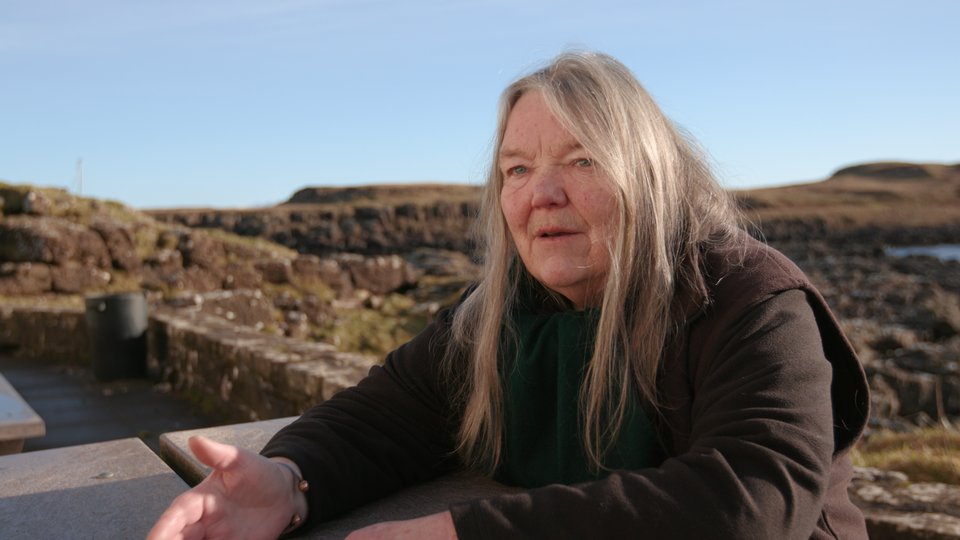
Maggie Fyffe was 28 when she arrived on the Isle of Eigg, Scotland, in 1976. She came with her husband and her infant son, having been invited by the island’s owner to start a craft workshop on the island. Eigg is one of the Scottish Small Isles, an archipelago of islands a few miles off the country’s west coast, and when Fyffe arrived, the population was at an all-time low of 39. 

The island was owned by businessman and former Olympic bobsleigher Keith Schellenberg. Schellenberg had bought Eigg in 1975 for the equivalent of $360,000 (274,000 pounds), and despite some initial investment, things had progressively declined. In an interview with the West Highland Free Press in 1991, he enthused that under his ownership the island had kept its “slightly rundown ... Hebridean feel.”

Fyffe and her neighbors saw it differently. “We were in extreme circumstances,” she says. “With no security of tenure, no one was investing; the community hall was falling apart; the only shop was in a corrugated shed with no water or electricity.”
ELEANOR CHURCH
Maggie Fyffe moved to the Isle of Eigg in the 1970s and is secretary of the Isle of Eigg Heritage Trust.
Fed up and desperate for change, the community decided to do something about it. When Schellenberg’s divorce led to the island being put on the market, Eigg passed briefly to a German artist, before the newly formed Isle of Eigg Trust raised $1.97 million to buy it ― one-third from hundreds of small donations and two-thirds from a woman who has remained anonymous to this day. Last year, Eigg celebrated its 20th anniversary of community ownership. 
While not the first community land purchase in Scotland, the high-profile buyout of Eigg in 1997 made headlines around the world and reignited debate and activism around land reform in the country.
Vast estates and whole islands are traded between millionaires on the international property market, while those who live and work in those places are forced to watch mutely, dealing with the whims and changing fancies of one new landlord after another.
The country’s gross imbalance of land is the result of a system of feudal tenure along with antiquated inheritance laws. In the 18th century, after the end of the clan system in Scotland ― where communities of people lived together under a chief ― much of the land was parceled up and given away or taken by those who had no right to it.
Absent landlords quickly came to realize that their new acquisitions could turn more of a profit if they got rid of tenants in favor of livestock. People were cleared from land that they had known for generations in a legacy that persisted through the centuries.
But things are changing. A string of community purchases followed Eigg, facilitated by new laws introduced by the Scottish government. More than 560,000 acres of Scotland now rest in community ownership, with the government aiming to increase that figure to 1 million acres by 2020.
The Isle of Ulva, in the Inner Hebrides, which has a population of just six (down from 570 in the 1840s) is the most recent to pass out of private ownership and into the hands of the community for a total of $6.1 million earlier this year.
ELEANOR CHURCH
The Isle of Ulva, which currently has a population of just six people, has recently been purchased by the community.
Those who live on community-owned land are already showing another world is possible. Since the buyout, the population of Eigg has risen to 105 and a baby is due next week. The number of visitors to the island has doubled, homes have been built, a development at the new pier houses three businesses, including a shop and a tearoom, and the island is powered almost entirely by renewables.
Fyffe, who is secretary of the Isle of Eigg Heritage Trust, acknowledges the hard work needed with democracy happening at this extremely grassroots level, and the tensions that flare up have been well-documented. But conflict is part of community, and Fyffe would not have it any other way.
Fyffe’s daughter, who had left the island along with many of her generation, has since returned because she “saw that things were happening” and because she wanted to be able to provide for her own children the sort of childhood she had known.
This story is being repeated across Scotland. Barney Higgins, 32, moved from Glasgow to the Isle of Gigha, off Scotland’s west coast, five years ago. That Gigha was community-run was a direct influence on his move, not only ideologically but for the basic fact that both his job at Achamore Gardens and the rental accommodation he lives in had been created as a result of the purchase. He is heavily involved in the life of the island, from sitting on the board of directors for the Gigha Heritage Trust, which purchased the island in 2002, to volunteering in the tearoom.
JOHN SHORT VIA GETTY IMAGES
The Isle of Gigha in Scotland was purchased by the community in 2002.
“It’s a thriving, growing, developing, challenging little place,” he told HuffPost. “I just don’t see how that could happen without that new vision that community ownership brings.”
The population growth experienced on these islands is something that many communities on the mainland would like to replicate. A 2018 report on Scotland’s sparsely populated areas found that half of the country contains just 2.6 percent of the population and that, if current trends continue, that figure will drop by almost a third by 2050.
In Sutherland, a region in the north of the Scottish mainland, for example, three-quarters of the land is in the hands of 81 families and just one person is employed for every 1,800 acres. 
“What these areas need are young people, families,” according to David Cameron, a director of Community Land Scotland. “And you need jobs and housing to bring in families.”
Freeing up land from private hands, says Cameron, would bring in the homes and jobs so sorely needed. The community buyout in June 2018 of the 3,000 acre West Helmsdale crofting estate in East Sutherland has led to the creation of the first job in the area for a century, in the form of a part-time development officer, and the community says it is just the beginning.
Andy Wightman, member of the Scottish Parliament for Lothian, in the Scottish Lowlands, has dedicated much of his life to questions of land reform. He is enthusiastic about community buyouts but sees the need for them as symptomatic of still deeper structural problems.
“If our local police are not catching criminals, they don’t tell us to run the police ourselves,” he says. “So why’s our land system failing? Why had it led to this situation where the only option we have is to own this land ourselves?”
He believes, above all, that tax reforms are needed to remove the tax exemptions that large Scottish land holdings currently enjoy. That could force the land to be divided up and sold in smaller parcels that would be more economic to run, changing the current pattern of land ownership into something more widely accessible. As Cameron of Community Land Scotland puts it: “Why do people need to own so much land when they do nothing with most of it?”
Such far-reaching changes require “political bravery,” Wightman acknowledges. And yet, their ultimate aims are not as radical as they might initially appear. At the end of the 16th century, about half of Scotland was held in common ownership. 
“There’s often a misapprehension that this is something new when in fact common ownership of land is a very, very old thing,” Wightman says. “We’re in effect trying to restore an older, more normal order of things, rather than creating a new order where private land ownership is the norm.”
Back on Eigg, Fyffe says she has witnessed an important shift over the past two decades. “Twenty years ago it took a long time for people to start talking about ‘we’ rather than ‘them,’” she tells HuffPost. “It was such a mindset that you had an owner, and ‘they’ were doing this or ‘they’ were doing that. It took quite a long time to become ‘we’ are doing this, ‘we’ could do that.”
For more content and to be part of the “This New World” community, follow our Facebook page. 
HuffPost’s “This New World” series is funded by Partners for a New Economy and the Kendeda Fund. All content is editorially independent, with no influence or input from the foundations. If you have an idea or tip for the editorial series, send an email to thisnewworld@huffpost.com